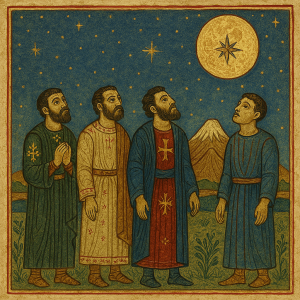
Hace algunos años, me encontré en un pueblo de Ruanda trabajando con sobrevivientes del genocidio. Realizamos algunas entrevistas informales, nos familiarizamos con sus actividades diarias y luego, cuando el sol se ponía, la gente bajaba el ritmo y, muy pronto, a las 7:00 p. m., en la oscuridad de la noche, la gente estaba en sus hogares preparándose para su descanso nocturno. No había sonido en todo el pueblo. Me pareció extraño que la gente se preparara para dormir a esa hora tan temprana. Y entonces se me ocurrió que, sin electricidad, sin la iluminación artificial que esta proporciona, a todos los efectos, el día terminaba con la puesta del sol.
Hoy celebramos el solsticio de invierno. Es el día más corto del año en el hemisferio norte. Desde el solsticio de verano hasta este día, los días se han vuelto cada vez más cortos y, a partir de ahora, tendremos más horas de luz solar al día para vivir y disfrutar. En un mundo sin electricidad, puedes imaginar lo bienvenidos que serían los días más largos por venir; tan bienvenidos, que este día se celebraría como el “nacimiento del sol”. De hecho, el sol permanece más tiempo afuera, brindando más posibilidades para el trabajo, el juego y la socialización, es decir, ¡posibilidades para la vida!
Para facilitar la difusión del cristianismo, la fecha del nacimiento de Cristo se trasladó al 25 de diciembre en el Imperio Romano durante el siglo IV. ¡Celebrar el nacimiento del Sol fue reemplazado por las festividades navideñas, en honor al nacimiento del Hijo! Mientras tanto, en Armenia, durante el siglo IV, el solsticio de invierno no se celebraba en la misma medida que en el Imperio Romano. La fecha de la Navidad no se cambió y el 6 de enero sigue siendo la fecha de celebración de la Teofanía. Hay más factores para las diferentes fechas de Navidad, pero por hoy, basta decir que Armenia no se vio afectada por el cambio de fecha. Hasta el día de hoy, la Iglesia armenia celebra la Natividad y el Bautismo de Cristo en la misma fecha, el 6 de enero.
El solsticio señala el reloj cósmico que tiene estaciones y tiempos que cambian en todo el mundo. Es un recordatorio de que algunos de los grandes tesoros de nuestra fe se encuentran en los fenómenos más simples de la naturaleza. Ya sea el nacimiento del sol o el nacimiento del Hijo, hay un hilo conductor que recorre ambos: la luz. Ambos son regalos de luz para el mundo.
How we process this revelation in the Christmas message, is how Armodoxy fits into our cosmology.
https://epostle.net/wp-content/uploads/2025/12/Solstice-e1766475772571.jpg765532Vazken Movsesianhttps://epostle.net/wp-content/uploads/2022/07/final_logo_large_for_epostle_web-300x189.pngVazken Movsesian2025-12-23 00:01:092025-12-22 23:43:07Solsticio: Luz de luz
Armodoxy for Today: Advent, the Solstice and Homelessness
We’ve arrived at the Winter Solstice: The shortest day of the year in the Northern Hemisphere.
The Winter Solstice is a day I personally celebrate every year, for a variety of reasons, chief among them is the festive nature of the day. It signals the beginning of Winter and lengthening of days and the beginning of the Christmas Celebrations. I am also intrigued by the movements of our planet around the Sun, the precision under which these astronomical bodies dance in the sky.
This year, the celebration was overshadowed by an invitation I received to offer the opening prayer at the Homeless Persons’ Memorial Service. If this is the shortest day of the year, it follows that this is also the longest night of the year, and so appropriately, this evening is an opportunity to focus on the severe problem of homelessness. This past year over 2,000 unhoused individuals died on the streets. Throughout the country memorials are being held to commemorate the lives of those who otherwise would not be remembered anywhere else.
We assembled in a sanctuary space of the local cemetery in Glendale, California. I was with friends from Ascencia where we have had the privilege of feeding their homeless clients for the last two decades. Ascencia’s motto is simple: Lifting people out of homelessness. They had organized this gathering, as local component of the larger National commemoration. We were honored to be invited.
We provide meals at Ascencia in the Armenian tradition of matakh – as an offering of thanksgiving for blessings. We do so because we feel the homeless do not need sympathy, they need empathy, that is we need to be empathetic in our response to their call. These people who we fed were our neighbors. They were our brothers, sisters, fathers, mothers and children. As an Armenian, my grandparents were homeless – exiled from Armenia during the Genocide. So standing in their shoes is not merely a metaphor but an understanding that these are our family and in turn, we offer them a glimpse at their children, to know there is hope beyond the trappings of the day.
As so, at the service we remembered those who passed by name, Carla Baird, Michael Blazen, Patricia Doe, Adam Holling, Daniel Lima, Vartan Marootian, Arturo Villegas Palomo, Hilario Rodriguez, Nicole Rodriguez, Jose Vera Sarmiento, Walter Smith and Phillip Steele, all whose lives ended on the streets of Glendale. I mention their names, because it’s too easy to clump them together as a group. They had names, personalities, parents and family.
At the memorial we were joined by a few government officials. Not everyone wants to attend an event where votes may not be gathered, but those who attended joined the chorus in a pledge against homelessness, including Senator Sasha Perez, who reflected in an emotional expression remembering family members who had succumbed to homelessness.
On this night we pray, Heavenly Father, at this holy season as we remember the birth of Your Son, who was betrayed to homelessness on the night of the Nativity, open our ears to listen carefully to the call of the angels who proclaimed the reason and purpose of our faith: Peace on Earth and Good will toward one another. May we never walk away from that calling. Let us become those instruments of peace and goodwill by extending ourselves to one another, in service, sacrifice and sharing of our resources and talents. Amen.
https://epostle.net/wp-content/uploads/2025/12/Homeless-Persons-Memorial-Ascencia-1-e1766371565647.jpg9951660Vazken Movsesianhttps://epostle.net/wp-content/uploads/2022/07/final_logo_large_for_epostle_web-300x189.pngVazken Movsesian2025-12-22 00:01:102025-12-21 19:24:07Adviento, el solsticio y la falta de hogar
Armodoxy for Today: Children to brighten up our Advent
The holiday season is a joyous season and a stressful one. For families who have suffered loss, the stress level is compounded with feelings of longing, sadness and depression.
In 1997, then President Clinton, established a national memorial day for children, to be commemorated annually two weeks before Christmas. At the time, I was serving as Parish Priest of the Armenian Church in Pasadena. A year earlier, a young girl in the church family and a student at the church school named Cathia Hamparian had died in a car accident. She was 13 years old. Her loss had devastated family and friends and had shaken up the community.
With Cathia’s family, we organized the first Children’s Memorial that year dedicated it in memory of her sweet soul. And we have continued with the tradition of remembering children, as an annual event during Advent. Sadly, through the years, the list of names has increased, with children of all ages, who have passed before their time.
It is a very special evening, because it offers an outlet to parents who try to make sense of the senseless. These children are the most innocent of God’s creation. They didn’t have a chance to live a full life. But on this one night they find a group of people who deal with the same questions and queries, they have. Together they support one another to stand once again.
The great power of the Church is in its ability to create community – a safe place for people to share without fear or worries. Jesus sets the ground rules for the church: judge not, lest you be judged, love and embrace the brokenhearted, shower one another with unbridled love and care. It’s actually the formula for a successful church. And why not? The Church is the Body of Christ, and that formula of no judgement, embracing the brokenhearted and loving others, describes Jesus Christ. He’s perfect and his Holy Church is set up to be perfect. It is in that environment that God, that is Love, is present and active.
The Children’s Memorial is part of our Advent journey, pointing to the importance and necessity of the Church in the life of the Christian. Even more, it points to the Resurrection because children continue to live in the hearts of their loved ones, and within our community their presence is never far away.
We pray this simple prayer today, from the Children’s Memorial, No heart breaks alone, for I know that You, my God, are always nearby. And when I whisper a prayer, hear me. When sorrow is overwhelming comfort me tenderly. I know You are always there to hear, for not a single tear will fall that You my God don’t see. I turn to You always. Amen.
Cover photo: At the end of the 2025 Cathia Hamparian Memorial Service, participants placed candles around an angel figurine.
https://epostle.net/wp-content/uploads/2025/12/Advent-2025-Covers-e1766154041324.jpg272456Vazken Movsesianhttps://epostle.net/wp-content/uploads/2022/07/final_logo_large_for_epostle_web-300x189.pngVazken Movsesian2025-12-19 00:01:492025-12-19 07:07:56Niños que iluminarán nuestro Adviento
In our encounter with Jesus’ commandments, one in particular stands out from the rest, the commandment to not resist evil. We are to understand that opposition to evil cannot come by adding evil to the equation. Evil + evil will never equal an absence of evil. We can’t fight fire with fire when it’s only reasonable (and preferrable) to fight it with water.
"Al que te golpee en la mejilla derecha", instruye Jesús, "ofrécele también la otra. Si alguien quiere demandarte y quitarte la túnica, déjale también el manto. Y a quien te obligue a ir una milla, ve con él dos. Da a quien te pida, y no le des la espalda a quien quiera tomar prestado de ti". (Mateo 5:39-41)
La ausencia de mal es amor, por lo que "ama a tus enemigos" es el siguiente paso natural y un paso necesario en el camino hacia la paz.
Dentro de la Iglesia Armenia, la frase "La paz sea con todos" se repite a menudo en sus siete horas de culto, y de manera más notable durante su Divina Liturgia. Imagina eso: un pueblo que no ha conocido la paz y que, al mismo tiempo, no ha poseído poder militar ni estrategias militares elaboradas, y aun así proclama y ofrece paz.
Hacemos una pausa hoy con una invitación y un desafío de Adviento: en preparación para la Navidad, ¿puedes imaginar una alternativa al mal para resolver el mal? El llamado de Jesús a "ser perfectos, como vuestro Padre Celestial es perfecto" (Mateo 5:48) implica que existen medios que requieren que uses tus talentos dados por Dios para superar las tragedias que identificamos como mal.
El Viaje de Adviento trata sobre prepararnos para la gran Teofanía, la Revelación de Dios. Esa preparación se logra a través de la lucha por comprender —"imaginar", si quieres— nuestra existencia como hijos de Dios. Bienaventurados los que trabajan por la paz, porque ellos serán llamados hijos de Dios.
Oramos con una oración del ganador del Premio Nobel de la Paz, el Rev. Martin Luther King, Jr.: Oh Dios, Creador y Preservador de toda la humanidad; en quien habitar es encontrar paz y seguridad; hacia quien volverse es encontrar vida y vida eterna, te suplicamos humildemente por toda clase y condición de hombres; que te plazca dar a conocer tus caminos a ellos, y tu salud salvadora a todas las naciones. También oramos por tu santa Iglesia universal; para que sea guiada y gobernada por tu Espíritu, de modo que todos los que profesan y se llaman cristianos sean conducidos al camino de la verdad, y mantengan la fe en unidad de espíritu, en el vínculo de la paz y en la rectitud de vida. Finalmente, encomendamos a tu bondad paternal a todos aquellos que están de alguna manera afligidos o angustiados en mente o cuerpo. Dales paciencia ante el sufrimiento y poder de resistencia. Esto lo pedimos en el nombre de Jesús. Amén.
https://epostle.net/wp-content/uploads/2025/12/Pastoral-Peace-855-e1766036886758.jpg765768Vazken Movsesianhttps://epostle.net/wp-content/uploads/2022/07/final_logo_large_for_epostle_web-300x189.pngVazken Movsesian2025-12-18 00:01:042025-12-18 03:24:05Paz sin más maldad
Los disparadores vienen en todas las formas y tamaños. En un arma, es el dispositivo que libera el mecanismo para disparar. Las flores o los animales peludos pueden provocar alergias en las personas. Y un buen actor que interpreta su papel puede despertar emociones que ablandarán hasta el corazón más duro.
Los eventos celestiales, como los eclipses solares o lunares, a menudo provocan discusiones de índole religiosa. Debido a que los movimientos de los protagonistas, es decir, la Luna y el Sol, tienen sus propios ritmos y patrones, algunas personas atribuyen explicaciones místicas a todo el evento. Si observamos más de cerca, el único elemento místico de estos movimientos es que son inusualmente precisos y perfectos. ¿Nos atrevemos a decir que apuntan a un diseñador, a quien a menudo llamamos Dios?
At a solar eclipse a person who noted my interest in the event asked, if the eclipse is mentioned in the Bible? Now, if you’ve been a priest long enough you know where this is leading (or misleading) –somehow this is being a precursor to end times. I’ve read in the Bible about darkening-sky events, but in the case of eclipses which last only a few minutes, there is nothing apocalyptic about them. But look at it in another way, MRI’s and Xray’s are not mentioned in the Bible either, but we use them to diagnose a wide variety illnesses. Jets aren’t mentioned in the Bible, but they sure help get you around.
Armodoxy te desafía a ver la naturaleza como una extensión de las maravillas de Dios. Están por todas partes. En lugar de permitir que lo desconocido y lo incomprendido disparen pensamientos sobre el fin de los tiempos, celebra la majestad de Dios y toda la belleza de Su Creación.
Terminamos con esta oración del Libro del Eclesiástico: "La gloria de los astros es la belleza del cielo, un despliegue brillante en las alturas del Señor. Por orden del Santo, permanecen en sus puestos asignados; nunca se relajan en sus vigilias. Mira el arcoíris y alaba a Aquel que lo hizo; es sumamente hermoso en su brillo. Rodea el cielo con su arco glorioso; las manos del Altísimo lo han extendido. (capítulo 43)
https://epostle.net/wp-content/uploads/2025/12/Celetial-Trigger-854-e1765947047862.jpg765878Vazken Movsesianhttps://epostle.net/wp-content/uploads/2022/07/final_logo_large_for_epostle_web-300x189.pngVazken Movsesian2025-12-17 00:01:142025-12-16 20:51:39Los grandes detonantes
This week of Advent begins with a scriptural reading from Hebrews chapter 1. It reads like an essay, explaining that God speaks to us through His Son, Jesus Christ. The scripture reads, “Long ago God spoke to our ancestors in many and various ways by the prophets, but in these last days he has spoken to us by a Son, whom he appointed heir of all things, through whom he also created the worlds. He is the reflection of God’s glory and the exact imprint of God’s very being, and he sustains all things by his powerful word. When he had made purification for sins, he sat down at the right hand of the Majesty on high, having become as much superior to angels as the name he has inherited is more excellent than theirs.”
Esta introducción al libro que abordamos hoy, Hebreos, tiene un matiz cósmico. Resulta interesante que lo leamos en la Iglesia durante la semana del solsticio de invierno.
The author of Hebrews continues his writing setting apart the Son of God from the angels, “For to which of the angels did God ever say, ‘You are my Son; today I have begotten you’? Or again, ‘I will be his Father, and he will be my Son’? And again, when he brings the firstborn into the world, he says, ‘Let all God’s angels worship him.’” For the author of this scriptural treasure, it is important to set Jesus apart from all of creation.
Cuando hablamos de la Iglesia Apostólica, nos referimos a la Iglesia en tiempos de los Apóstoles. En aquel entonces no existía la Biblia; solo estaba la comunidad de creyentes que se reunía para ser llena del Espíritu Santo y alentarse mutuamente. La Iglesia Apostólica, y más tarde la Iglesia primitiva, entendía la Iglesia y la expresión cristiana como parte de un ritmo del universo que comenzó en la Creación y que luego experimentó la Caída debido a nuestras acciones contra el ritmo y la armonía del universo.
Cristo es apartado. Cristo viene a devolvernos la armonía y el ritmo con el universo, es decir, con toda la creación.
Estamos recorriendo el tiempo de Adviento en preparación para recibir la Natividad y la Revelación de Dios en nuestras vidas. Hoy, nos detenemos a escuchar el mensaje de armonía y ritmo. Estamos a un día del solsticio de invierno. Miramos hacia nuestro interior y observamos los patrones de la naturaleza. La Navidad está cerca.
Let us pray a prayer that comes to us from Holy Scripture for the Book of Sirac, (43) The beauty of the celestial height and the pure firmament, heaven itself manifests its glory. The sun at its rising shines at its fullest, a wonderful instrument, the work of the Most High! Let us praise Him the more, since we cannot fathom him, for greater is He than all his works; Awesome indeed is the LORD, and wonderful His power. Lift up your voices to glorify the LORD as much as you can, for there is still more. For who has seen him and can describe him? Who can praise him as he is? Beyond these, many things lie hidden; only a few of his works have I seen. It is the LORD who has made all things; to those who fear him he gives wisdom.
https://epostle.net/wp-content/uploads/2025/12/Rhythms-of-the-Northern-Lights-853-e1765847029560.jpg765507Vazken Movsesianhttps://epostle.net/wp-content/uploads/2022/07/final_logo_large_for_epostle_web-300x189.pngVazken Movsesian2025-12-16 00:01:332025-12-15 17:04:18De vuelta en armonía y ritmo
Armodoxy for Today: Advent Series – Christmas on Las Lunas St.
There is a house on Las Lunas, less than a mile from our home, that decorates for Christmas. We discovered it when we first moved to Pasadena, and since then it has been one of my favorite Christmas stop.
Yes, there was the Balian mansion. Many happy memories were made there, taking visitors from out of town to see the elegant display of lighting in this upscale Altadena neighborhood. Lights hung in an orderly manner with some traditional colored statues, such as the manger scene, angel singers, wise men, and the rest of Nativity seekers found in the Gospel of Luke. Kids loved going for the added attraction, the vendors who lined the streets with electronic gadgets, bright lights that lured the kids and their parents to fork over a few bucks for these plastic sparkly lights that lasted just long enough to make it home. In the hands of the kids they broke down rather quickly. But even with all the lights hanging from the mansion, the glow sticks and sparkly lights were fun because they contrasted so brightly against the dark surroundings of the neighborhood.
And then there is the house on Las Lunas… no additional lights are needed. Here you’ll find a house decorated with lights on top of lights. Different sizes and shapes of bulbs. Statues of the Holy Family, the wise men and Santa Claus, yes! You expect those. But also, here to you’ll find lit plastic statues of cartoon carolers from Mickey Mouse to Looney Tunes, with a variety of superheroes like Batman and Spiderman, all assembled to greet the newborn Babe in the Manger. Electrical outlets and wires throughout the front yard power the lights that roll off the roof and stretch to the curb, like a technicolor electric blanket. The house on Las Lunas is a celebration of Christmas both religious as well as secular. And I love it.
It is obvious that this is an amateur production, but… so was the First Christmas in Bethlehem. (I mean, making do with a manger for a crib?) It is also a labor of love, as was the First Christmas in Bethlehem.
Through the years I’d take our boys to see the “House on Las Lunas.” More than the house itself, I’d love to watch their expressions as they looked at the lights. Their expression were the definition of “Christmas Magic.”
A few years back, I knew it wasn’t right to enjoy this to this extent without offering something in return. So that year, and the years following, I’d carry some extra cash with me when we’d visit the house, with the hope that I’d see the owner, thank him and offer something to, at the very least, help with the electric bill for all these bulbs, many from the incandescent era. I never saw him. Even in the off-season, whenever passing by on Las Lunas I’d glance over on the chance I’d see someone in the yard. But no such luck.
A few years ago, it was time to introduce our grandsons to the magic on Las Lunas. My wife and I bundled them up, put them in the car and took them over to give them their first glimpse of Christmas on Las Lunas. I took some cash along with me again, on the possibility, and hope, that we might find the artistic director of the light show. This time, we were in luck.
We arrived at the house and helped our grandsons out of their infant seat harnesses. They walked out with wide eyes, taking it all in. Big smiles, not knowing in which direction to go first. Christmas music was playing loud. And then… there he was. The owner of the house and creator of the light show was there with a drill in his hand and an assortment of tools. He was working on a small “Santa’s house.”
The kids went in and out of all the lights and arrived at the barn where the Holy Family, wisemen and animals were circled around the manger with the Christ child. Our older grandson looked in and we explained what was happening. His younger brother who has to copy everything his older brother does, came and listened attentively. We went walking through the lights and different statues and of course, the kids were excited to find Batman and Spiderman peeking through some well-lit shrubs.
The owner was busy with the lights, but this was my chance to show my appreciation for the years of happiness he had given our family and make an offering of assistance. I approached him and introduced myself and our grandsons. I told him that I had been coming to his house for years with my sons and now, it was the next generation’s turn. I choked up as I reminisced. “I just want to thank you for all the happiness and joy you’ve brought to my kids and now my grandkids.”
He smiled and appreciated being appreciated. He gave me a brief history. His father lived in this house until his death 20 years ago. As a tribute to his father, he decorated the house every Christmas because one of his fondest memories was visiting the Balian mansion as a kid. We exchanged memories under the cold December sky. I was surprised to notice through all this light down here, the twinkling of stars high up above in the sky.
I reached into my pocket and began, “I know this costs a lot of money to maintain. I’d like to participate with a small offering to at least take care of the electricity.” He looked at me. I was in the shadow of the light, and he probably didn’t notice a couple of tears swelling up in my eyes, but he probably heard it in my voice.
He said, “I can’t take it. It’s not about me. It’s about him.” He pointed to the manger and the baby Jesus laying in it. “I know what he would want you to do with that money. Please give it to the homeless. There are so many on the streets,” and he pointed to the main street at the end of the block, with cars and buses rolling by.
I felt the greatest joy at that moment. I couldn’t say much, I was still choked up but I did manage to get out a few words. “I will. I will give this money to the homeless and may God bless you.”
During this Advent Season, the Armenian Church sets its mark on the destination, that is Christmas, by giving the shopping list for the Christ child, the honoree of this Birthday celebration. It is only proper to ask him his choice of gift and give that which he desires. The shopping list is given to us by Jesus himself. It is found in the Gospel of Luke. The Jesus’ words are as follows: When you give a dinner or a supper, do not ask your friends, your brothers, your relatives, nor rich neighbors, lest they also invite you back, and you be repaid. But when you give a feast, invite the poor, the maimed, the lame, the blind. And you will be blessed, because they cannot repay you; for you shall be repaid at the resurrection of the just. (Luke 14: 12-14)
This is the magic of Christman, a magic we find on Las Lunas Street.
https://epostle.net/wp-content/uploads/2025/12/Las-Lunas-Christmas-Magic-852-e1765783564411.jpg7651017Vazken Movsesianhttps://epostle.net/wp-content/uploads/2022/07/final_logo_large_for_epostle_web-300x189.pngVazken Movsesian2025-12-15 00:01:472025-12-14 23:34:30Magia en la calle Las Lunas
Armodoxy para hoy: La serie de Adviento – El regalo de Jesús
Estás en el Gran Banquete (Lucas 14). Es una celebración. Es una mesa puesta en el Reino. Y ahora te das cuenta de que un banquete como este debe tener un propósito. Lo tiene. Es celebrar el Reino de Dios. Y el invitado de honor es Jesucristo.
Imagina que te invitan a una celebración para el Señor. En realidad, no necesitas imaginar nada; la celebración del nacimiento del Señor, o natividad, tiene lugar en Navidad y, como entenderemos eventualmente, no se limita al día de Navidad. Es costumbre, cortesía y de buen gusto compartir un regalo con el homenajeado. ¿Qué regalo podrías darle a Jesús? Créeme, no hay nada en Amazon, en un catálogo o en cualquier otro lugar que entre en la categoría de regalo para Jesús. Afortunadamente, Jesús nos ha dado su lista de deseos para celebrar su cumpleaños. Aparece como un prefacio a la parábola del Gran Banquete.
Jesús dice: “Cuando ofrezcas una comida o una cena, no invites a tus amigos, ni a tus hermanos, ni a tus parientes, ni a tus vecinos ricos, no sea que ellos también te inviten a ti y te devuelvan el favor. Al contrario, cuando ofrezcas un banquete, invita a los pobres, a los lisiados, a los cojos y a los ciegos. Y serás bienaventurado, porque ellos no tienen cómo pagarte; pues se te recompensará en la resurrección de los justos”.
Ahí lo tienes. Es el regalo para Jesús. Una vez que te das cuenta de que estás en la Mesa del Señor, la vida y la inmortalidad se te entregan como regalos. La vida, y la vida eterna, es un regalo al cual no tienes absolutamente ninguna forma de ponerle precio. Es, de hecho, invaluable e imposible de pagar, a menos que hagas exactamente lo que Jesús nos pide que hagamos: dar un regalo a aquellos que no tienen forma de pagarte. ¿Captaste la lista específica de personas mencionadas por Jesús? Dijo que debías ofrecer una invitación a los pobres, a los mancos, a los cojos y a los ciegos. Este es el mismo grupo que se identifica como marginados en la Parábola del Banquete.
Jesus could not spell it out any clearer, the greatest gift we can give Jesus for the celebration of his birth, is the gift he requests: do good to others, do to those who have no way to pay you back or return the favor.
Esto va en contra de todo lo que estamos acostumbrados a hacer durante la temporada navideña, pero este es el verdadero regalo de la Navidad. En este regalo entendemos que la medida del amor a Dios se basa en nuestra capacidad de amar y cuidar los unos de los otros. Dar en Navidad comienza con el reconocimiento del nacimiento de Jesús como un regalo para nosotros, y con compartir la alegría llevando bondad a los demás, especialmente a aquellos que no tienen forma de devolver el favor. Los orígenes de los regalos cristianos provienen de esta sencilla comprensión de que la única manera de reconocer y agradecer a Dios por el maravilloso regalo de la vida es compartiéndonos con los demás.
La Navidad ya está a la vista. El propósito y el significado comienzan a entrar en juego a medida que avanzamos en nuestro camino de Adviento.
We therefore pray, Lord, we thank you for the gift of life. We prepare ourselves for Christmas by opening our hearts to one another. Help me to share my love with others with no other expectation than the satisfaction of fulfilling Your Will. May I give to others, in the same spirit with which You have given to us and may my gratitude be expressed in the offerings I give to those in need. Amen.
https://epostle.net/wp-content/uploads/2024/12/Jesus-Gift-Cover.jpg11251125Vazken Movsesianhttps://epostle.net/wp-content/uploads/2022/07/final_logo_large_for_epostle_web-300x189.pngVazken Movsesian2025-12-12 00:01:532025-12-11 21:54:23Un regalo para el homenajeado
La Parábola del Gran Banquete (Lucas 14:12-24) termina con las palabras: “Porque les digo que ninguno de aquellos hombres que fueron invitados probará mi cena”. Y ahora, te encuentras sentado a la mesa, y la única razón por la que estás aquí es porque has aceptado la invitación. Estás en el Banquete al que se hace referencia como “Bienaventurado el que coma en el banquete en el reino de Dios”. Eres bienaventurado. Estás en el banquete. Y ahora, echemos un vistazo a nuestro alrededor.
Hasta ahora hemos observado a otros que rechazaron la invitación. El desafío de Armodoxy consiste en ponerte a ti mismo dentro de la parábola. Es fácil mirar a los personajes de una parábola y ver las faltas de los demás, pero el cristiano está llamado a verse a sí mismo en la dinámica de la parábola. Esta ubicación es un ejercicio de autoevaluación. Por ello, encontramos una de las razones importantes de la temporada de Adviento: estar preparados emocional y espiritualmente para aceptar al Creador del Universo en medio de nosotros. Cristo nace y es revelado, ese es el mensaje de la Navidad.
Ahora estás en la Mesa. Ve más allá preguntándote: ¿de qué maneras he respondido a la invitación de tomar asiento? La verdadera invitación es al Reino de los Cielos. Dios nos pide —nos invita— a valorar la vida, valoramos nuestros autos, nuestros hogares, nuestros negocios, hasta el punto de dejar a nuestros hijos en espera mientras perseguimos la riqueza material. Dios nos pide —nos invita— a buscar la paz. Construimos armas más grandes y mejores. Eliminamos las opciones de trabajar juntos para encontrar armonía y solo encontramos formas de construir fronteras y barreras. Dios nos pide —nos invita— a amarnos unos a otros y cuidar de los demás. Nosotros decimos que no a todos. Establecemos nuestros estándares de modo que el amor no sea incondicional.
En otras palabras, la invitación al Banquete es una invitación al Reino de Dios. Responder a la invitación es una oportunidad para que cada uno de nosotros escuche verdaderamente con atención las respuestas de nuestro corazón.
La parábola trata de compartir el amor de Dios y el reino de Dios con todos. Todos tienen el mismo acceso. Hoy nos sentamos a la Mesa y miramos a nuestro alrededor, agradecidos de estar aquí y aumentando nuestra conciencia del amor, la tolerancia, la búsqueda de la paz y el amor por la vida que nos ha traído hasta aquí. La gracia y la misericordia de Dios nos han dado acceso a esta hermosa oportunidad; mañana veremos el precio por sentarse a esta Mesa. Es elevado, pero también es muy gratificante.
Acompáñame en oración: Refugio y esperanza todopoderoso y benevolente de los débiles y afligidos, mi Señor y mi Dios, que creaste todo de la nada. Acércate a mí con Tu misericordia inefable, pues muestras compasión a quienes te anhelan y los sanas a través de Tu benevolencia. Hazme digno de la Mesa de la Inmortalidad, para unirme en oración a quienes te adoran, pues a Ti te corresponde la gloria, el dominio y el honor, ahora y siempre, Amén.
https://epostle.net/wp-content/uploads/2025/12/Homeless-looking-into-the-Banquet-Hall-851-e1765344993380.jpg765768Vazken Movsesianhttps://epostle.net/wp-content/uploads/2022/07/final_logo_large_for_epostle_web-300x189.pngVazken Movsesian2025-12-11 00:01:372025-12-10 14:16:13Estás sentado en el banquete
Jesús nos dice que los invitados al Gran Banquete tenían excusas para rechazar la invitación (Lucas 14). No hay razón para cuestionar la sinceridad de los invitados, y podemos asumir que cada excusa era una razón legítima para no asistir. Es posible que algunos inventaran una excusa solo para no ir, mientras que otros realmente tenían otro evento al cual asistir. De cualquier manera, al final, no asistieron a la reunión.
An old Armenian tale has a man approaching his neighbor to borrow his neighbor’s rope. The neighbor says, “I’m sorry, but I’m using my rope to tie the water.” Puzzled, the man asks, “How can you possibly tie water with a rope?” To which, the neighbor replies, “If I don’t want to lend you my rope, I can use any excuse that I’d like!” Indeed, each person has an excuse. The point of the parable is not to question the reasons, only to note that they each refused.
None of the invitees even tried to attend. Their excuses were all before the banquet began. It would have been quite another story had they entered the banquet and then made the decision to leave or not attend. Perhaps the hors d’oeuvres were not tasty. Or the aroma coming out of the kitchen was not pleasing. Or, even worse, they tasted a sample of the food and they realized they made a mistake. They had all made their decision to not attend on information they had that wasn’t pertinent to the banquet itself. Jesus, sets up this scenario where the invitees refuse before attending or tasting the meal. They didn’t even get to the hors d’oeuvres, they just refused to attend.
Issues of faith are personal. We can all chose to accept or reject an invitation to faith, to a religion, to Jesus or to God. More often than not, rejecting faith comes about because of preconceived notions that we have about God, and faith. It is popular to dismiss these items by saying, I am spiritual, not religious, but in fact, this is merely a play on words. Taking some time to delve into faith, as you are doing by following this series, gives you a fresh look at things. Armodoxy is about the ancient Christian Faith, but through the lens of our lives today. Armodoxy is about celebrating the life that God has given us by understanding our relationship to a loving and caring Creator. We begin to realize that God is not as is presented in the movies, but God is one who is interacting with us, because we are interacting with Him. That is, until you accept the invitation, you are outside of the Banquet. You can’t possibly partake of the meal if you’re not there. The invitation is given by God. While you may have your doubts and fears because of what you’ve been told God is, Armodoxy offers you a seat at the table to witness for yourself the beauty of the Kingdom.
En la Divina Liturgia de la Iglesia Armenia, justo antes de participar en la Sagrada Comunión, se canta un himno de invitación: ճաշակեցէք և տեսէք զի քաղցր է Տեր = Gustad y ved que el Señor es bueno. Probar y encontrar la dulzura del Señor solo puede experimentarse al sentarse en el banquete.
Mañana continuamos nuestro viaje de Adviento, mientras observamos lo que sucede después de haber participado en el Gran Banquete. Espero que me acompañes.
https://epostle.net/wp-content/uploads/2025/12/Man-looking-into-the-Banquet-Hall-850-e1765343872672.jpg765770Vazken Movsesianhttps://epostle.net/wp-content/uploads/2022/07/final_logo_large_for_epostle_web-300x189.pngVazken Movsesian2025-12-10 00:01:032025-12-09 21:18:10Tristeza antes de la cena