Armodoxia para hoy: las uvas, símbolo de la productividad
En el capítulo 15 de Juan, Jesús establece una metáfora en la que él es la vid, su Padre es el viñador y nosotros somos las ramas. Sin importar cómo analices estos tres elementos, el mensaje es claro: la vida se trata de productividad. La vida está hecha para vivirse. Nosotros somos las ramas en esta metáfora y la única manera de ser productivos —de dar fruto, de dar uvas— es estar conectados a la vid.
La vid, Jesucristo, es el Amor encarnado. Una vida productiva es aquella que se nutre y se impulsa por el Amor. Solo cuando estás conectado a la vid, al Amor, la vida tiene propósito y sentido. Una vida de amor no es egoísta. La rama no se preocupa por el amor propio ni por la autopreservación. El ego se deja a un lado y el fruto —uvas robustas, jugosas, sabrosas y de aroma cautivador— brota a través de las ramas duras y ásperas para brindar alegría a quienes participan de él.
Esto solo sucede al estar conectado a la vid. Una rama cortada de la vid, separada del Amor, solo queda sola y se marchita.
Tu minuto de hoy para el verano.
https://epostle.net/wp-content/uploads/2025/08/Grapes-productivity-765-e1755662461355.jpg1125795Vazken Movsesianhttps://epostle.net/wp-content/uploads/2022/07/final_logo_large_for_epostle_web-300x189.pngVazken Movsesian2026-08-19 00:10:162026-08-18 22:21:12Retorciendo para producir
Las primeras frutas de la temporada, las uvas, se bendicen en la fiesta de la Asunción de la Asdvadzadzin. La semana pasada nos preparamos para la fiesta con reflexiones sobre la Santísima Madre, María. Esta semana meditamos sobre el significado de las uvas basándonos en las palabras de Jesús, registradas en el capítulo 15 de Juan:
Yo soy la vid verdadera, y mi Padre es el labrador. Todo pámpano que en mí no lleva fruto, lo quitará; y todo aquel que lleva fruto, lo limpiará, para que lleve más fruto….
Yo soy la vid, vosotros los pámpanos; el que permanece en mí, y yo en él, este lleva mucho fruto; porque separados de mí nada podéis hacer. El que en mí no permanece, será echado fuera como pámpano, y se secará; y los recogen, y los echan en el fuego, y arden. Si permanecéis en mí, y mis palabras permanecen en vosotros, pedid todo lo que queréis, y os será hecho. En esto es glorificado mi Padre, en que llevéis mucho fruto, y seáis así mis discípulos.
Tu minuto de hoy para el verano.
https://epostle.net/wp-content/uploads/2023/08/DALL·E-2023-08-10-20.42.37-oil-painting-of-table-with-various-types-of-grapes-and-vineyards-in-the-background.png10241024Vazken Movsesianhttps://epostle.net/wp-content/uploads/2022/07/final_logo_large_for_epostle_web-300x189.pngVazken Movsesian2026-08-17 00:10:102026-08-16 20:36:30Sobre las uvas
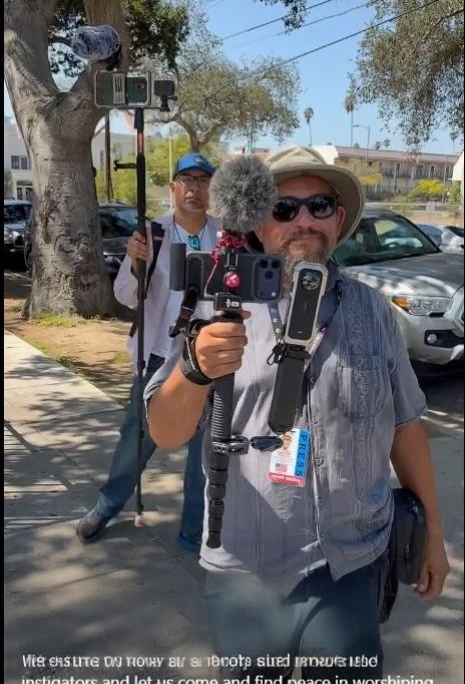
Siguiente paso #817 – 15 de agosto de 2026 – La Fiesta de la Asunción de Santa María de esta semana queda eclipsada por una ola de ruido que distrae de su mensaje central para nosotros. Como quien dio a luz al AMOR, es difícil encontrarla en medio del bullicio. Ella proviene de la tradición de los "Siete Dolores" en la tradición católica romana, y de una iglesia en Gyumri, Armenia, que ha servido tanto a armenios apostólicos como a católicos romanos. El P. Vazken comparte un prefacio de su sermón sobre las siete heridas de María. Pero primero… los nuevos guardianes de la democracia autoproclamados atacan a la iglesia armenia local como un blanco fácil (cf. archivos Epstein, genocidio, etc.). Al competir por el estatus de influencer, pierden la oportunidad de conectar con algo superior. Y más…
Foto: de una publicación en Facebook – Aspirantes a defensores de la libertad se abren paso a la fuerza frente a una iglesia armenia. >
https://epostle.net/wp-content/uploads/2026/08/Copilot_20260815_162455-e1786936973442.png14621024Vazken Movsesianhttps://epostle.net/wp-content/uploads/2022/07/final_logo_large_for_epostle_web-300x189.pngVazken Movsesian2026-08-15 17:09:392026-08-15 17:09:39Ruido alrededor de Santa María
Una costumbre y tradición en la Iglesia Armenia es bendecir las uvas en la Fiesta de la Asunción. Jesús utiliza la metáfora de la vid y los sarmientos para describir su relación con sus seguidores. Profundizaremos más en ese tema la próxima semana, pero por hoy, centrémonos en por qué la bendición de las uvas está relacionada con la Santísima Madre María.
Debido al clima de Armenia, la primera cosecha de uvas estaba lista a mediados de agosto, lo que hacía de la Fiesta de la Asunción un momento conveniente para que los agricultores ofrecieran su primera cosecha a la iglesia como símbolo de gratitud. Esta ofrenda era bendecida por el sacerdote en una oración de acción de gracias por el clima y la tierra fértil. Luego, las uvas se compartían con la comunidad a través de la iglesia.
La primera cosecha no eran las sobras, sino lo mejor de la recolección. Debes ofrecerle a Dios lo mejor de ti: tus bienes, tu trabajo, tu energía, tus talentos; y a través de la Iglesia, estos se distribuyen entre la comunidad. Santa María, quien conoció a Cristo desde el vientre hasta la Resurrección, fue la primera cristiana. En este día, ofrecemos los primeros frutos de nuestro trabajo.
Tu minuto de hoy para el verano.
https://epostle.net/wp-content/uploads/2025/08/Vineyard-762.jpg11251125Vazken Movsesianhttps://epostle.net/wp-content/uploads/2022/07/final_logo_large_for_epostle_web-300x189.pngVazken Movsesian2026-08-15 00:10:252026-08-13 21:19:02¿Por qué conectar las uvas con María?
Dentro de la tradición armenia, la Santísima Madre, Santa María, tiene muchos nombres cuyos significados han inspirado a generación tras generación. Estos nombres descriptivos se han otorgado como nombres propios a las niñas en la tradición armenia. Algunos de ellos son: Srbuhi = la Santa, Lousaper = la Portadora de luz, Tiruhi = la Santa Dama, Makruhi = la Pura, Imastuhi = la Sabia, Geghetzik = Hermosa, Anarat = la Inmaculada... y la lista continúa.
Estos nombres descriptivos resaltan las virtudes de Santa María y, para nosotros, se convierten en faros que guían nuestra vida, con santidad, luz, pureza, sabiduría y belleza.
Pero el nombre más común con el que se le conoce en la Iglesia Armenia es un descriptor y una definición. Es Asdvadzadzin, o la Madre de Dios. Como ocurre con todos los nombres, especialmente con Asdvadzadzin, el énfasis no está en ella, sino en el fruto de su vientre, Jesús.
Tu minuto de hoy para el verano.
https://epostle.net/wp-content/uploads/2026/01/Marys-Acceptance-875.jpg345345Vazken Movsesianhttps://epostle.net/wp-content/uploads/2022/07/final_logo_large_for_epostle_web-300x189.pngVazken Movsesian2026-08-14 00:10:042026-08-11 22:09:24María, el nombre
Esta semana es de preparación para la Fiesta de la Asunción de la Santísima Madre, María. A veces, la historia de Santa María parece abrumadoramente complicada con eventos sobrenaturales, especialmente su relación con José y, posteriormente, el nacimiento virginal de Cristo. Por ello, el mensaje más importante y fundamental de su historia podría pasar desapercibido.
Empecemos desde el principio. Santa María encabeza la lista de los santos porque le dijo "sí" a la petición de Dios de dar a luz a Jesucristo, el Amor Encarnado, la expresión completa y absoluta del Amor. Como santa, no se le adora, sino que sus acciones son un ejemplo a seguir y emular.
La petición que Dios le hizo a Santa María no es diferente a la que te hace a ti y a mí: da a luz a Cristo. Da a luz al amor. Trae el Amor al mundo. Prepárate con oración, ayuno y actos de caridad. Límpiate, purifícate de pensamientos malvados, odio y prejuicios para que el amor fluya de ti libremente. La virginidad simplificada.
Tu minuto de hoy para el verano.
https://epostle.net/wp-content/uploads/2025/08/bringing-love-into-the-world-white-hearts-759-e1754973627451.jpg1125800Vazken Movsesianhttps://epostle.net/wp-content/uploads/2022/07/final_logo_large_for_epostle_web-300x189.pngVazken Movsesian2026-08-13 00:10:452026-08-11 22:03:45Antes de la virginidad
Cuando la legendaria banda de rock, The Beatles, grabó “Let it Be”, la voz de Paul McCartney añadió un elemento muy tierno a los acordes que golpeaba en el piano. “Cuando me encuentro en tiempos de problemas”, cantaba, “la Madre María viene a mí”.
Yo tenía 12 años cuando salió la canción. Era una pieza hermosa y sentimental. Recuerdo haber pensado que incluso él, uno de los Beatles y, por lo tanto, todo el grupo, compartía el lugar tan especial que la Madre María ocupa en nuestras vidas.
Pasaron varios años, quizás décadas, hasta que en una entrevista McCartney compartió que la letra trataba sobre su propia madre, Mary McCartney, quien había fallecido a causa de una enfermedad cuando él era joven. Con esas palabras, él expresaba el anhelo que sentía por su propia madre.
Esta semana comienza la preparación para la Fiesta de la Asunción de Santa María. Todos sentimos un anhelo por la Santísima Madre. Nos prepararemos para la fiesta centrando nuestra atención en ella y en su historia.
Tu minuto de hoy para el verano.
https://epostle.net/wp-content/uploads/2026/08/Mary-on-the-Keys-scaled.jpg15582560Vazken Movsesianhttps://epostle.net/wp-content/uploads/2022/07/final_logo_large_for_epostle_web-300x189.pngVazken Movsesian2026-08-12 00:10:322026-08-11 22:02:00Que así sea, Madre María
Armodoxia para hoy: Más allá de la cuna y la tumba
En este cuarto día de preparación para la festividad que nos espera, nos enfocamos en el lugar singular que ocupa Santa María en la historia de la humanidad.
La festividad que celebramos el domingo se llama la Asunción. Como nos cuenta la Tradición, cuando la Santísima Madre falleció, el apóstol Bartolomé estaba ausente del grupo de apóstoles que asistieron a su funeral. Cuando regresó a Jerusalén, pidió visitar su tumba para presentar sus respetos a la Santa Madre de Bendita Memoria. Al encontrar su tumba vacía, se reveló que ella fue “asunta” al Cielo por Cristo mismo. Por ello, la festividad se llama la Asunción de la Asdvadzadzin.
Los dos términos Asunción y Asdvadzadzin celebran a quien conoció a Jesús antes y después de los marcadores de la “cuna a la tumba”. Santa María conoció a Cristo desde el vientre hasta la Resurrección y hasta su propia Asunción. En palabras de los ángeles, ¡ella es la muy favorecida, el Señor está con ella; bendita tú entre las mujeres! (Lucas 1:28)
Tu minuto de hoy para el verano.
https://epostle.net/wp-content/uploads/2025/08/Utah-761-e1755145355218.jpg8781123Vazken Movsesianhttps://epostle.net/wp-content/uploads/2022/07/final_logo_large_for_epostle_web-300x189.pngVazken Movsesian2025-08-14 00:01:442025-08-13 21:23:21Más allá de la cuna a la tumba
Ahora que ha pasado la fiesta de la Asunción de la Santísima Madre de Dios, Asdvadzadzin, comparto contigo esta fascinante historia que une a todos los cristianos bautizados y confirmados en la Iglesia armenia.
Cuando la Asdvadzadzin falleció, todos los apóstoles, excepto el apóstol Bartolomé, estaban en Jerusalén y asistieron a su servicio funerario. Cuando Bartolomé regresó a Jerusalén y fue informado del fallecimiento de la Madre María, pidió ver los restos benditos una última vez. Cuando abrieron su tumba para cumplir con la petición de Bartolomé, su cuerpo no estaba allí. Ella fue asunta al Cielo por su Hijo. De ahí que la palabra "Asunción" se utilice para describir la entrada de la Asdvadzadzin al Cielo. Es diferente a la Resurrección, que fue un evento singular donde Jesús, por su propio poder, resucitó. En el caso de Santa María, ella fue asunta al Cielo.
A continuación, hay una breve historia apócrifa. Durante la infancia de Jesús, las escrituras nos dicen que ocurrieron muchos eventos y "María guardaba todas estas cosas, meditándolas en su corazón" (Lucas 2:19). Cuando el cordón umbilical de Jesús se desprendió, María lo colocó en un frasco de alabastro y lo guardó consigo a través de los años. Cuando Bartolomé vino a presentar sus respetos a la vida de la Santa Madre, le entregaron el frasco, el cual mantuvo cerca de su corazón.
En la cuarta década d.C., Bartolomé llegó a Armenia para predicar el Evangelio. Fue martirizado en Armenia por su fe y compromiso con Jesucristo. Antes de ser ejecutado, pudo entregar el pequeño frasco de alabastro a los miembros de la Iglesia clandestina en Armenia. El frasco y su contenido, el cordón umbilical de nuestro Señor, fueron guardados secretamente por la Iglesia hasta la conversión de Armenia en el año 301 d.C. por San Gregorio el Iluminador. En ese momento, el frasco fue entregado a Gregorio, quien había ascendido al Trono Apostólico como obispo principal. Gregorio consagró el primer lote de Santo Miuron en ese momento y añadió los restos del cordón umbilical al primer miuron. Este Santo Crisma, que se utiliza para la consagración de los fieles, sacerdotes, obispos y lugares sagrados, se renueva cada siete años. En cada nuevo lote se añade el lote anterior, lo que significa que ¡hay moléculas en el Santo Miuron que provienen de la época de Jesucristo!
Este año habrá una bendición del Santo Miuron. En los próximos episodios compartiremos el misterio del Santo Miuron con nuestros oyentes.
Hoy rezamos el Cántico de María, conocido como el Magníficat, en armenio, Medzastzudzeh. Mi alma magnifica al Señor, y mi espíritu se regocija en Dios mi Salvador, porque ha mirado la humilde condición de su sierva; porque he aquí, desde ahora todas las generaciones me llamarán bienaventurada. Amén.
https://epostle.net/wp-content/uploads/2024/08/IMG_9877-scaled.jpeg18182560Vazken Movsesianhttps://epostle.net/wp-content/uploads/2022/07/final_logo_large_for_epostle_web-300x189.pngVazken Movsesian2024-08-19 00:01:162024-08-18 22:15:07Frasco de alabastro con el cordón umbilical