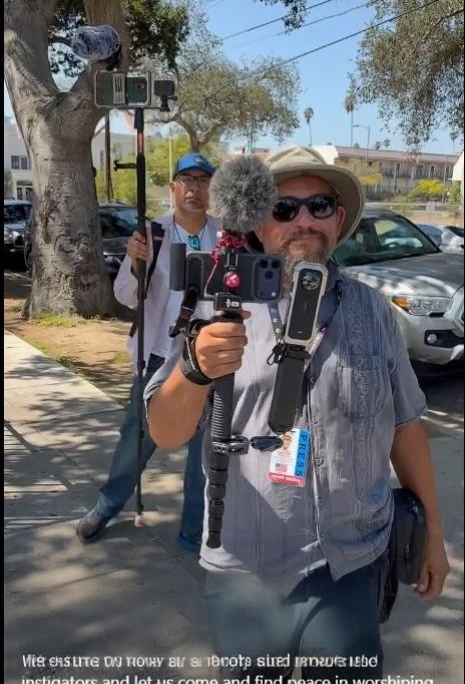
Siguiente paso #817 – 15 de agosto de 2026 – La Fiesta de la Asunción de Santa María de esta semana queda eclipsada por una ola de ruido que distrae de su mensaje central para nosotros. Como quien dio a luz al AMOR, es difícil encontrarla en medio del bullicio. Ella proviene de la tradición de los "Siete Dolores" en la tradición católica romana, y de una iglesia en Gyumri, Armenia, que ha servido tanto a armenios apostólicos como a católicos romanos. El P. Vazken comparte un prefacio de su sermón sobre las siete heridas de María. Pero primero… los nuevos guardianes de la democracia autoproclamados atacan a la iglesia armenia local como un blanco fácil (cf. archivos Epstein, genocidio, etc.). Al competir por el estatus de influencer, pierden la oportunidad de conectar con algo superior. Y más…
Foto: de una publicación en Facebook – Aspirantes a defensores de la libertad se abren paso a la fuerza frente a una iglesia armenia. >
https://epostle.net/wp-content/uploads/2026/08/Copilot_20260815_162455-e1786936973442.png14621024Vazken Movsesianhttps://epostle.net/wp-content/uploads/2022/07/final_logo_large_for_epostle_web-300x189.pngVazken Movsesian2026-08-15 17:09:392026-08-15 17:09:39Ruido alrededor de Santa María
Una costumbre y tradición en la Iglesia Armenia es bendecir las uvas en la Fiesta de la Asunción. Jesús utiliza la metáfora de la vid y los sarmientos para describir su relación con sus seguidores. Profundizaremos más en ese tema la próxima semana, pero por hoy, centrémonos en por qué la bendición de las uvas está relacionada con la Santísima Madre María.
Debido al clima de Armenia, la primera cosecha de uvas estaba lista a mediados de agosto, lo que hacía de la Fiesta de la Asunción un momento conveniente para que los agricultores ofrecieran su primera cosecha a la iglesia como símbolo de gratitud. Esta ofrenda era bendecida por el sacerdote en una oración de acción de gracias por el clima y la tierra fértil. Luego, las uvas se compartían con la comunidad a través de la iglesia.
La primera cosecha no eran las sobras, sino lo mejor de la recolección. Debes ofrecerle a Dios lo mejor de ti: tus bienes, tu trabajo, tu energía, tus talentos; y a través de la Iglesia, estos se distribuyen entre la comunidad. Santa María, quien conoció a Cristo desde el vientre hasta la Resurrección, fue la primera cristiana. En este día, ofrecemos los primeros frutos de nuestro trabajo.
Tu minuto de hoy para el verano.
https://epostle.net/wp-content/uploads/2025/08/Vineyard-762.jpg11251125Vazken Movsesianhttps://epostle.net/wp-content/uploads/2022/07/final_logo_large_for_epostle_web-300x189.pngVazken Movsesian2026-08-15 00:10:252026-08-13 21:19:02¿Por qué conectar las uvas con María?
Dentro de la tradición armenia, la Santísima Madre, Santa María, tiene muchos nombres cuyos significados han inspirado a generación tras generación. Estos nombres descriptivos se han otorgado como nombres propios a las niñas en la tradición armenia. Algunos de ellos son: Srbuhi = la Santa, Lousaper = la Portadora de luz, Tiruhi = la Santa Dama, Makruhi = la Pura, Imastuhi = la Sabia, Geghetzik = Hermosa, Anarat = la Inmaculada... y la lista continúa.
Estos nombres descriptivos resaltan las virtudes de Santa María y, para nosotros, se convierten en faros que guían nuestra vida, con santidad, luz, pureza, sabiduría y belleza.
Pero el nombre más común con el que se le conoce en la Iglesia Armenia es un descriptor y una definición. Es Asdvadzadzin, o la Madre de Dios. Como ocurre con todos los nombres, especialmente con Asdvadzadzin, el énfasis no está en ella, sino en el fruto de su vientre, Jesús.
Tu minuto de hoy para el verano.
https://epostle.net/wp-content/uploads/2026/01/Marys-Acceptance-875.jpg345345Vazken Movsesianhttps://epostle.net/wp-content/uploads/2022/07/final_logo_large_for_epostle_web-300x189.pngVazken Movsesian2026-08-14 00:10:042026-08-11 22:09:24María, el nombre
Cuando la legendaria banda de rock, The Beatles, grabó “Let it Be”, la voz de Paul McCartney añadió un elemento muy tierno a los acordes que golpeaba en el piano. “Cuando me encuentro en tiempos de problemas”, cantaba, “la Madre María viene a mí”.
Yo tenía 12 años cuando salió la canción. Era una pieza hermosa y sentimental. Recuerdo haber pensado que incluso él, uno de los Beatles y, por lo tanto, todo el grupo, compartía el lugar tan especial que la Madre María ocupa en nuestras vidas.
Pasaron varios años, quizás décadas, hasta que en una entrevista McCartney compartió que la letra trataba sobre su propia madre, Mary McCartney, quien había fallecido a causa de una enfermedad cuando él era joven. Con esas palabras, él expresaba el anhelo que sentía por su propia madre.
Esta semana comienza la preparación para la Fiesta de la Asunción de Santa María. Todos sentimos un anhelo por la Santísima Madre. Nos prepararemos para la fiesta centrando nuestra atención en ella y en su historia.
Tu minuto de hoy para el verano.
https://epostle.net/wp-content/uploads/2026/08/Mary-on-the-Keys-scaled.jpg15582560Vazken Movsesianhttps://epostle.net/wp-content/uploads/2022/07/final_logo_large_for_epostle_web-300x189.pngVazken Movsesian2026-08-12 00:10:322026-08-11 22:02:00Que así sea, Madre María
María, la madre de Jesús, es la primera entre todos los santos de la Iglesia. En la Iglesia armenia se le conoce como Asdvadzadzin (Portadora de Dios) o Asdvadzamayr (Madre de Dios). Estos títulos nos dicen más sobre la primacía de Jesucristo en nuestra fe que sobre María, pero señalan la reverencia con la que nos acercamos a la Santísima Madre.
Única en la historia cristiana, María es elegida por Dios para llevar al Niño Jesús. Encontramos a María en las Escrituras en la Concepción, el Nacimiento, en la adolescencia de Jesús y finalmente en la Crucifixión, al pie de la Cruz, observando cómo su hijo es golpeado, torturado y asesinado por la misma humanidad a la que vino a salvar. Según las Escrituras, María es la única testigo de la vida de Jesús desde la "cuna hasta la tumba". Aunque es posible que José viviera tanto tiempo, no hay detalles de su vida más allá de la historia de Jesús a los 12 años (Lucas 2:41-49).
Aunque se ha dicho y escrito mucho a lo largo de los siglos sobre la Madre María, su historia es sencilla y tiene lugar en los dos primeros capítulos de los Evangelios de San Mateo y San Lucas. Más aún, la sencillez de la historia de María se puede resumir en una palabra: ¡Sí! María, la Santa Madre de Dios, es venerada y distinguida de todos los santos debido a un sencillo y valiente "sí" que dio a la invitación de Dios.
La historia de ese «sí» no puede expresarse con mayor elocuencia que en el Evangelio de San Lucas (capítulo 1), cuando un ángel le revela que concebirá un hijo, el «Hijo del Altísimo». María le responde al ángel: «¿Cómo puede ser esto, si no conozco varón?».
El ángel le respondió: «El Espíritu Santo vendrá sobre ti y el poder del Altísimo te cubrirá con su sombra...». Entonces se escucha la respuesta positiva de María: «¡Aquí tienes a la esclava del Señor! Que se cumpla en mí según tu palabra». Y el ángel se retiró de su presencia.
El "sí" de María al ángel es sencillo, pero poderoso. Parece haber fluido de sus labios, pero requirió el valor de toda una vida para pronunciarlo. Ten en cuenta que hablamos de hace 2000 años, en Oriente Medio. Esta historia no ocurre en el siglo XXI en EE. UU. La sentencia por un embarazo fuera del matrimonio era la muerte, sin mencionar la humillación, el deshonor y el estigma que suponía para tu familia. La presión, tanto real como psicológica, para decir "no" era enorme, por lo que el valor de ese "sí" era incalculable. Y así fue como su "sí" cambió el curso de la historia humana, pues de ella nació un niño que es el Hijo de Dios.
Ahora, invita la acción de María a tu siglo XXI. Cada día y en cada momento se nos pide que traigamos a Cristo a este mundo. Cristo es la encarnación del amor. Al amar, cuidar y ser empático con las necesidades de los demás, estamos trayendo a Cristo a este mundo, estamos diciéndole «sí» a Dios. Es así de sencillo. Y el nivel de dificultad para hacerlo depende de nosotros. La armodoxia es el testimonio de un pueblo que ha elegido llevar a Cristo al mundo. No ha sido fácil, pero la recompensa ha sido grande. Cada altar de la Iglesia armenia lleva la imagen de Santa María presentando y ofreciendo a Jesucristo, el Amor, al mundo. Cada altar es un recordatorio de que este «sí» cambia la historia de la humanidad.
Oramos: «Señor Jesucristo, tu santa madre dijo sí a la invitación de llevarte y presentarte al mundo. Viniste a un mundo de oscuridad y trajiste luz, a un mundo de odio y predicaste el amor. Hoy digo sí, para llevar luz y amor a un mundo que sufre. Brilla en mi vida, guíame siempre por los caminos de tu amor. Amén».
https://epostle.net/wp-content/uploads/2026/01/Marys-Acceptance-875.jpg345345Vazken Movsesianhttps://epostle.net/wp-content/uploads/2022/07/final_logo_large_for_epostle_web-300x189.pngVazken Movsesian2026-01-14 00:01:012026-01-13 20:48:09Aceptando con amor
Armodoxia para hoy: Más allá de la cuna y la tumba
En este cuarto día de preparación para la festividad que nos espera, nos enfocamos en el lugar singular que ocupa Santa María en la historia de la humanidad.
La festividad que celebramos el domingo se llama la Asunción. Como nos cuenta la Tradición, cuando la Santísima Madre falleció, el apóstol Bartolomé estaba ausente del grupo de apóstoles que asistieron a su funeral. Cuando regresó a Jerusalén, pidió visitar su tumba para presentar sus respetos a la Santa Madre de Bendita Memoria. Al encontrar su tumba vacía, se reveló que ella fue “asunta” al Cielo por Cristo mismo. Por ello, la festividad se llama la Asunción de la Asdvadzadzin.
Los dos términos Asunción y Asdvadzadzin celebran a quien conoció a Jesús antes y después de los marcadores de la “cuna a la tumba”. Santa María conoció a Cristo desde el vientre hasta la Resurrección y hasta su propia Asunción. En palabras de los ángeles, ¡ella es la muy favorecida, el Señor está con ella; bendita tú entre las mujeres! (Lucas 1:28)
Tu minuto de hoy para el verano.
https://epostle.net/wp-content/uploads/2025/08/Utah-761-e1755145355218.jpg8781123Vazken Movsesianhttps://epostle.net/wp-content/uploads/2022/07/final_logo_large_for_epostle_web-300x189.pngVazken Movsesian2025-08-14 00:01:442025-08-13 21:23:21Más allá de la cuna a la tumba
Dentro de la tradición armenia, la Santísima Madre, Santa María, tiene muchos nombres cuyos significados han inspirado a generación tras generación. Estos nombres descriptivos se han otorgado como nombres propios a las niñas en la tradición armenia. Algunos de ellos son: Srbuhi = la Santa, Lousaper = la Portadora de luz, Tiruhi = la Santa Dama, Makruhi = la Pura, Imastuhi = la Sabia, Geghetzik = Hermosa, Anarat = la Inmaculada... y la lista continúa.
Estos nombres descriptivos resaltan las virtudes de Santa María y, para nosotros, se convierten en faros que guían nuestra vida, con santidad, luz, pureza, sabiduría y belleza.
Pero el nombre más común con el que se le conoce en la Iglesia Armenia es un descriptor y una definición. Es Asdvadzadzin, o la Madre de Dios. Como ocurre con todos los nombres, especialmente con Asdvadzadzin, el énfasis no está en ella, sino en el fruto de su vientre, Jesús.
Tu minuto de hoy para el verano.
https://epostle.net/wp-content/uploads/2025/08/MJ-Madonna-1-e1755063691530.jpg836973Vazken Movsesianhttps://epostle.net/wp-content/uploads/2022/07/final_logo_large_for_epostle_web-300x189.pngVazken Movsesian2025-08-13 00:01:292025-08-13 14:55:56¿Qué hay en un nombre?
Cuando la legendaria banda de rock, The Beatles, grabó “Let it Be”, la voz de Paul McCartney añadió un elemento muy tierno a los acordes que golpeaba en el piano. “Cuando me encuentro en tiempos de problemas”, cantaba, “la Madre María viene a mí”.
Yo tenía 12 años cuando salió la canción. Era una pieza hermosa y sentimental. Recuerdo haber pensado que incluso él, uno de los Beatles y, por lo tanto, todo el grupo, compartía el lugar tan especial que la Madre María ocupa en nuestras vidas.
Pasaron varios años, quizás décadas, hasta que en una entrevista McCartney compartió que la letra trataba sobre su propia madre, Mary McCartney, quien había fallecido a causa de una enfermedad cuando él era joven. Con esas palabras, él expresaba el anhelo que sentía por su propia madre.
Esta semana comienza la preparación para la Fiesta de la Asunción de Santa María. Todos sentimos un anhelo por la Santísima Madre. Nos prepararemos para la fiesta centrando nuestra atención en ella y en su historia.
Tu minuto de hoy para el verano.
https://epostle.net/wp-content/uploads/2025/08/758-Longing-for-Mary-1.jpg11251125Vazken Movsesianhttps://epostle.net/wp-content/uploads/2022/07/final_logo_large_for_epostle_web-300x189.pngVazken Movsesian2025-08-11 00:01:402025-08-11 11:47:07Hágase, María
Armodoxy para hoy: Muiron, del pesebre a la resurrección
Armenia fue bendecida con la visita de dos de los apóstoles de Cristo, san Tadeo y san Bartolomé. Llegaron a Armenia para evangelizar el Evangelio con tres o cuatro años de diferencia, en los años 41 y 45 d. C., respectivamente. Para ponerlo en contexto, ¡llegaron a Armenia menos de 10 años después de los eventos que cambiaron la vida y la historia de la Crucifixión y la Resurrección, de los cuales ambos fueron testigos oculares! Ayer compartí la historia de la participación de Tadeo en la formación del Santo Muiron. La historia de san Bartolomé se considera apócrifa, pero inspiradora, y es una conexión más con Jesús y el Muiron.
Cuando la Santísima Madre, la Asdvadzadzin, falleció, todos los apóstoles asistieron a su funeral excepto Bartolomé. Cuando Bartolomé regresó a Jerusalén y fue informado del fallecimiento de la Madre María, pidió ver los restos benditos una última vez. Al abrir su tumba, su cuerpo no estaba allí. Ella fue asumida al Cielo por su Hijo.
Durante la infancia de Jesús, las escrituras nos dicen que ocurrieron muchos eventos y “María guardaba todas estas cosas, meditándolas en su corazón” (Lucas 2:19). Cuando se le cayó el cordón umbilical a Jesús, María lo guardó en una caja de alabastro. Cuando Bartolomé vino a presentar sus respetos a la vida de la Santa Madre, le entregaron la caja, la cual mantuvo cerca de su corazón.
Bartolomé trajo esta caja consigo a Armenia. Allí fue martirizado por su fe y compromiso con Jesucristo. Antes de ser ejecutado, pudo entregar la pequeña caja de alabastro a los miembros de la Iglesia clandestina en Armenia. La caja y su contenido —el cordón umbilical de nuestro Señor— fueron guardados secretamente por la Iglesia hasta la conversión de Armenia en el año 301 d. C. por san Gregorio el Iluminador. En ese momento, la caja fue entregada a Gregorio, quien había ascendido al Trono Apostólico como obispo principal. Gregorio bendijo el primer lote de Santo Muiron en aquel entonces y añadió el contenido de la caja de alabastro al aceite, junto con el aceite que Jesús había enviado con Tadeo. Debido a que en cada nuevo lote se añade el anterior, hay moléculas de la época de Jesucristo, con su ADN proporcionando una conexión física directa con el Señor, desde el pesebre hasta la Resurrección. De hecho, el Muiron es lo que nos une en una sola familia: la familia de Cristo, o cristianos. ¿Es de extrañar que los nombres armenios terminen con el sufijo “ian”? El “ian” se refiere a “la familia de…”. En este caso, un cristian es un miembro de la familia de Cristo.
Durante la bendición del Muiron, en las oraciones ofrecidas por el Catolicós, él se refiere a la mezcla como yiugh, es decir, “aceite”, hasta el momento en que se añade el lote anterior, punto en el cual se le denomina correctamente como Santo Muiron.
Oramos hoy: Señor Jesucristo, mantén siempre presente en mi mente tus preciosas y santas palabras: “Mi familia son aquellos que escuchan la palabra de Dios y la cumplen” (Lucas 8:21). Por la intercesión de tus amados discípulos Bartolomé y Tadeo, te pido que fortalezcas en mí las virtudes de la Fe, la Esperanza y el Amor para que sea digno de ser llamado cristiano. Amén.
https://epostle.net/wp-content/uploads/2024/09/33340c60-5f20-417b-87ce-ab54ef2bd983.jpeg10241024Vazken Movsesianhttps://epostle.net/wp-content/uploads/2022/07/final_logo_large_for_epostle_web-300x189.pngVazken Movsesian2024-09-18 00:01:162024-09-17 22:58:26Muiron: del pesebre a la resurrección
Armodoxy para hoy: Santa María y la conexión con la uva
Mi abuela era una de cuatro hermanas. Ella era la mayor. Su nombre era Marie. Los nombres de sus hermanas eran Lousaper (la que lleva la luz), Srpuhi (la Santa) y Diruhi (la Dama, como el femenino de Señor). Las cuatro hermanas tenían nombres que describían a Santa María. Ninguna otra santa es tan venerada como Santa María por los armenios, y el hecho de que en una sola familia cuatro hijas lleven el nombre de la bendita Madre es un testimonio del respeto y la devoción que ella ha tenido entre el pueblo.
A Santa María se le conoce como Asdvadzadzin, que significa la portadora de Dios, en referencia a su posición única al dar a luz a Jesús, el Hijo de Dios. Si bien las iglesias tradicionales celebran la Asunción de Santa María, solo la Iglesia Armenia tiene la tradición única de bendecir las uvas en ese día.
Mi abuela recordaba cómo los primeros frutos de la cosecha, los mejores, eran llevados a la iglesia ese día para una bendición especial. La ofrenda de los frutos era un gesto de gratitud, agradeciendo a Dios por las bendiciones que Él ha otorgado al pueblo, la templanza del clima, la fertilidad de la tierra y la abundancia de sol que produce las uvas. De hecho, ella añadía que los habitantes del pueblo no comían el fruto de la vid hasta que fueran bendecidos en este día.
Una de las razones que se dan para la conexión entre Santa María y las uvas es que las uvas pueden propagarse sin semilla, aludiendo al nacimiento virginal. Pero la mejor razón proviene de Cristo mismo, quien establece esta analogía: “Yo soy la vid verdadera, y mi Padre es el labrador. Todo pámpano que en mí no lleva fruto, lo quitará; y todo aquel que lleva fruto, lo limpiará, para que lleve más fruto. Permaneced en mí, y yo en vosotros. Como el pámpano no puede llevar fruto por sí mismo, si no permanece en la vid, así tampoco vosotros, si no permanecéis en mí”. (Juan 15:1-4)
La vida de un cristiano depende completamente de una conexión inquebrantable con Cristo mismo. Jesús presenta la imagen de la vid, las ramas y el fruto. Y quien actúa es Dios Padre, quien poda las ramas. Así como el suelo, el clima y la luz solar son necesarios para obtener uvas deliciosas y jugosas, nuestra conexión con Jesús, la Vid, es necesaria para que nuestras vidas sean sabrosas y hermosas.
El servicio de bendición de las uvas es un llamado a la productividad. Dios nos da un mundo y nosotros somos los administradores de esta hermosa vida. Armodoxy atestigua que el cristianismo no es un escape de este mundo hacia otro, sino la comprensión de que en este mundo nosotros —tú y yo— somos los agentes para hacer que la voluntad de Dios se haga en la tierra como en el cielo.
De la oración de bendición de las uvas que se ofrece en la fiesta de la Asunción: Bendice, oh Señor, las uvas. Que podamos disfrutar de lo que Tú has creado en este mundo y concédenos ser dignos de comer y beber contigo de la abundancia de Tu vid más fructífera en la mesa del Reino de Tu Padre, de acuerdo con la justa promesa que hiciste, para honor y gloria de Tu Trinidad coexistente, el Padre, el Hijo y el Espíritu Santísimo, a quien se debe gloria, poder y honor, ahora y siempre. Amén.
Y esto no termina aquí…
https://epostle.net/wp-content/uploads/2024/08/Grape-Glass.jpeg22381593Vazken Movsesianhttps://epostle.net/wp-content/uploads/2022/07/final_logo_large_for_epostle_web-300x189.pngVazken Movsesian2024-08-14 00:01:182024-08-13 21:22:11Santa María y las uvas