La orilla siempre es más segura que las aguas que llevan la barca más allá del horizonte, a menos que, por supuesto, la costa sea susceptible a la erosión, a las mareas o a las disputas de los hombres en la guerra. Es cierto que existen condiciones seguras y peligrosas vinculadas a cada decisión que tomas.
El cristiano está llamado a una vida de productividad, usando sus talentos al máximo de sus capacidades. Este camino hacia adelante puede verse frenado por temores instigados por experiencias pasadas. El teólogo y filósofo Søren Kierkegaard escribe: “La vida debe entenderse hacia atrás. Pero debe vivirse hacia adelante”.
El equilibrio amable entre aprender del pasado y vivir el presente es el mensaje de Jesús: “Así que, no os afanéis por el día de mañana, porque el día de mañana traerá su afán. Basta a cada día su propio mal” (Mateo 6:34). Un minuto de hoy en Summertime.
—
Oramos con el Libro de Horas armenio, la oración de la mañana: Te damos gracias, oh Señor nuestro Dios, que nos concediste un sueño reparador en paz. Y al despertar, nos hiciste adorar Tu nombre santo, glorificado y temible. Concédenos pasar el resto del día en paz. Viviendo nuestras vidas con una conducta pura en este mundo, que podamos alcanzar el puerto pacífico en la vida eterna. Amén.
https://epostle.net/wp-content/uploads/2026/06/Copilot_20260610_214432.png15361024Vazken Movsesianhttps://epostle.net/wp-content/uploads/2022/07/final_logo_large_for_epostle_web-300x189.pngVazken Movsesian2026-06-11 00:10:052026-06-10 21:48:23Mira hacia ambos lados
Armodoxia para hoy: Otra vuelta alrededor de las palmas
El domingo entre la Fiesta de la Ascensión (40 días después de Pascua) y el domingo de Pentecostés (50 días después de Pascua) se conoce como Segundo Domingo de Ramos en la Iglesia Armenia.
La designación de Segundo Domingo de Ramos es exclusiva de la Iglesia Armenia y se le llama así por varias razones. Tras la Fiesta de la Resurrección, los cuatro Evangelios se leen en la Iglesia en orden hasta el día de Pentecostés (Lucas por la mañana, Juan al mediodía, Mateo durante la hora de la tarde y Marcos por la noche). Las narraciones del Domingo de Ramos coinciden con este domingo entre la Ascensión y Pentecostés, de ahí el nombre de "Segundo Domingo de Ramos". Y si haces la cuenta, este es el séptimo domingo de Pascua.
Pero hay más detrás del apodo de Segundo Domingo de Ramos. El Domingo de Ramos es cuando Jesús entró triunfalmente en Jerusalén. Los cuatro Evangelios registran este evento. En la Ascensión, Jesús entra en la Jerusalén eterna. Los apóstoles son testigos de cómo Jesús asciende al cielo, tal como leemos en el Libro de los Hechos, con la promesa de que estará con nosotros hasta el fin de los tiempos.
Según la Tradición de la Iglesia, mientras San Gregorio el Iluminador (siglo IV) estaba encarcelado en la mazmorra llamada Khor Virab, un ángel lo visitaba a diario para llevarle alimento y consuelo espiritual. El domingo siguiente a la Ascensión, el ángel no aparece. Al día siguiente, Gregorio le pregunta al ángel por su paradero. El ángel responde que los ángeles celebran en el cielo la fiesta del regreso de Jesús, quien toma su lugar a la diestra del Padre.
La entrada de Jesús en la Jerusalén eterna es un recordatorio para todos nosotros de que la vida es mucho más que las realidades tangibles que consumen nuestro tiempo y energía. Hay un lado espiritual que necesita ser nutrido.
Durante la misión Artemis II, que llevó a los hombres de vuelta a la luna después de más de medio siglo, los astronautas de la NASA fueron testigos de lugares y fenómenos visuales que no podían expresarse con palabras. El astronauta de la NASA y comandante de la misión Artemis II, Reid Wiseman, en una entrevista posterior a la misión, dijo: "No soy realmente una persona religiosa, pero simplemente no tenía otra forma de explicar nada, así que pedí que el capellán del barco de la Marina (este es el barco que recogió a los astronautas después del amerizaje) viniera a visitarnos por un minuto". Wiseman admitió: "Cuando ese hombre entró... vi la Cruz en su cuello y me eché a llorar".
El nacimiento de un niño, enamorarse, perder a un ser querido, provocan derroches de emociones similares. Existen sentidos más allá de los cinco físicos que, de vez en cuando, si bajamos la guardia y permitimos que el espíritu se mueva con nosotros, pueden y serán experimentados. La Iglesia Armenia, mucho antes de la exploración espacial (intenta dos milenios antes), señaló esas expresiones ultrasensoriales en su teología al referirse al misterio, Khorhourt khorin anhas anuzgisbn = Misterio profundo, inescrutable, sin principio... (De la Divina Liturgia de la Iglesia Armenia)
La fiesta del Segundo Domingo de Ramos nos recuerda que hay más en la vida que lo tangible y lo físico. Oramos: Señor, abre mis sentidos de par en par a los eventos y expresiones que me rodean, para que pueda ser partícipe de todas las maravillas que nos bendices en este mundo. Amén.
https://epostle.net/wp-content/uploads/2026/05/Around-the-Palms-Again-Artemis-ii.jpg375375Vazken Movsesianhttps://epostle.net/wp-content/uploads/2022/07/final_logo_large_for_epostle_web-300x189.pngVazken Movsesian2026-05-19 00:10:112026-05-18 21:44:38Otra vuelta alrededor de las palmas
Cada domingo durante la temporada de Cuaresma tiene un nombre único. Hoy se conoce como el Domingo del Hijo Pródigo. En consecuencia, la lección del día proviene del Evangelio de San Lucas, capítulo 15, donde Jesús enseña mediante una parábola, comúnmente conocida como la historia del hijo pródigo.
Quizá si no nos hubiera llegado nada más de la época de Jesús que esta única parábola, sería suficiente para explicar nuestra relación con Dios. Es una historia de reconciliación que expresa el amor incondicional que Dios nos tiene y que, por lo tanto, nos exige a nosotros.
La historia del hijo pródigo se desarrolla así: un hombre tiene dos hijos. El menor pide y recibe su herencia. Toma su parte de los bienes de su padre y la malgasta en una vida desenfrenada. Mientras tiene dinero, es popular y tiene muchos amigos. Pero cuando se le acaba el dinero, también se le acaban los amigos. Sin dinero, sin fiestas, sin un estilo de vida extravagante y sin amigos, sale a buscar trabajo. Pero no sirve de nada. No logra ganar lo suficiente para sobrevivir.
Una noche, cuando se encuentra realmente abatido, ve a unos cerdos alimentándose y llega a considerar comer la comida de los animales debido a su gran hambre. Es en ese momento cuando recobra el sentido. Recuerda el hogar de su padre y piensa que los siervos de su padre viven mejor que él. Esa misma noche, toma la decisión de regresar a casa, con su padre, para pedirle perdón. Incluso planea pedirle que lo acepte como a uno de sus siervos.
Ahora bien, mientras el hijo regresa a casa, su padre lo ve en el camino. El padre corre hacia él, lo abraza y lo besa. Ni siquiera le da a su hijo la oportunidad de hablar ni de explicar sus actos mientras estuvo fuera de casa. Entonces, el padre ordena a sus siervos que se acerquen, le traigan la mejor ropa y le pongan el anillo de autoridad en la mano. ¡Luego ordena una celebración! Se sacrifica el becerro más gordo para esta fiesta.
La historia del hijo pródigo no termina aquí. Recuerda que tenía un hermano mayor. Este hermano mayor estaba trabajando en el campo y escuchó el sonido de la música y el baile. No entendía lo que pasaba y protestó ante su padre. Le dijo: “¡Mira! Todos estos años te he servido como un esclavo y nunca he desobedecido tus órdenes. Sin embargo, nunca me has dado ni siquiera un cabrito para que yo pudiera celebrar con mis amigos.¡Pero cuando este hijo tuyo, que ha malgastado tus bienes con prostitutas, regresa a casa, matas para él el becerro engordado!”. Simplemente no podía entender la injusticia de la vida. Él (el hermano mayor) había hecho todo bien y el hermano menor había desperdiciado su herencia. “¿Dónde está la justicia?”, exigió. ¿Por qué se recompensa al que hizo lo malo mientras el que hizo lo bueno sigue trabajando y esforzándose?
El padre, con compasión y comprensión, le explica al hermano mayor: “Tú siempre estás conmigo y todo lo que tengo es tuyo. Pero teníamos que celebrar y alegrarnos, porque este hermano tuyo estaba muerto y ha vuelto a vivir; estaba perdido y ha sido encontrado”.
Esta es la historia del hijo pródigo. Léela en Lucas 15. Analizaremos las diversas dimensiones de este relato en los próximos días. Hoy te dejo una tarea: ¿Cuál fue el pecado del hijo pródigo? ¿Que viviera con prostitutas? ¿Que estuviera consumido por el materialismo? Reflexiona sobre ello y continuaremos mañana.
Te dejo esta oración de San Nerses Shnorhali: Padre celestial, Dios verdadero, que enviaste a tu Hijo amado a buscar a la oveja perdida. He pecado contra el cielo y ante ti. Recíbeme como al hijo pródigo y vísteme con el ropaje de la inocencia, del cual fui privado por el pecado. Ten misericordia de tus criaturas y de mí, un gran pecador. Amén (24/3)
https://epostle.net/wp-content/uploads/2025/03/cover-919.jpg11251125Vazken Movsesianhttps://epostle.net/wp-content/uploads/2022/07/final_logo_large_for_epostle_web-300x189.pngVazken Movsesian2026-03-02 00:01:442026-03-02 11:15:52El pecado del pródigo
La tercera persona en las narrativas de la Natividad es San Juan Bautista. En la Iglesia Armenia se le celebra como aquel que bautizó a Jesús (=M’grdich) y como el precursor (=nakha-garabed). Aproximadamente una semana después de la Teofanía, la Iglesia Armenia celebra el nacimiento de San Juan Bautista y Precursor de Jesucristo.
“Juan el Bautista vino predicando en el desierto de Judea”, escribe el evangelista San Mateo (capítulo 3). El mensaje de Juan era simplemente: “¡Arrepentíos, porque el reino de los cielos se ha acercado!”. Porque este es de quien habló el profeta Isaías al decir: “La voz de uno que clama en el desierto: ‘Preparad el camino del Señor; enderezad sus sendas’”.
El precursor prepara el camino para quien está por venir; así, Juan el Bautista preparaba activamente a la gente para la Revolución que pronto llegaría, es decir, para Jesucristo. Uso la palabra “Revolución” intencionalmente para llamar la atención sobre la singularidad y la novedad del mensaje de Jesús. Estaba a punto de hacer estallar a la sociedad y todas las convenciones de la comunidad religiosa. Si no fuera revolucionario, no habría necesidad de un precursor. No hay necesidad de preparar a la gente para mantener el statu quo.
El evangelista describe además la apariencia de Juan como alguien “vestido de pelo de camello, con un cinturón de cuero alrededor de su cintura; y su comida eran langostas y miel silvestre”. Es importante notar que esta es una de las raras ocasiones en los Evangelios en las que se describe la apariencia de alguien. Juan era comparado con el profeta Elías, quien era “un hombre velludo que llevaba un cinturón de cuero alrededor de su cintura” (2 Reyes 1:8). Según la tradición, Elías fue un precursor de la venida del Señor (ver Malaquías 4:5) y la conexión entre Juan y Elías se establece en varias instancias en el Nuevo Testamento.
Juan el Bautista fue el primero en reconocer a Jesús, aun estando en el vientre materno. Su madre Isabel era pariente de María, la madre de Jesús. Cuando las dos primas embarazadas se encontraron, Juan “saltó en el vientre de su madre” (Lucas 1:41), convirtiéndose así en el primero en reconocer a Jesús, aun estando in utero.
Esta es nuestra lección del Precursor Juan: él sabía dónde estaba parado en el proceso salvífico. Aceptaba plenamente su posición como precursor del Señor. En términos actuales, él sabía que era el acto de apertura del evento principal. No intentó eclipsar a Jesús; al contrario, se hizo a un lado y dijo: “Un hombre no puede recibir nada si no le es dado del cielo. Vosotros mismos me sois testigos de que dije: ‘Yo no soy el Cristo’, sino: ‘He sido enviado delante de Él’. El que tiene a la novia es el novio; pero el amigo del novio, que está a su lado y le oye, se regocija grandemente por la voz del novio. Por tanto, este gozo mío se ha cumplido. Es necesario que Él crezca, pero que yo disminuya” (Lucas 1).
Oremos: “Señor Dios nuestro, Jesucristo, que viniste al río Jordán para ser bautizado por Juan. Que mi alma sea humillada mientras permanezco en tu presencia. Que encuentre mi llamado en tu servicio. Que el ejemplo de Juan el Precursor me recuerde buscar siempre la Gloria de Dios y no la mía. Amén.”
https://epostle.net/wp-content/uploads/2026/01/Forunner.jpg345345Vazken Movsesianhttps://epostle.net/wp-content/uploads/2022/07/final_logo_large_for_epostle_web-300x189.pngVazken Movsesian2026-01-15 00:01:262026-01-14 21:23:24Juan el Precursor: Los primeros pasos de la revolución
María, la madre de Jesús, es la primera entre todos los santos de la Iglesia. En la Iglesia armenia se le conoce como Asdvadzadzin (Portadora de Dios) o Asdvadzamayr (Madre de Dios). Estos títulos nos dicen más sobre la primacía de Jesucristo en nuestra fe que sobre María, pero señalan la reverencia con la que nos acercamos a la Santísima Madre.
Única en la historia cristiana, María es elegida por Dios para llevar al Niño Jesús. Encontramos a María en las Escrituras en la Concepción, el Nacimiento, en la adolescencia de Jesús y finalmente en la Crucifixión, al pie de la Cruz, observando cómo su hijo es golpeado, torturado y asesinado por la misma humanidad a la que vino a salvar. Según las Escrituras, María es la única testigo de la vida de Jesús desde la "cuna hasta la tumba". Aunque es posible que José viviera tanto tiempo, no hay detalles de su vida más allá de la historia de Jesús a los 12 años (Lucas 2:41-49).
Aunque se ha dicho y escrito mucho a lo largo de los siglos sobre la Madre María, su historia es sencilla y tiene lugar en los dos primeros capítulos de los Evangelios de San Mateo y San Lucas. Más aún, la sencillez de la historia de María se puede resumir en una palabra: ¡Sí! María, la Santa Madre de Dios, es venerada y distinguida de todos los santos debido a un sencillo y valiente "sí" que dio a la invitación de Dios.
La historia de ese «sí» no puede expresarse con mayor elocuencia que en el Evangelio de San Lucas (capítulo 1), cuando un ángel le revela que concebirá un hijo, el «Hijo del Altísimo». María le responde al ángel: «¿Cómo puede ser esto, si no conozco varón?».
El ángel le respondió: «El Espíritu Santo vendrá sobre ti y el poder del Altísimo te cubrirá con su sombra...». Entonces se escucha la respuesta positiva de María: «¡Aquí tienes a la esclava del Señor! Que se cumpla en mí según tu palabra». Y el ángel se retiró de su presencia.
El "sí" de María al ángel es sencillo, pero poderoso. Parece haber fluido de sus labios, pero requirió el valor de toda una vida para pronunciarlo. Ten en cuenta que hablamos de hace 2000 años, en Oriente Medio. Esta historia no ocurre en el siglo XXI en EE. UU. La sentencia por un embarazo fuera del matrimonio era la muerte, sin mencionar la humillación, el deshonor y el estigma que suponía para tu familia. La presión, tanto real como psicológica, para decir "no" era enorme, por lo que el valor de ese "sí" era incalculable. Y así fue como su "sí" cambió el curso de la historia humana, pues de ella nació un niño que es el Hijo de Dios.
Ahora, invita la acción de María a tu siglo XXI. Cada día y en cada momento se nos pide que traigamos a Cristo a este mundo. Cristo es la encarnación del amor. Al amar, cuidar y ser empático con las necesidades de los demás, estamos trayendo a Cristo a este mundo, estamos diciéndole «sí» a Dios. Es así de sencillo. Y el nivel de dificultad para hacerlo depende de nosotros. La armodoxia es el testimonio de un pueblo que ha elegido llevar a Cristo al mundo. No ha sido fácil, pero la recompensa ha sido grande. Cada altar de la Iglesia armenia lleva la imagen de Santa María presentando y ofreciendo a Jesucristo, el Amor, al mundo. Cada altar es un recordatorio de que este «sí» cambia la historia de la humanidad.
Oramos: «Señor Jesucristo, tu santa madre dijo sí a la invitación de llevarte y presentarte al mundo. Viniste a un mundo de oscuridad y trajiste luz, a un mundo de odio y predicaste el amor. Hoy digo sí, para llevar luz y amor a un mundo que sufre. Brilla en mi vida, guíame siempre por los caminos de tu amor. Amén».
https://epostle.net/wp-content/uploads/2026/01/Marys-Acceptance-875.jpg345345Vazken Movsesianhttps://epostle.net/wp-content/uploads/2022/07/final_logo_large_for_epostle_web-300x189.pngVazken Movsesian2026-01-14 00:01:012026-01-13 20:48:09Aceptando con amor
Ocho días después de la Natividad, Jesús recibe su nombre. El pasaje del Evangelio que se lee hoy es el más corto de todo el año, pues consta de un solo versículo, Lucas 2:21. Aquí, el Evangelio describe que al Niño Jesús se le pone el nombre de “Jesús”, que fue el nombre que el ángel del Señor reveló a José y a María, diciendo: “Le pondrás por nombre Jesús, porque Él salvará a su pueblo de sus pecados” (Mateo 1).
El nombre Jesús significa exactamente eso: “Dios es salvación”. El nombre Jesús es un título que refleja la misión divina de Cristo de rescatar a las personas de sus pecados. El pecado es lo único, y posiblemente lo único, que impide que vivas una vida plena y llena de sentido.
En esta temporada de la Iglesia posterior a la Teofanía, el nombre de Jesús llega a nosotros como un recordatorio sencillo de que puedes disfrutar de la plenitud de la vida a través de las enseñanzas de Cristo. San Nerses Shnorhali, el teólogo del siglo XII, llevó el acto de la salvación un paso más allá al proclamar: “El nombre del Amor es Jesús”, pronunciando así la fórmula de la Armodoxia: a través del amor encontramos la plenitud de la vida y nos unimos con nuestro Creador y con toda la Eternidad.
Oramos hoy: Oh Señor Dios, celebramos hoy el nombre sagrado de Jesús. Que esta celebración sea un punto de inflexión en mi vida donde comprenda que solo a través del Amor —el nombre de Jesús— puedo encontrar la salvación y la eternidad. Amén.
https://epostle.net/wp-content/uploads/2026/01/Jesus-Prince-of-Peace.jpeg660757Vazken Movsesianhttps://epostle.net/wp-content/uploads/2022/07/final_logo_large_for_epostle_web-300x189.pngVazken Movsesian2026-01-13 00:01:402026-01-12 15:45:36Su nombre es Jesús
Armodoxia para hoy: La Teofanía – ¡Cristo ha nacido y se ha revelado!
Hemos llegado a la Teofanía. El Adviento nos ha preparado para aceptar con claridad y propósito la gran noticia: Cristo ha nacido y se ha revelado. Más que una "celebración navideña", ahora comprendemos la gran revelación: "Porque de tal manera amó Dios al mundo, que ha dado a su Hijo unigénito..." (Juan 3:16). La mayoría ha aprendido o memorizado este pasaje de memoria. Tras el Adviento y este viaje de Adviento, confío en que estas palabras resuenen profundamente en tu conciencia espiritual.
No es por accidente que hasta ahora no hayamos hablado del nacimiento virginal, la obediencia de José, la visita de los Reyes Magos o la vigilia de los pastores. No te preocupes, lo haremos. Pero hoy pasamos al bautismo de Jesús, el punto de partida de su ministerio. El bautismo está registrado por todos los evangelistas (Mateo, Marcos, Lucas y Juan) en sus Evangelios. En un sentido muy real, su bautismo fue el "nacimiento" de su ministerio. Al leer el relato de San Mateo (capítulo 3) encontramos: "Y Jesús, después que fue bautizado, subió luego del agua; y he aquí los cielos le fueron abiertos, y vio al Espíritu de Dios que descendía como paloma, y venía sobre él. Y hubo una voz de los cielos, que decía: Este es mi Hijo amado, en quien tengo complacencia".
En este momento único de la historia, Dios se revela como la Santísima Trinidad. El Hijo de Dios permanece en el río Jordán, el Espíritu Santo desciende sobre Jesús en forma de paloma y se escucha la voz de Dios Padre. La revelación de las tres Personas de la Santísima Trinidad define la fiesta de la "Teofanía". Asdvadzahaydnoutiun
En la Iglesia Armenia, la fiesta de la Teofanía abarca todos los acontecimientos de la vida de nuestro Señor Jesús, desde su nacimiento hasta su bautismo. Al concluir la Divina Liturgia, se bendice el agua para simbolizar el bautismo de Jesús. En el agua se vierte el Santo Miuron, es decir, el crisma o "Santo Óleo", que proviene de la época de Cristo y que la Iglesia Armenia conserva y renueva cada siete años.
Hoy es un nuevo comienzo. Es un nuevo día de celebración. En términos modernos, puedes pensarlo como un reinicio total; es como presionar el botón de reinicio en tu dispositivo para volver a su forma original. En este caso, estamos de vuelta, reiniciados, en la vida tal como debía ser. Hoy, la Luz brilla intensamente, porque el Autor de la Luz brilla en nuestros corazones.
Ahora que has llegado a la Teofanía después de este intenso periodo de Adviento, te invito a seguir los podcasts diarios, "Armodoxia para hoy", donde exploraremos las complejidades de la Iglesia Armenia y su fe. El mensaje original del Evangelio tal como lo presenta la Iglesia Armenia. Si te has perdido alguna parte de la serie de Adviento, encontrarás las lecciones archivadas en Epostle.net. De ahora en adelante, aprenderemos dónde encajan en nuestra fe las narrativas navideñas de los pastores, los reyes magos y las estrellas. ¿Cuál es la cualidad mística y mágica del Santo Miuron? ¿Cuál es la fuerza de la Santa Divina Liturgia que se repite cada semana? Porque Armodoxia para hoy conecta los puntos entre lo antiguo y lo actual, lo sagrado y lo secular, nuestras relaciones actuales con la belleza del Reino de Dios y Su amor y bondad para cada uno de nosotros.
En este día especial, nuestra oración es la oración de los ángeles: que haya paz en la tierra y buena voluntad para todos. Te dejo hoy con un himno especial, Aysor Hayragan, Hoy la voz del Padre, que se escucha en el río Jordán y en nuestras vidas hoy. Es meditativo y te invito a dejarte llevar por la melodía y esta interpretación festiva del Coro de Radio Vem. (Visita el sitio web de Vem para transmisiones e información.)
¡Cristo ha nacido y se ha revelado! Bendita sea la revelación de Cristo.
Armodoxia para hoy: Revelación (Víspera de la Teofanía)
Es la víspera de la Teofanía. Quizás esperes un mensaje sobre un niño en un pesebre o una estrella brillando en el cielo, pero en su lugar, tomamos un desvío en el último día de Adviento y nos enfocamos en
la historia de revelación del Libro de Daniel.
En la víspera de la Teofanía, en todas las iglesias armenias, esta historia, conocida como el “Cántico de los tres jóvenes”, se entona del capítulo 3 de Daniel y se responde con un canto rebelde contra los poderes del mundo, reafirmando la lealtad a Dios.
Muchas historias del Antiguo Testamento presentan a la realeza, y esta no decepciona. Se trata del rey Nabucodonosor. Según se narra, él ha construido una enorme estatua de oro para celebrar su propia magnificencia y destreza. Ha enviado una orden para que todos en su reino se presenten, rindan homenaje y adoren ante la estatua. Si alguien se negara a hacerlo, el castigo sería la muerte en un horno de fuego. Tres hombres, Sadrac, Mesac y Abed-Nego, rechazan la orden del rey. Las órdenes de castigo se llevan a cabo y los tres son arrojados al horno ardiente. Ellos entran cantando alabanzas a Dios y sobreviven al calor y a las llamas.
Su canto, “El cántico de los tres jóvenes”*, dice: “Oh Nabucodonosor, nuestro Dios a quien servimos puede librarnos del horno de fuego ardiendo, y de tu mano nos librará… Y si no, que sepas… que no serviremos a tus dioses, ni adoraremos la estatua de oro que has levantado”.
Nabucodonosor está furioso por su desprecio y actitud rebelde. Ordena que el calor del horno aumente siete veces más. Los tres hombres continúan cantando alabanzas a Dios.
El narrador continúa describiendo que la intensidad del calor era tan grande que los guardias que llevaron a los hombres al horno murieron por las llamas, pero Sadrac, Mesac y Abed-Nego salieron ilesos y siguieron cantando alabanzas a Dios. El rey, al mirar dentro del horno, exclama con asombro: “¿No echamos a tres hombres atados en medio del fuego? … ¡Miren! Veo a cuatro hombres sueltos, caminando en medio del fuego; no están heridos, y el aspecto del cuarto es como el del Hijo de Dios”.
En la víspera de la Teofanía, la víspera de la celebración del nacimiento y revelación de Jesucristo, este pasaje bíblico se lee en todas las iglesias armenias como un recordatorio de que en nuestros peores momentos, cuando la presión aumenta e incluso supera las expectativas normales de supervivencia, nuestra salvación está en Dios. Dios se revela en medio de nosotros. Él nunca nos abandona. La historia de Sadrac, Mesac y Abed-Nego se vuelve a contar como preludio a la historia más grande jamás contada, un preludio al nacimiento del Salvador, quien permanece con nosotros durante nuestros momentos más difíciles, donde encontramos a un Padre amoroso y atento que nunca nos abandona.
Esta noche, nos saludamos unos a otros con la gran noticia: ¡Cristo ha nacido y se ha revelado, bendita sea la revelación de Cristo!
Oremos: “Oh Señor y Salvador, Jesucristo, Hijo del Padre, en esta tarde entraste al mundo. El Verbo se hizo carne. Mantén la frescura de esta historia siempre presente en mi vida. Esta noche terminamos este periodo preparatorio de Adviento, y estoy listo para comprometerme plenamente contigo y con Tu revelación, mañana en la Teofanía. Que nunca me aparte de esta conexión con la Vida y esta Verdad. En todo te alabo junto con el Padre y el Espíritu Santo. Amén”.
*Nota: La historia del rey Nabucodonosor y los tres hombres se encuentra en Daniel 3 y te recomiendo encarecidamente que la leas en su totalidad. El Cántico de los tres jóvenes es parte del canon armenio, es decir, está en la Biblia ortodoxa tradicional y en la católica romana. Desafortunadamente, los protestantes (incluidas las iglesias evangélicas armenias) han eliminado el Cántico de los tres jóvenes de las Sagradas Escrituras junto con otros libros, y los han colocado en un grupo de libros etiquetados como “Apócrifos” (es decir, “ocultos”). Para la Iglesia Armenia, la Sagrada Escritura no puede ser descartada.
https://epostle.net/wp-content/uploads/2026/01/And-the-Son-of-God-in-their-Midst-3-men-868.jpg765750Vazken Movsesianhttps://epostle.net/wp-content/uploads/2022/07/final_logo_large_for_epostle_web-300x189.pngVazken Movsesian2026-01-05 00:01:592026-01-04 18:52:16Antes de los pesebres y las estrellas brillantes
Cuando comenzamos a recorrer el Adviento, mencioné que existen tres narrativas evangélicas sobre el nacimiento de Jesucristo. Todos conocemos el relato de la Natividad de San Mateo, con el nacimiento virginal y la visita de los Magos. De igual manera, sabemos que San Lucas presenta la Natividad en el contexto del censo, con José y María buscando un lugar donde dar a luz en un establo porque no había "lugar en el mesón". Los ángeles anuncian la Buena Nueva con las palabras: "Paz en la tierra y buena voluntad entre los hombres".
La tercera historia de la Natividad no se lee como las otras dos. Está registrada por el evangelista San Juan en su Evangelio. El tiempo al que se hace referencia no es hace dos mil años, sino al principio de todos los tiempos. Se lee de la siguiente manera:
"En el principio era el Verbo, y el Verbo estaba con Dios, y el Verbo era Dios. Él estaba en el principio con Dios. Todas las cosas fueron hechas por medio de Él, y sin Él nada de lo que ha sido hecho, fue hecho. En Él estaba la vida, y la vida era la luz de los hombres. Y la luz resplandece en las tinieblas, y las tinieblas no la comprendieron".
La narrativa final, la de San Juan, trata sobre la presencia eterna de Cristo. Las santas palabras de las Escrituras señalan al Eterno, al Creador y a la Fuente de la Luz. Y ahora, “El Verbo se hizo carne” y “habitó entre nosotros, y vimos su gloria, gloria como del unigénito del Padre, lleno de gracia y de verdad”. (14)
Nos referimos a este evento como la Teofanía, es decir, la Revelación de Dios. En armenio, la palabra es descriptiva del evento: Asdvadzahaydnutiun. En Jesucristo, Dios se revela a la humanidad. La Natividad es parte de la Teofanía. Aquel que estaba en el principio, el que tomó la nada y creó las estrellas y el cielo, el mar y el paisaje, está ahora entre nosotros. El Adviento nos ha preparado para este momento y ahora entendemos que, por mucho que nos preparemos, nunca estaremos lo suficientemente preparados para estar en Su presencia. Solo por Su gracia podemos encontrar la expresión de asombro que surge de nuestro ser interior.
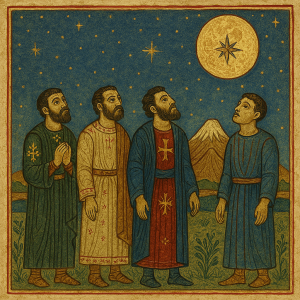
El 6 de enero es la fiesta de la Teofanía, Asdvadzahaydnutiun. Llega en dos días. Los 50 días de Adviento han estado llenos de lecciones de las Sagradas Escrituras y las enseñanzas de Jesucristo. Estamos listos para ver la Teofanía a través del lente de la Armodoxia. Eso significa que, con asombro, esperamos presenciar la Natividad desde Belén hasta nuestros hogares. Miramos hacia los cielos y vemos la estrella brillante que nos guía hacia el establo donde el Niño Jesús está envuelto en pañales y yace en un pesebre. Y el lugar bajo la estrella está en nuestro vecindario, cerca de casa. La Armodoxia nos pide entender que la estrella brilla sobre Artsaj, Ucrania, el Congo, Ecuador y San Salvador, Moscú, Etiopía, Bangladesh, Darfur, e incluso bajo Wall Street y los centros aparentemente brillantes del mundo, porque, sobre todo, entendemos que Jesucristo se revela donde la humanidad lucha, ya sea física, emocional o espiritualmente. La Teofanía estará aquí y estamos listos para saludarnos con un mensaje de esperanza, amor y fe.
Oremos: Señor Dios, en este día santo viniste a un mundo en las condiciones más humildes. Viniste a compartir Tu mensaje divino con nosotros. Lénanos con el poder del Espíritu Santo. Danos la fuerza para maravillarnos ante las maravillas de este día y permanecer con asombro. Danos la percepción para ver la estrella de Belén dondequiera que nazcas para los necesitados, para nosotros y para quienes sufren. Amén.
https://epostle.net/wp-content/uploads/2026/01/Nativity-Theophany-Advent-867.jpg765750Vazken Movsesianhttps://epostle.net/wp-content/uploads/2022/07/final_logo_large_for_epostle_web-300x189.pngVazken Movsesian2026-01-03 00:01:032026-01-02 22:28:27Natividad: Parte de la Teofanía
Armodoxy para hoy: Servicio, la última parada del Adviento
Comenzamos este viaje bajo la dirección de la Iglesia hace casi 50 días. Adviento significa venida. Nos hemos preparado para la venida de Cristo: la Natividad, o en términos más precisos, la Teofanía. La preparación ha sido emocional, espiritual e incluso física con los pasajes bíblicos y los ejercicios que la Iglesia nos ha prescrito.
La última parada en el camino del Adviento está guiada por el pasaje que nos llega del Evangelio de San Lucas y que se lee durante el último culto dominical antes de la Teofanía. Dice así:
Surgió también entre [los discípulos] una disputa sobre quién de ellos debía ser considerado el mayor. Pero Él les dijo: “Los reyes de las naciones se enseñorean de ellas, y los que tienen autoridad sobre ellas son llamados ‘bienhechores’. Pero no sea así entre ustedes; al contrario, el que es mayor entre ustedes, sea como el más joven, y el que gobierna, como el que sirve. Porque, ¿quién es mayor, el que se sienta a la mesa o el que sirve? ¿No es el que se sienta a la mesa? Sin embargo, yo estoy entre ustedes como el que sirve”. (22:24-28)
Esta es, por así decirlo, la "última estación" antes de la celebración de la Teofanía. Tras haber aprendido las lecciones de las últimas seis semanas, hoy avanzamos hacia el servicio. Jesús nos dice, sin rodeos, que él viene a nosotros para servir, presentándose como un ejemplo para que todos hagamos lo mismo: servirnos los unos a los otros. Y articuló esta idea de la grandeza a través del servicio con sus acciones en la Última Cena, al lavar los pies de sus discípulos (Juan 13).
Esta es la última estación porque, para servir, primero debes estar preparado espiritual y emocionalmente. Esto significa que debes deshacerte del egoísmo que te limitará o te impedirá servir a los demás. El servicio cristiano es desinteresado; en otras palabras, exige que dejes de lado tu propio yo mientras atiendes las necesidades de los demás. Sin el entrenamiento de los últimos cincuenta días, el servicio sería extremadamente difícil, porque emocionalmente no estabas listo para dejar de lado los placeres egoístas en favor de servir a alguien más. El servicio nace de un corazón empático. La empatía es el resultado de comprender el dolor de los demás o de ponerte en sus zapatos.
El camino de la Armodoxy es sencillo y está interconectado con todo; es decir, cada lección está vinculada con las demás para construir, dar impulso y otorgar sentido a la fe. Hoy estás un paso más cerca de la gran noticia de que Cristo está entre nosotros. Mañana se explicará la Teofanía.
Oremos: Oh Señor, Jesucristo, nos has dado un ejemplo de amor y servicio. Haznos dignos de ser llamados tu Cuerpo Vivo, la Iglesia, amando y cuidando a los demás. Permíteme ver el mundo que sufre y el dolor de las personas, y responder con mi capacidad para servir a los demás. Dame la fuerza y el valor para expresar mi amor a todos. Amén.
https://epostle.net/wp-content/uploads/2026/01/Service-Advent-Last-Stop-867.jpg7501140Vazken Movsesianhttps://epostle.net/wp-content/uploads/2022/07/final_logo_large_for_epostle_web-300x189.pngVazken Movsesian2026-01-02 00:01:562026-01-01 19:44:42Última parada del Adviento: Servicio

 horno de fuego ardiendo, y de tu mano nos librará… Y si no, que sepas… que no serviremos a tus dioses, ni adoraremos la estatua de oro que has levantado”.