Lenten Journey Day 33 – Worrying about Tomorrow

Lenten Recipe

Recipe 33: Grilled Red Pepper and Eggplant Sandwiches


Lenten Journey Day 33 – Worrying about Tomorrow 

We end this fifth week of Lent with a meditation about apprehension, anxiety and worry about the future. Certainly anxiety comes into play when we are confronted with uncertainty. Even more, this coming Sunday is the Sunday of Advent, when we reflect on the second coming, which in its turn produces new anxieties and new worries of tomorrow.

Jesus warns us not to be anxious. He speaks directly against anxiety and against worrying about tomorrow. Anxiety and the fear that causes it are the opposites of faith. If we have faith we have trust. If we have trust then we diminish the power of anxiety and completely submit to God, so that “Thy will be done” will be done in our lives. Of course this is much easier said than done.

Let us look directly at the instruction that is given to us by our Lord Jesus Christ. Herein is the greatest lesson that we have regarding faith. It comes to us from the Sermon on the Mount, from the Gospel of St. Matthew, quoting Jesus:

Do not store up for yourselves treasures on earth, where moths and vermin destroy, and where thieves break in and steal. But store up for yourselves treasures in heaven, where moths and vermin do not destroy, and where thieves do not break in and steal. For where your treasure is, there your heart will be also…

Therefore I tell you, do not worry about your life, what you will eat or drink; or about your body, what you will wear. Is not life more than food, and the body more than clothes? Look at the birds of the air; they do not sow or reap or store away in barns, and yet your heavenly Father feeds them. Are you not much more valuable than they? Can any one of you by worrying add a single hour to your life?

And why do you worry about clothes? See how the flowers of the field grow. They do not labor or spin. Yet I tell you that not even Solomon in all his splendor was dressed like one of these. If that is how God clothes the grass of the field, which is here today and tomorrow is thrown into the fire, will he not much more clothe you—you of little faith? So do not worry, saying, ‘What shall we eat?’ or ‘What shall we drink?’ or ‘What shall we wear?’ For the pagans run after all these things, and your heavenly Father knows that you need them. But seek first his kingdom and his righteousness, and all these things will be given to you as well. Therefore do not worry about tomorrow, for tomorrow will worry about itself. Each day has enough trouble of its own.

Our Lord Jesus Christ plainly explains that trusting God means to completely submit to His will. It means to allow Him to be God. It means to enjoy the life that He gives us and to fly with the birds, and be clothed like the lilies of the field. Enjoy all that God has given us. It requires us to have complete and total faith in Him, by allowing Him to be Father. Remember, in the old covenant God was known as Lord, but Jesus set up a new relationship, unlike any other, so that we dare to call God, “Father.” Our Father who art in heaven… If we believe He is our Father then as a heavenly Father, He takes care of every single part and aspect of that universe.

Certainly we will always have fears and apprehensions of tomorrow, but we need to diminish them and the only way, the only cure for that is faith. To strengthen our faith, to really look at the examples that He gives us, let us look for all of the examples that are plainly around us. Alongside the birds of the air and the lilies of the fields are the simple smiles of our children, the warm embraces of our loved ones, the monumental signs of the mountains, the crashing waves, the moon and stars, each of them telling us, as Albert Einstein says, “God does not play dice with the universe.” Life has not haphazardly come into being. We are not here by accident. God loves us and takes care of us.

Reduce your anxiety, eliminate your fears and trust in God.

Today we conclude with a prayer from Russian writer, Alexander Solzhenitsyn:

How easy it is for me to live with you, Lord! 
How easy it is for me to believe in You! 
When my mind is distraught 
and my reason fails, 
when the cleverest people do not see further 
than this evening and do not know 
what must be done tomorrow – 

You grant me the clear confidence, 
that You exist, and that You will take care 
that not all the ways of goodness are stopped. 
At the height of earthly fame I gaze 
with wonder at that path 
through hopelessness – 
to this point, from which even I have been able to convey 
to men some reflection of the light which comes from You. 

And you will enable me to go on doing 
as much as needs to be done. 
And in so far as I do not manage it – 
that means that You have allotted the task to others. 
Amen

Lenten Journey Day 32 – Trust

Lenten Recipe
Recipe #32 – Olivada

Lenten Journey Day 32 – Trust

Our lives are built upon trust. Trust and faith are what give our lives stability. Trust and faith come from experience, that is, they are based on our own personal experiences and history. For instance, we trust that when the light turns green for us, the on-coming traffic has a red light. This trust is built on our experience of the thousands of traffic lights we have breezed through, with the full confidence that the opposite traffic is stopped. If we did not have this type of trust, we would live in fear and suspicion. We would stop at every signal we came to, uncertain what to expect.

If we think a bit deeper about our habits on approach to the traffic light, we trust on multiple levels. We trust the equipments – the electronics, the switches and the light bulbs themselves. We also trust the programmers who have set the time switches for the red and green lights. We can safely say that we believe that the programmer is a trustworthy person, that is, someone who will not fool us by giving us a green light and a green light for the opposite street. Our trust, makes the programmer (or builder of the signal) a person who is worthy of our trust.

This type of trust we learn. It is a trust built on experience. It is on this trust that we build our expectations for life. If we do not have this basic trust, we are then betrayed to a chaotic lifestyle. Life become chaos, it does not have order or rhythm. It becomes chaotic because we are overly consumed with fear – fear of the unknown and of the harm that will ensue.

It therefore follows that fear and chaos are overcome by faith and trust. We learn to have faith and trust, which in turn give rhyme and reason to our life and existence.

This week we are challenged to look at our prayer life in a new manner, that is, not only as a conversation with God but a conversation with the self. We turn inward to find the strength to push outward – to push that love and compassion out. We find the strength to do this because we trust. We trust love because we understand that love to be God.

God is love. Unconditional love. If we have love in our heart and if we have love for one another, Jesus tells us, “by this everyone will know that you are my disciples, if you love one another.” We are Christians by the love that we share and spread.

When we find it difficult to share our love, it is usually because we do not trust. We do not faith that love will be returned to us. We do not trust that love will not hurt. We have lost trust in love. But today we stand with a different outlook and a mature understanding of our faith and place in the universe, we now understand that God is love. And this understanding makes all the difference.


We trust God because God is the one constant in the universe. He is, the I am. Not He was, not He will be, but He is. God as the Eternal Present, is the only thing that can be trusted. He is the only constant in our life that dispels the fear and brings order to the chaos. As such, He – this constant – allows us to trust in ourselves, the love that is in our heart. To trust God means to trust love. We therefore can push ourselves and push outward that love without fear.

On this 32nd day of Lent we are noticing the change in our Journey. What started as the road to faith is now turning into the path of action. You have it within you to act, to trust your actions because they are built on faith, they are built on love, that is, they are built on the trust that you have in God.


Today we have a simple exercise: to love. It is the beginning to the path to action. It is the first step towards action. It is a true love, which may hurt, but we trust it. We are completely submitting ourselves to that love. Submitting to God is submitting to love. Push yourself today to freely explore submission to God. Substitute the love where you think of God. Substitute God where you think of love. Push yourself to love others – family, friends, or someone you do not know. Push yourself to engage in a random act of love. Then take the chance and really push yourself to love your enemy. It is there, in your action, that you see God manifested. There you see God born. There you see the chaos brought to order and fear dispelled. It is at that point that you truly understand, “Thy will be done.” It is His will that we love one another.

Let us pray:
O Christ Jesus, when all is darkness and we feel our weakness and helplessness, give a sense of your presence, your strength and your love. Help us to trust your protecting love and your strengthening power, so that nothing may frighten us. For living close to you, we will see your plan, your purpose and your will in all things. Amen.

Lenten Journey Day 31 – God’s Power

Lenten Recipe

Recipe #31 – Tomato & Bread Soup


Lenten Journey Day 31 – God’s Power

Today we continue with the lessons of the Unrighteous Judge, to understand God’s response to our prayer. Does God answer prayer? How? Is prayer as powerful as they say it is? Does it change God’s mind?

Yesterday we looked at the Problem of Evil. Certainly we all pray for the good and against evil – whether for ourselves, or for others, this prayer is a familiar one. At the very least we have said the phrase, “Peace on Earth” as a prayer of humankind through the ages. Yet evil is very real in the world. In fact, we see such a great presence of evil in this world. If God is all powerful why does He not eliminate evil? If God is all loving, why does He allow evil to exist? Why does He tolerate hatred? Why is there prejudice? Why is there war? Why is there illness? Why evil?

Our church fathers have pondered this question and as an answer have directed our attention to the cross of Christ. In fact, on that original Good Friday – not evil Friday, but good Friday – we find the Son of God himself is not exempt from evil. God did not stop evil from touching His Son. If God allows this evil, does that make Him powerless? Does that diminish His power. We say that He is omnipotent, we say that He is all powerful, so why does He not stop evil? Perhaps it is because we fail to understand the true nature of God.

St. John the Evangelist tells us that God is love. In a very straightforward mathematical equation (a=b; b=a) he allows us to see that God is Love and therefore, Love is God. Pure love is that manifestation of God. But we are talking concepts: God, Love, what do these things mean? St. Nerses Shnorhali in his theologically rich hymn, “Aradov Looso,” (=morning light), offers us the primer, that is, the key to unlock the giant mystery of Life, Love and God. In this hymn, which he offers to light and the source of light, Shnorhali writes, “The name of love is Jesus.” When we understand that God is love, and love’s name is Jesus, we now begin to understand that the crucifixion is part of the equation but is not the end. Jesus rose. He conquered death; He conquered evil, so in God’s eyes, it is only a platform. It is only one step – and a necessary step to understanding true love.

Each of us that has had the fortune of experiencing love knows that there is a cost to it. There are certain pains that go along with love. Does that exempt us from being all that we can be? Does that in any way hinder us, expressing and experiencing true love? Quite the opposite. In fact it enhances the love experience. So much so that if we look at the empty tomb on Easter, it is only valuable, it is only truly an empty tomb of victory in the context of the crucifixion. That is, without a crucifixion you can never experience a resurrection. And herein lies the key to evil.

The answer to the question, Is God powerless over evil? is, certainly not! God is love! And that is the power of power, that is the light of light. That is the true God of true God. That is real power, isn’t it? For He lights up the darkness; He gives strength to the weak. It allows us to stand in the face of crucifixion and know that we are never alone and that there is an empty tomb for each of us. There is victory for each of us. There is a resurrection for every crucifixion.

From the beginning of this Lenten Journey we have been challenged to move our thought process from our minds to our hearts. As St. Nerses Shnorhali reminds us, “Put a guard upon my heart, so that it may think no evil.” Not “upon my brain,” but “upon my heart.” It is from that point that we start developing our love. From our heart. Now, mind you, the heart does get broken. That heart is not rational, but neither is love. Love is true. Love goes beyond rationality. It gives us the endless possibility to be in union with God. You cannot rationalize a crucifixion, but you can understand that a father, in love for his creation, would give everything – even His Son – knowing that in the end, His creation too, shares in the possibility of resurrection, in complete victory over all the dreaded evil in this world. Herein, God answers the ultimate prayer.

We conclude today with a prayer, by St. Patrick who lived during the 4th and 5th centuries. This is called St. Patrick’s Breastplate because it seeks God’s protection in a world of both tangible and invisible dangers.

I arise today
Through a mighty strength, the invocation of the Trinity,
Through the belief in the threeness,
Through the confession of the oneness
Of the Creator of Creation.
I arise today
Through the strength of Christ’s birth with his baptism,
Through the strength of his crucifixion with his burial,
Through the strength of his resurrection with his ascension,
Through the strength of his descent for the Judgment Day.
I arise today
Through the strength of the love of Cherubim,
In obedience of angels,
In the service of archangels,
In hope of resurrection to meet with reward,
In prayers of patriarchs,
In predictions of prophets,
In preaching of apostles,
In faith of confessors,
In innocence of holy virgins,
In deeds of righteous men.
I arise today
Through the strength of heaven:
Light of sun,
Radiance of moon,
Splendor of fire,
Speed of lightning,
Swiftness of wind,
Depth of sea,
Stability of earth,
Firmness of rock.
I arise today
Through God’s strength to pilot me:
God’s might to uphold me,
God’s wisdom to guide me,
God’s eye to look before me,
God’s ear to hear me,
God’s word to speak for me,
God’s hand to guard me,
God’s way to lie before me,
God’s shield to protect me,
God’s host to save me
From snares of demons,
From temptations of vices,
From everyone who shall wish me ill,
Afar and anear,
Alone and in multitude.
I summon today all these powers between me and those evils,
Against every cruel merciless power that may oppose my body and soul,
Against incantations of false prophets,
Against black laws of pagandom
Against false laws of heretics,
Against craft of idolatry,
Against spells of witches and smiths and wizards,
Against every knowledge that corrupts man’s body and soul.
Christ to shield me today
Against poison, against burning,
Against drowning, against wounding,
So that there may come to me abundance of reward.
Christ with me, Christ before me, Christ behind me,
Christ in me, Christ beneath me, Christ above me,
Christ on my right, Christ on my left,
Christ when I lie down, Christ when I sit down, Christ when I arise,
Christ in the heart of every man who thinks of me,
Christ in the mouth of everyone who speaks of me,
Christ in every eye that sees me,
Christ in every ear that hears me.
I arise today
Through a mighty strength, the invocation of the Trinity,
Through belief in the threeness,
Through confession of the oneness,
Of the Creator of Creation.
Amen. 

Lenten Journey Day 30 – Why Evil?

Lenten Recipe

Recipe 30: Rice Desert with Cherries

Lenten Journey Day 30 – Why Evil?

Of all the questions that have plagued humankind, of all the questions that have demanded an answer, perhaps there is none greater than “Why Evil?” Why is there evil in this world? The question is asked by people who profess a religious belief as well as those who disavow any notion of deity. For the Christian, the “Problem of Evil” is troubling a puzzle because it can shake the very foundation of faith and belief in God.

The Problem of Evil is expressed as follows: If God is good, and if God is all powerful, why does he allow evil? Why do bad things happen? Why are there earthquakes? Why is there cancer? Why wars and genocide? Why do we have to deal with so many tragedies? And so the problem is, either God is not all-powerful, and therefore allows evil, or He is not all good and therefore is responsible for the evil. The are other questions which are related and follow: why does evil happen to innocent people? Why do the good suffer?

Today we will look at the problem of evil, and build upon the themes that we have been exploring during the Lenten Journey, especially along the lines of our Parable of the Judge and our need to pray unceasingly. We keep in mind that on this 30th day of Lent we understand ourselves to be in a process of maturing and growing spiritually. Things look differently today. Things are understood differently today. Putting away our preconceptions, we open our heart to an answer that is coming to us from the definition of God being love.

In yesterday’s journey we were challenged to make our prayer life real. God is not some Santa Claus/Superman type of person to whom we can give our list of demands and wants. Rather, we submit by saying “Thy will be done…” or “Let it be Your will that is actualized in and through my life.” In so doing, we accept a new responsibility, a more mature outlook on our life and our surroundings.

The Christian is called to a life of responsibility. If someone else is in charge of your life, you cannot take responsibility. If it is someone else who is doing your work, it is not your fault when problems occur. But, the Christian stands firm and says, “It is my doing. I accept the love that God has given me in my heart and therefore I need to act on that love.”

Prayer is a conversation with God and also a conversation with the self. This is the idea of meditation, of secluding oneself, getting away from everything and really having that honest conversation with the self. What is it that I need in this life? Who am I? What special talents do I have that I can use and perhaps even exploit?

Now let’s move over to evil, because if I am in charge of my life, how do I explain the big evils within life? That is, what about those things over which I am completely powerless? Earthquakes that take away villages and towns where thousands upon thousands are destroyed? What about the evils of famine and war? More closely, what about illness that devastates families and relationships? I am completely powerless. And as much as I pray about them, I know they are not in my hands. How can I effectuate the change upon these big issues or upon the evils which occur on a grand scale? True, they are not individually in our hands, but this is where the power of the collective, of the Church, comes in.

We believe with Christ, all things are possible. We believe that love is more powerful than evil. Where is love going to manifest itself to this magnitude, but in the body of Christ? Two thousand years ago we had the example, we had the manifestation, we had the incarnation of Love. We touched that incarnation, and in so touching, we were healed. That Incarnation was taken up to a crucifixion and we witnessed a resurrection. If we accept this, then we have to also accept the entire package. The package says, “I am with you to the end of the ages.” In that package we understand – as Jesus says, “Have courage. The victory is mine” – we too, are worthy and capable of resurrecting from our crucifixions and can now have a different understanding of events in our life. In fact, earthquakes, hurricanes, catastrophes, illnesses, cancers – they are not the end. They are the crucifixions that we endure just as the Son of God endured. God did not prevent that cancer, that earthquake, that hurricane from trying to destroy love. Evil did try. But evil is all around. It is not a question of combating evil with more evil. It is a question of enduring and overcoming evil with only one power, the only power that we have – with love.

In enduring, we find the resurrections in our lives. We see that generations are built upon love that cannot crumble, that cannot be destroyed neither through earthquake nor famine nor through the cancers of evil, hatred, bigotry that are all consuming. You see there is evil in this world and God allows it even upon the cross. Does that make God powerless? We will look at that question was we continue our Lenten Journey during this season of prayer as we look at our prayer lives, as we look at the idea of evil and the power of love.

Today we conclude with a different type of prayer. It is an inspirational message. It is something I found a few years ago that brought a lot of comfort to a patient, and I wish to share it with you today. It has many applications, please use it accordingly as a prayer in your lives. It is entitled, Cancer is So Powerless.

Cancer is so powerless, 

It cannot cripple love.
It cannot shatter hope, 
It cannot corrode faith.
It cannot destroy peace, kill friendship, suppress memories, silence courage, invade the soul.
It cannot steal eternal life. 
It cannot concur the spirit.
We confirm this by saying “Amen.”

Confirm by pronouncing the real power: Love.
 
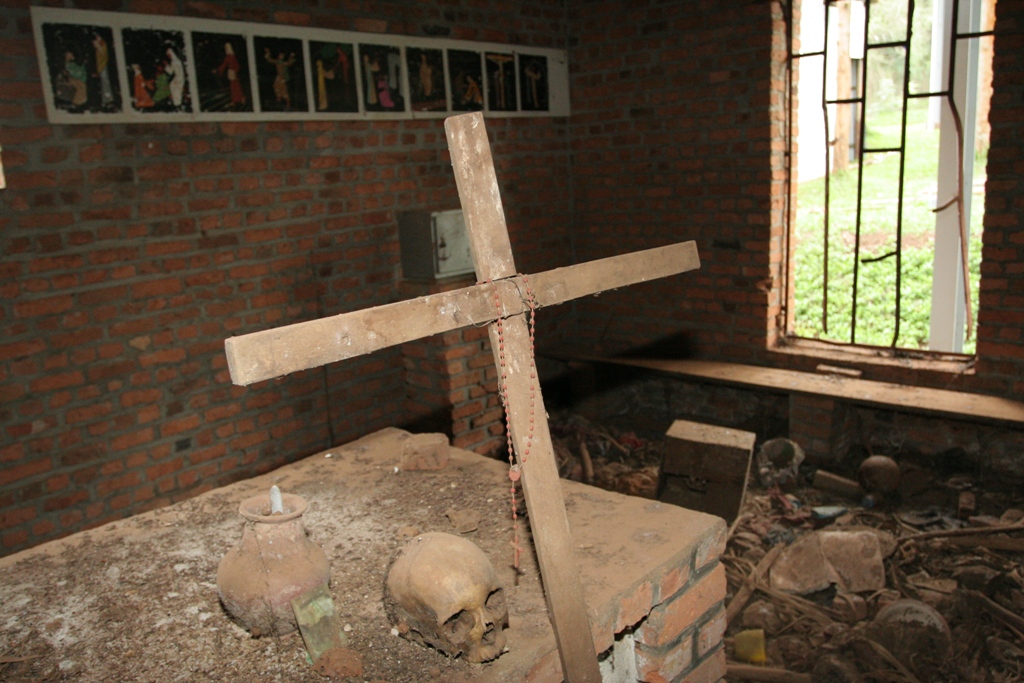
Photo: (c)2006 Fr. Vazken Movsesian, Church Altar in Rwanda

Lenten Journey Day 29 – God’s Way

Lenten Recipe

Recipe 29: Mediterranean Bean Salad

Lenten Journey Day 29 – God’s Way 

The Lenten journey is much like a set of stairs. As we ascent upward, we acknowledge the foundation built by each step. Each stair is dependent upon the previous steps we have taken and the success of our climb relies on us placing a firm foot on the stair before.

Yesterday’s step introduced the parable of the Unrighteous Judge. Through it Jesus taught about the nature of prayer. Because our Heavenly Father already knows our needs we therefore understand prayer not only as a conversation with God but a conversation with the self. As we climb the steps, we come to understand God as a caring and compassionate Father who works with and within us, not outside of us. Many times our prayers are based an expectation that God, like Superman, will come swooping down from the heavens and rectify the situation that we’re in. When we pray, “Thy will be done on earth as it is in heaven” we should not expect something outside of us to take control; that is, a “Superman” effect by God. Our understanding of prayer today is that we are open to the possibility of God’s will being done. Not to merely sit back and say, “Thy will be done,” and expect some power from outside to overtake us, but now we are open to the possibility of God working through us. That means we open our hands and embrace those who need love. That means we put one step in front of the other and we walk in the paths of righteousness. That means we open our eyes and open our ears to God’s justice. That means we become the instruments to do God’s will here on earth. This is quite different from a lazy man’s prayer wishing that God swoop down from the heavens and take care of his every need.

“Thy will be done” is a prayer of us engaging – being in fellowship with God, allowing God to work through us. Allowing God to be a partner with us in this lifetime. This is the mature prayer of the Christian. This is the new step that we take today. We understand God through the conversation that we are having with Him. Prayer is this new conversation with God and it is not a one-way street. It is not a request list that we hand out and expect to be filled like a Santa Claus does who comes down a chimney and delivers according who’s been “naughty or nice.” The dreams that we have may be wild ones, but to actualize those dreams, God works through us. He becomes a partner with us so that we become the legs, the hands, the mouth, the strength of God here on Earth.

St. Paul likens the Church to the Body of Christ specifically talking about the members of the body in terms of hands, feet, legs. Why? Because the only way Christ can work in this world is through a physical presence and a body. And here is the next step upwards… You’ve arrived at day 29, stepping on the previous steps and moving forward. You’ve made the transition in understanding. Prayer is your a partnership with God.

Yes, the Lenten journey has brought us here. What began as a solo venture is now a partnership between you and God, between you and others. You are not alone. There is a reason that Jesus says, “Where two or three are gathered in My name, there shall I be.” He does not say, “Where one is gathered, “ for there cannot be one Christian. Christianity implies a community. It implies working together. Faith without works is meaningless says the apostle.

On this day of Lent, we understand that prayer will have a different meaning for us. The words, “Thy will be done,” will be a call for action for us to open our hearts, open our senses to the possibility of the Eternal God of the Universe to work through us and not outside of us.

But what of problems that are beyond us such as earthquakes, hurricanes, illnesses and disease? We’ll take a look at those problems tomorrow as we continue on this thread, as we take the next step up the staircase of Lent.

Accordingly, for our prayer today, let us pray the prayer of St. Francis of Assissi.
“Lord, make me an instrument of your peace, where there is hatred, let me sow love,
Where there is injury, pardon.
Where there is doubt, faith,
Where there is despair, hope.
Where there is darkness, light.
And where there is sadness, joy.
Grant that I may not so much seek to be consoled as to console,
To be understood as to understand
To be loved as to love.
For it is giving that we receive. It is in pardoning that we are pardoned. And it is in dying that we are born to eternal life. Amen.”

Lenten Journey Day 28 – Perseverance

Lenten Recipe

Recipe 28: Broiled Lemon-garlic Mushrooms

Lenten Journey Day 28 – Perseverance

Of the Lenten Sundays, three of them are named after parables which spotlight questionable character. During the last two Sundays we met the Prodigal Son and the Dishonest Steward. Completing the trilogy of Parables-Sundays is the dedication for this 28th day of Lent to the Unrighteous Judge. All three parables come to us from our Lord and are found in the Gospel of Luke, chapter 16, 17 & 18, respectively.

The Unrighteous Judge is a man who, as Jesus explains, did not fear anyone – not even God, nor was he ashamed of any person. In the town where he served as judge a widow kept coming to him and pleading with him, begging that he hear her case. For some time he refused, but finally he said to himself, “Even though I don’t fear God, nor do I care about men, but because this widow keeps bothering me, I will see that she gets justice so she won’t eventually wear me out!” Jesus concludes his parable with an interesting statement. He says, “Listen to what the unjust judge says and will not God bring about justice for his chosen ones who cry out to him day and night. Will he keep putting them off? I tell you, He will see that they get justice, and quickly.”

Indeed, this is an odd story. At first reading you might think that Jesus compares God to this unrighteous, unjust judge. The parable creates this image of a God who can be worn out, or worn down. It is as if, should we keep persevering, if we continue to pray over and over again, God will eventually wear down and He will say yes to our needs and to our desires. So keep praying, keep being persistent. Persevere like the old lady! And in the end God will wear down and will give you what you want.

On closer inspection of the parable, that is, when we read it in its entirety, we see that the evangelist, St. Luke, writes a few words of explanation as a preface to the parable. He says, “Jesus told His disciples this parable to show them that they should always pray and not give up.” So yes, this is a story of perseverance, but it is not to wear God down, it is to keep in mind that must continually be in communion with God. St. Luke’s preface to the parable suggests that during his time, as is the case today, there is a misconception about the nature of prayer.

When Jesus teaches us the “Lord’s Prayer” he warns, “Do not heap up extra words. Your heavenly Father already knows what you need. Therefore when you pray, pray like this. Our Father, which art in heaven … ” Let’s think about that for a moment. If our Heavenly Father knows what we need, why then should we pray?

God knows our needs, so obviously, we have a very real misunderstanding about the nature of prayer.

Prayer is not merely a conversation with God. We pray because we need a conversation with ourselves. God already knows the desires of our heart. He knows our needs and wants, most probably, better than we know them. God knows where we are going. The real question is, do we? It may sound strange, but unless you have a true focus on your life, it is questionable whether or not you know what your needs are.

How often do we give time to hear ourselves, to hear the inner self speak? Part of this Lenten journey has been to open the ears of our heart, to be able to listen attentively. The Psalmist says, “Be still! And know that I am God.” Lent is giving us the opportunity to sit still and listen, hear, absorb and thereby grow spiritually. Lent is not merely to cut down on food, but it is to come down to the bare essentials: What is necessary to survive? Or in Jesus’ words (to the tempter), “Man does not live by bread alone but by every word that comes forth from the Lord.”

When teaching us to pray, Jesus directs us to go into a small room and pray without any distractions so that you understand what your needs are. Because when we pray for the good things, God already wants us to have the good things, but how are they going to arrive to us? We need to find the strength. We need to find the patience, the devotion. We need to find the correct values. We need to wake up, put our dreams aside and put on the new garment of hope to walk forward. This all comes from the person – you and me – taking action. When we accept that we are God’s children and that He is our Father, then we know that He will take care of us in all circumstances. Just as He takes care of the birds in the air, as He takes care of the lilies of the field who are here today and gone tomorrow, so too, He will take care of us. Jesus tells us, “How much more are you worth than those lilies of the field, than those birds of the air? Your Heavenly Father takes care of them. How much more He will take care of you.”

Do you have that faith? It is an unquestioning faith and is difficult to achieve, hence the need to discipline ourselves. What remains for us is to continue to pray. Persistence! Persevere! Consistency! Like the woman in the story, never doubt that in the end, you will get what you need, because in that persistence, it is not God the Judge listening, it is you listening to yourself. In your persistence you’ll find that these prayers turn into mantras. They turn into guidelines by which you start living, by which you start accepting responsibility in your life. And much as your life has changed during this Lenten season, your prayer life will begin to mature, and your prayers become real mantras toward action, to realize the dreams that are set deep in your heart and not the desires based on the whims of today.

We conclude today’s Lenten journey with the prayer that our Lord, Jesus Christ, taught us,
Our Father in Heaven, hallowed be Your name. Your kingdom come, Your will be done on Earth as it is in heaven. Give us today our daily bread. Forgive us our debts as we also have forgiven our debtors, and lead us not into temptation, but deliver us from evil. For Yours is the kingdom, and the power and the glory forever and ever. Amen.

AI Samples-1

Artificial Intelligence Samples

At our recent Bible Study, I shared thoughts about the altered reality we are now creating with the aid of artificial intelligence. These are samples from our 3/13/23 session


If Komitas and Aram Khatchadourian met, what might their conversation be like?

If Komitas and Aram Khatchadourian were to meet, it is likely that they would have a fascinating conversation about music and Armenian culture.

Komitas was a prominent composer, ethnomusicologist, and priest who collected and transcribed Armenian folk music in the early 20th century. His work was crucial in preserving Armenian music and culture, and he is considered a national hero in Armenia.

Aram Khatchadourian was a renowned composer and conductor who is best known for his works inspired by Armenian folk music. His compositions often incorporate elements of Armenian folk music, and he played an important role in promoting Armenian music on the world stage.

Given their shared interest in Armenian music, it is likely that Komitas and Khatchadourian would discuss the rich history of Armenian music, the various styles and genres that exist, and the challenges facing modern Armenian music. They might also discuss the role of music in Armenian culture and society and how it has evolved over time.

It’s possible that they would also discuss their own work and influences, and perhaps even collaborate on a new piece of music that combines traditional Armenian music with modern composition techniques.

Overall, their conversation would likely be a stimulating and inspiring exchange of ideas between two giants of Armenian music.

Simulate a conversation between Komitas and Aram Khatchadourian if they were to meet.

Here’s a possible simulation of a conversation between Komitas and Aram Khatchadourian:

Komitas: Good afternoon, Aram. It’s a pleasure to meet you.

Aram Khatchadourian: Good afternoon, Komitas. The pleasure is mine. I’ve long admired your work in preserving and documenting Armenian folk music.

Komitas: Thank you, Aram. I consider it my life’s work to ensure that our rich musical traditions are not lost to time. What about you? I understand that you’ve also been incorporating Armenian folk music into your compositions.

Aram Khatchadourian: Yes, that’s correct. I’ve always felt a strong connection to our musical heritage and have tried to integrate it into my work whenever possible. I find that there is something truly special about the way that Armenian melodies and rhythms resonate with people.

Komitas: I couldn’t agree more. There is a deep emotional quality to Armenian music that is difficult to capture in words. I believe that it speaks to something fundamental in the human experience.

Aram Khatchadourian: Absolutely. In fact, I often feel that my role as a composer is to help bring that emotional quality to the forefront, to allow others to experience it in a more visceral way.

Komitas: That’s a noble goal, Aram. But do you not worry that by adapting Armenian folk music for modern audiences, we risk losing some of the authenticity and cultural context of the original works?

Aram Khatchadourian: It’s a fair concern, Komitas. But I believe that as long as we approach the music with respect and a willingness to learn, we can create something new that still honors the spirit of the original compositions. And in doing so, we can help ensure that Armenian music continues to thrive and evolve alongside other musical traditions.

Komitas: I see your point, Aram. It’s important to strike a balance between tradition and innovation. Perhaps we can work together to create something that blends our unique perspectives and talents.

Aram Khatchadourian: I would be honored to collaborate with you, Komitas. Together, we might be able to create something truly special that celebrates the beauty and depth of Armenian music.

Komitas: I couldn’t agree more, Aram. Let’s begin our collaboration as soon as possible.


What might the Armenian Nation look like if the Armenian Genocide of 1915 did not occur?

It’s impossible to know exactly what the Armenian Nation would look like if the Armenian Genocide of 1915 did not occur, as historical events have far-reaching and complex consequences that are difficult to predict. However, it is possible to explore some possible scenarios and speculate on what might have been different.

If the Armenian Genocide did not occur, it’s possible that the Armenian population would be larger and more geographically dispersed than it is today. The Armenian population in the Ottoman Empire was decimated during the genocide, with estimates of the number of Armenians killed ranging from 1 to 1.5 million. Without this loss of life, the Armenian population would likely be larger and more evenly distributed across the region, including in Turkey, where there were once large Armenian communities.

Additionally, the cultural and economic contributions of the Armenian people may have been more significant in the Ottoman Empire and the surrounding region. Prior to the genocide, Armenians played an important role in the Ottoman economy, particularly in the fields of trade and finance. They were also prominent in the fields of education, literature, and the arts. Without the genocide, Armenians would have continued to play a significant role in the cultural and economic development of the region.

It’s also possible that the Armenian people would have had more political autonomy and representation within the Ottoman Empire. Prior to the genocide, Armenians had advocated for greater political rights and autonomy within the empire, including the creation of an Armenian state. If the genocide did not occur, it’s possible that these demands would have been taken more seriously and that Armenians would have had more representation in Ottoman politics.

Finally, it’s possible that the geopolitical landscape of the region would be different if the Armenian Genocide did not occur. The genocide played a significant role in the formation of the modern Turkish state and its relationship with Armenia and the wider region. If the genocide did not occur, it’s possible that the political and cultural relationships between Turkey, Armenia, and neighboring countries would be different than they are today.

In conclusion, while it’s impossible to know exactly what the Armenian Nation would look like if the Armenian Genocide did not occur, it’s possible to speculate on some of the ways in which history may have been different. The Armenian population would likely be larger and more geographically dispersed, and the cultural and economic contributions of the Armenian people would have been more significant. Armenians may have also had more political autonomy and representation within the Ottoman Empire, and the geopolitical landscape of the region may have been different than it is today.


What might the Armenian Nation look like or be if the nation had not accepted Christianity in the 4th century?

It’s difficult to predict exactly what the Armenian Nation would look like or be if it had not accepted Christianity in the 4th century, as this is a significant turning point in Armenian history that has had far-reaching cultural, social, and political consequences. However, we can speculate on some possible scenarios and consider how the history of the Armenian people might have been different.

If Armenia had not accepted Christianity, it’s possible that the country would have continued to adhere to its traditional pagan beliefs, which were closely tied to the natural world and the spirits that inhabited it. The traditional Armenian religion was based on a pantheon of gods and goddesses, and was characterized by a strong emphasis on sacrifice and ritual. If Armenia had not converted to Christianity, it’s possible that these beliefs and practices would have continued to evolve and adapt over time, potentially developing into a unique and distinctive religious tradition.

Without Christianity, it’s also possible that the Armenian people would have had a different relationship with neighboring cultures and empires. The conversion to Christianity was a key factor in Armenia’s integration into the wider Roman and Byzantine worlds, and helped to establish a common cultural and religious identity with other Christian nations. Without this common bond, it’s possible that Armenia would have remained more isolated and less integrated into the wider region.

On the other hand, it’s also possible that without Christianity, the Armenian Nation would have been more vulnerable to the influence of neighboring cultures and religions. Christianity provided a sense of unity and identity that helped to strengthen the Armenian Nation, and without this common bond, the nation may have been more susceptible to fragmentation and division.

Overall, it’s difficult to predict exactly what the Armenian Nation would look like or be if it had not accepted Christianity in the 4th century. The conversion to Christianity was a significant turning point in Armenian history that has had far-reaching consequences, and any speculation on what might have been different should be considered with caution. However, it’s clear that the traditional Armenian religion would have continued to evolve and adapt over time, and that the Armenian Nation may have had a different relationship with neighboring cultures and empires if it had not converted to Christianity.


Simulate a conversation between William Saroyan and Avetik Issahakian.

(Note: William Saroyan and Avetik Issahakian were both prominent Armenian writers, but they lived in different time periods. Saroyan was born in 1908 and lived until 1981, while Issahakian was born in 1875 and died in 1957. This conversation is fictional and should be viewed as a hypothetical interaction between two great Armenian writers.)

William Saroyan: Hello, Avetik. It’s an honor to meet you.

Avetik Issahakian: Hello, William. The honor is mine. I’ve read some of your works, and I must say, you have a unique style.

William Saroyan: Thank you. I’ve always been drawn to the idea of celebrating the simple joys of life, like the warmth of the sun on your face or the sound of a child’s laughter.

Avetik Issahakian: Yes, I can see that in your writing. My own work often focuses on the beauty of nature and the importance of preserving our cultural heritage.

William Saroyan: That’s a sentiment I can certainly get behind. I think it’s so important to remember our roots and celebrate our shared history as Armenians.

Avetik Issahakian: Indeed. And yet, our history is also marked by great tragedy and hardship. I have often struggled with how to reconcile the beauty of our culture with the pain and suffering that we have endured.

William Saroyan: I can understand that. In my own work, I’ve tried to capture the resilience and spirit of the Armenian people in the face of adversity. I think it’s important to acknowledge the suffering that we have experienced, but also to celebrate the strength and perseverance that we have shown.

Avetik Issahakian: Yes, I think you’re right. Our culture is not defined by our struggles, but by the way that we have overcome them. And as writers, we have a responsibility to honor that legacy and keep it alive for future generations.

William Saroyan: Absolutely. And I think that’s something that we share as writers, regardless of our individual styles or backgrounds. We both have a deep appreciation for the power of words and the role that literature can play in shaping our collective identity as Armenians.

Avetik Issahakian: Yes, that’s very true. It’s an honor to be a part of that tradition, and I’m grateful to have had the chance to speak with you about it today.

William Saroyan: Likewise, Avetik. It’s been a pleasure. Let’s hope that our work can continue to inspire and uplift the Armenian people for generations to come.


If Hrant Dink and Nikol Pashinyan were to meet, what might they discuss in a conversation?

(Note: Hrant Dink was a prominent Turkish-Armenian journalist and activist who was assassinated in 2007, while Nikol Pashinyan is the current Prime Minister of Armenia. This conversation is fictional and should be viewed as a hypothetical interaction between two figures who have advocated for Armenian-Turkish reconciliation.)

Hrant Dink: Hello, Nikol. It’s good to meet you.

Nikol Pashinyan: Hello, Hrant. The pleasure is mine. I have long admired your work and your advocacy for Armenian-Turkish reconciliation.

Hrant Dink: Thank you. It’s a cause that has been close to my heart for many years. I believe that the future of our two nations depends on our ability to confront our shared history and find a path forward together.

Nikol Pashinyan: I completely agree. As you know, I have also been a vocal advocate for reconciliation between Armenia and Turkey. I believe that we must acknowledge the past, but also look towards the future and find ways to build a more peaceful and prosperous region.

Hrant Dink: Yes, that’s exactly the kind of dialogue that we need. I think it’s so important for us to have open and honest conversations about our shared history and the ways in which it has affected our communities.

Nikol Pashinyan: Absolutely. And I think it’s especially important for us to build bridges between our two nations, to promote cultural exchange and economic cooperation, and to find ways to collaborate on issues of mutual interest.

Hrant Dink: Yes, those are all important steps. And yet, we must also be vigilant in the face of those who seek to sow division and hatred between our communities. We must stand together against extremism and intolerance, and work towards a future that is inclusive and just for all.

Nikol Pashinyan: I couldn’t agree more. The road to reconciliation will not be easy, but I believe that it is a path worth pursuing. And with the support of individuals like yourself, Hrant, we can work towards a better future for all Armenians and Turks.

Hrant Dink: Thank you, Nikol. Your words give me hope for the future. Let us continue to work towards a future of peace and cooperation between our two nations.


If Mgrditch Khirimyan Hayrik were alive today, what advice might he give to the Armenian people and the leadership of the Armenian Nation?

Mgrditch Khirimyan Hayrik, also known as Father Khirimyan, was a prominent Armenian priest and national figure who played a significant role in the Armenian national liberation movement. He was one of the leaders of the Armenian national delegation that presented the Armenian national demands to the Ottoman government in 1914. He was executed during the Armenian Genocide in 1915.

If Mgrditch Khirimyan Hayrik were alive today, he might give the following advice to the Armenian people and the leadership of the Armenian Nation:

“Dear brothers and sisters, my heart is with you in these challenging times. As Armenians, we have a proud history of resilience and perseverance in the face of adversity. We have overcome many challenges in the past, and we can do so again.

To the leadership of the Armenian Nation, I urge you to prioritize the needs and aspirations of the Armenian people. The Armenian Nation is a vibrant and diverse community, and it is important to listen to the voices of all Armenians, including those in the diaspora.

I also urge you to remain steadfast in your commitment to justice and human rights. We must continue to seek recognition and accountability for the Armenian Genocide, and to stand up against all forms of oppression and injustice.

To the Armenian people, I say this: do not lose hope. Our strength lies in our unity, and we must continue to stand together in the face of adversity. Let us honor the memory of those who came before us by working towards a brighter future for the Armenian Nation.

Finally, I urge you all to remain committed to our cultural heritage and to the values that have sustained us for centuries. Our language, our music, our traditions – these are the things that make us who we are as a people. Let us continue to celebrate and cherish our identity, even in the face of challenges and adversity.

May God bless the Armenian Nation and guide us on the path towards a brighter future.”


Here’s a second round 

 

Lenten Journey Day 27 – Martyrs of Sepastia

Lenten Recipe

Recipe 27: Cold Linguine with Red Pepper, Artichoke and Sun Dried Tomato Sauce

Lenten Journey Day 27 – Friendship

The Armenian Church celebrates the 40 Martyrs of Sebastia during one of the Saturdays of Lent. Although Sebastia is a town in Armenia, the entire Christian Church commemorates the martyrdom that took place there as a lesson in Christianity, perseverance, sacrifice and friendship.

The story of the 40 Martyrs of Sebastia takes place in the 4th century, when 40 soldiers of the Roman army armed with a faith in Jesus Christ, are put to the test: either deny their faith or lose their lives. They refuse to betray or deny their faith in Christ Jesus. They are sentenced to a torturous death by being thrown into a mid-winter freezing lake. The forty men reach out to one another. They hold on to one another creating a human life raft. The water miraculously warms up. God creates an opportunity for the freezing water to give warmth, to give life. In so doing the men are also given an opportunity to be crowned as saints.

There are many dimensions to this story. I invite you to read about it. It appears in many books and articles. For now, I would like to focus on the friendship that existed between these soldiers, particularly because they had the same goal and foundation of faith. Even more, they belonged to a community that brought them together.

We build relationships with others with whom we establish what is called “friendship.” Most of the time, these are limited partnerships; that is, we can talk about everything except matters of faith. We may be reluctant to talk about faith/religion. Why? Because we have been conditioned, we have been taught it is not polite to discuss religion in mixed company. After all, politics and religion are the two ingredients that you never want to take into a friendship. More arguments start because of politics and religion they tell us, than any other subject.

During this Lenten Journey we have looked within. We have looked without. We have built our prayer life with quality and quantity. We understand ourselves as disciplined creatures, assisted by the practices of fasting and of abstinence. Our Christian charity is defined by responsibility and stewardship. And so at the end of this 4th week, we understand that certainly Christianity is not that distorted view that so many people speak about, but there is a purity in Christianity. Not only is Christianity defined by love, but it is the expression of pure love. It calls us to extend and give ourselves to one another. It is sacrifice that manifests itself in friendships and relationships. We love, honor, respect and cherish one another.

Because Christ’s message is so pure, it gives each of us an opportunity to grow in that that same purity.

The forty martyrs found that purity in one another. They were able to hold on to each other and stay afloat in that lake. They were able to find strength from one another. We too are on a journey. It is called life. We look for friends and sometimes shy away because we feel others may not understand our position. Real friendship means that we can put all our cards out on the table. It means we can count on one another. We can lean on others and expect them to lean on us as well. To make this happen we need open dialogue. There is a formula to the dialogue. It begins by talking about the bare essentials of life including our faith, our spirituality, who we are, how we understand ourselves and what commitment we have to love. WE understand quickly now that there is nothing to be embarrassed about when it comes to matters of faith. It is now becoming part and parcel of our being to be able to stand tall and say, “Yes, I am a Christian because I am a member of Christ’s family.” Simply put, we say, “Yes, I am called to love.” Nothing more, and certainly nothing less.

To love, to be able to stand up and help. To be able to sit down with a friend in trouble. To be able to extend a hand to someone in need. And to be able to offer the strength and the courage, to lift up someone who has fallen. You see, Christianity is all about continuing what Christ began.

The forty Martyrs of Sebastia understood the message of Christ as an expression of community. The name of the feast itself is about community. It is not one martyr that we remember, but 40 martyrs. It is a collective. People hanging on to one another, staying afloat, despite the difficulties in life. When we understand this, then we start reaching out to one another. We no longer fear confiding in our friends. Instead we have a healthy and open relationship, and we become true friends. Reaching out, hanging on, staying afloat in the waters of life… Understand that this is how miracles happen, because it at these moments that God heats the waters! We have yet another opportunity to really set sail and reach the dreams that we cannot do alone but certainly possible because of the community collective.

Today’s Lenten exercise is a simple one: reach out to your friends, reach out to your family. Engage them in a conversation of faith. Engage them to understand how important that faith is to you, and really explain what are the dimensions of that faith. Not merely stories, not merely myths, but a real story, a real story of hope, of faith, of really reaching out to one another and helping them stand up and for them to help you stand up. Together. With God’s blessings you reach the goals, you reach the dreams that are infront of you.

In that same spirit, let us pray from St. Nersess Shnorhali:
Glorified Lord, accept the supplications of your servant and graciously fulfill my petitions through the intercession of the Holy Mother of God, John the Baptist, St. Steven the first martyr, St. Gregory our Illuminator, the holy apostles, prophets, divines, martyrs, patriarchs, hermits, virgins and all your saints in heaven and on earth. And unto you, oh indivisible Holy Trinity be glory and worship for ever and ever. Amen. (24/24)

Photo – 2009 Fr. Vazken Movsesian

Lenten Journey Day 26 – Courage

Lenten Recipe 
Recipe 26: Cold Noodles in Spicy Sesame Sauce

Lenten Journey Day 26 – Courage 

During Lent we have become aware of the curtain drawn across the altar of life. That curtain is the obstacle that prevents us from seeing the wonders and the beauty of God – the obstacles that prevent us from maximizing our potential. That curtain has been lowered because of our fears, and the only way for us to bring it up, the only way for us to open that curtain is to combat our fears with courage.

Because God resides within us we know that the potential for courage is within us. Courage comes from within where God has placed it.

At the Last Supper, Jesus asked his disciples to look within. In the Gospel of John, we read Jesus’ final discourse (Chapter 16 and on). Jesus asks his disciples to act with love and with humility even in the face of the unthinkable, at the most horrid of endings. At the Last Supper he discloses to his disciples that he will suffer an unthinkable death. He will be humiliated before humanity. The same creature that received its life from Christ, will now kill the Christ. The same life that was formed from those hands, will now take those very hands and drive nails through them! And yet, Jesus says, have courage. In no uncertain terms he demands it of each of us who sit across from Him at the table. His words, “Courage! The victory is mine. I have overcome the world,” are words that should resound, should reverberate in the deepest pockets of our souls.

Our curtains need to be opened. The obstacles need to be removed. It’s all in our hands. We can do it if we have the courage. So let’s find that courage. It’s easy. Here is a small Lenten exercise for today. Imagine yourself sitting across from our Lord Jesus Christ at the Last Supper. As he spoke to his disciples 2,000 years ago, today he speaks to us, in the same language, knowing that ahead of Him lies the cross, and acknowledges the certainty of the resurrection. Now listen to his words carefully. “Courage! The victory is mine. I have overcome the world!”

It does not matter what difficulties we have ahead of us. It does not matter what kinds of obstacles there are. There may be crosses that are huge and torturous. There may be crosses that we find difficult to raise. There may be crosses that are merely stumbling blocks. It does not matter. With courage, we can carry those crosses. And we can find the resurrections. As we find, they are sitting on the other side of our curtains.
.
Open the curtains! Remove the obstacles! Put fear aside. Have courage – a courage that comes from within and without. Understand yourself as a creation of God, standing with Him during his trials and tribulations on the cross because, as you know, He is standing with you at your trials and your tribulations, guaranteeing you a resurrection.

Let us pray now the prayer of St. Nerses Shnorhali:
You who bring back the wanderers, turn me from my evil ways into good ones and imprint upon my soul the recollection of the dreadful day of death, the fear of hell, and the love of your kingdom that I may repent or my sins and do righteousness. Have mercy upon all your creatures and upon me, a great sinner. Amen. (I Confess with Faith, 17/24)

The Missed Sunset

Next Step #770 – March 16, 2023 – Going down the AI rabbit hole with Fr. Vazken. Where AI can take us.  Creating reality and implication for Truth and truth discovery. From a 1K Timex to information harvesting, from Pilate to the searcher: Truth. How Christianity is distorted by Bible text banging. Bible Study was never like this…
Zulal – By the Shepherd’s Clock
Produced by Suzie Shatarevyan for http://Epostle.net
Subscribe and listen on demand on your favorite pod-catcher!
We’re on StitcherPandoraSpotify and Apple Podcasts