Crying Jesus & the New You

Next Step #290 – December 26, 2013

At the live-nativity, Jesus cries and cries. Beyond the reference to his humanity, Fr. Vazken challenges the listener to explore levels of comfort (or discomfort) in listening to a message of Christmas. Herein is a message for the Church, one which may not be too well received or heard? What’s the New Year without a New You? Finding the new you in the new year. Also a review of the Christmas outreach programs.
Song: Zulal’s “Chouree bes yegah; kamu bes antzah”
Toy Drive 2013
St. Peter Mihran Tatiossian Blankets of love Project
Christmas Eve at St. Peter
Engineered by Ken Nalik
Produced by Suzie Shatarevyan for epostle.net
Look for The Next Step on blubrry.com
Now on Stitcher Radio!

updated 061121 mm

War is Over/Solstice is Here

Next Step #289 – December 19, 2013

A Christmas special with a different type of wish. Fr. Vazken challenges us to a new understanding of the Christmas message and its possibilities to bring peace to our lives and to the world. Cease-fire arrangements made at Christmas – The “War is over if you want it.” Solstice bells ring from the Southern Hemisphere to the Northern. Best wishes and prayers for your life and the coming year. A primer to the New Year. Answer to the December 25/January 6 debate and when to celebrate?
Songs & Links:
Snoopy’s Christmas by the Royal Guardsmen
Jethro Tull’s “God Rest Ye Merry Gentle Persons,” “Another Christmas Song,” and “Solstice Bells”
Chicago “God Rest Ye Merry Gentlemen
John Lennon’s Happy Christmas (the War is Over)
LEVON: A Wondrous Life
In His Shoes
Christmas Truce
Engineered by Ken Nalik
Produced by Suzie Shatarevyan for epostle.net
Look for The Next Step on blubrry.com
Now on Stitcher Radio! 

updated 061121 mm

Big Giants is not a Redundancy

Next Step #288 – December 12, 2013

The Armenian priest advocates for you, even unto death. Nelson Mandela’s memorial services – Dancing and singing is a celebration of life. Here is an opportunity to share the Christian message and the joy of Christianity as LIBERATOR, as FREEDOM, as VICTORY. Elevating the human spirit to timelessness by transferring the dash between the dates on the grave to the infinite. Remembering “A Saint is a sinner who keeps on trying.” (Stevenson) Pope Francis as Man of the Year. Lessons for us all in the lives of these two giants.
Obama’s reflections at the Mandela Memorial
Links – 100 Year Pilgrimage
Datev Toy Drive
Jethro Tull Christmas Album 
Jethro Tull at Oxford Cathedral
Cathia Hamparian Newsletter
Engineered by Ken Nalik
Produced by Suzie Shatarevyan for epostle.net
Look for The Next Step on blubrry.com
Now on Stitcher Radio! 

updated 061121

The Boy who sang the Psalms

Ever since the second Sunday of December was designated as “Children’s Memorial Day” in 1997 by then President Clinton, we, via In His Shoes Ministries, have organized services to remember the tragic loss of our children. This year the commemoration falls on the 25th anniversary of the earthquake in Armenia which claimed upward of 25,000 lives. 

There’s the stillness of death on a deathly unliving sea…


As I prepare for this year’s service, my mind goes to all the wonderful children I have met throughout the years and sadly have had to say goodbye to them all too early I’ve sat with them, held their hands, cried with their parents and have felt as if they were my own flesh and blood. Back in the early 1990’s we lost a young boy who would “sing the psalms.” I remember him often and in particular during this time of year when we remember our children.
 
I just found the eulogy that I delivered at his funeral. It was translated in the Window Quarterly. I post it here on this Armodoxy page, as a simple offering of reconciliation, condolence and understanding….
 

Eulogy:
The Boy who Sang the Psalms

Note: Saro Balabanian passed away at age 7, after a four year battle with leukemia. During his bout with cancer, he earned the affection and respect of his community..

Just about every day we hear reports of children dying in Somalia, Bosnia, Bangladesh or some third world country. Famine, war and poverty claim the lives of these, the young and innocent. As tragic as these stories may be, we have the option of turning the station or folding close the newspaper and going about our daily business. But today’s story is not from a world far away. And unlike other tragedies in this world, we don’t have the opportunity to turn the channel or turn the page. We are facing the death of a young boy, one who has touched so many of us in many different ways. We are standing before the reality we can’t escape, Saro has left us.

 
Unlike the stories we hear from Somalia and Bangladesh, Saro didn’t die because of man-made problems of famine, greed and war.  In fact he had all the resources one could want along with the love and devotion of very special parents and family. The villain was cancer and after fighting it for a few years, the good guy lost this battle.


Saro was a unique little boy. He always had a smile, even when he wasn’t feeling well. Until his last dying moment, that smile did not leave his face. You didn’t hear Saro complain much
either. Whether a blood transfusion or not being able to play with other little boys, you didn’t hear him complain or frown. He wasn’t too different from other little boys. He loved sports. He liked to play video games. He knew the basketball statistics like no one else. Most of all, he had a positive outlook. He hoped for a brighter tomorrow and was always filled with wonderment about things around him. Saro was a young boy with hope and expectations. His outlook was positive, always finding something good in even the worst of situations. It is
in this light that I wish to present this eulogy today. For if Saro were standing with us now, knowing him, he would want to make us feel good and would comfort us.

But how do we find something good in what happened today? Saro was seven years old. At that age, your biggest concern should be what kind of ice cream you’re going to eat, or which ride you will go on at the carnival. Instead, Saro was confronted with the nightmare of waking up with cancer, of receiving new blood, of rejections and transplants– all things which would scare anyone– but somehow Saro would comfort us all.

Saro grew up with a love for God, instilled by his father Rafi and mother Nora and grandparents. He would recite the psalms. On his last day, he recited Psalm 23: “The LORD is my shepherd, I shall not want…”  
 
It is easy for us today to look, in our usual cynicism and ask, where was God when Saro needed Him? Why did the God who Saro trusted, let him down? But let us look at Saro’s life through the eyes of innocence that Saro had. 
 
Where was God? God was there throughout every phase of Saro’s illness. God was working
the miracle of miracles– bringing people together out of concern– in love and respect for human life! God was teaching us the most valuable lesson of our lives — the need to love
and help one another!

It is unusual — we adults think we have so much to teach the young ones, when in reality, there is so much to learn from them. One day, people brought infants to our Lord so that he would touch them and the disciples ordered the people not to. Jesus told them, “Let the little children come to me, and do not stop them; for it is to such as these that the kingdom of God
belongs.” (Luke 18:16) And later he tells us that “the angels (of the children) continually see the face of my Father in heaven.” (Matt. 18:10)

We expected and waited for a miracle with Saro. In fact, we received it, but sometimes our senses are too dull to notice it or to accept it. Saro was an angel sent by God, who visited us
and taught us much about life. Saro’s was a short life, but a full life — where he touched and loved us. He taught us. You see, the miracle happened three years ago, when the doctors told
the family that Saro’s life was limited to a few months. Since that time we have seen strength, courage, hopefulness and faith in this young boy. He taught us what it means to believe, “The Lord is my Shepherd, I shall not want.” He taught us what it means, to “have faith as a little child, for to such belongs the kingdom of heaven.” He taught us that there is no fear when you trust in the Lord because you trust in the One who said, “Courage! The victory is mine. I have overcome the world!” 
He taught us that the pure in heart are truly blessed, “for they shall see God.”
 
Saro’s life became the miracle we expected. God touched us through Saro!We began to believe. We began to hope. We began to pray. We began to realize that this existence is not the end of all things! We saw people crossing boundaries. It didn’t matter if it
was an evangelical church, a catholic church or an orthodox church (Armenian and non-Armenian alike) — communities came down on their knees to pray. As if God were telling us, “Enough of these denominational divisions. I am ONE! My LOVE is ONE!”

Saro was the miracle. Saro was the angel who came and touched us. And whenever we look at the stories of the Bible and see miracles of angels and bright lights — let us never forget that those are not stories which happened centuries ago, but God is working through His people today! Saro was now. And everyone of us who was touched by Saro was a part of the miracle.

Today, we have the comfort of knowing that this life has not ended for Saro, because of the unfailing words of our Lord Jesus Christ: “I am the resurrection and the life. Those who believe in me, even though they die, will live!” Today, we bid farewell to Saro with the complete faith and acceptance that Saro lives today, where there is no pain, where there is no suffering, where there is no cancer, in his rightful place with his heavenly father, in the kingdom of all eternities.

In the Armenian Church funeral service we read the passage from the Gospel of St. John — “Unless a grain of wheat falls into the earth and dies, it remains just a single grain; but if it dies, it bears much fruit.” Jesus was talking about himself, but we can easily extend this to Saro. Saro is that single seed that has died, but will produce much harvest and fruit. You, me,
everyone of us who has been touched, is now obligated to keep the miracle going. 
 
Today, when you remember Saro, remember all the pain in the world. Remember the children of war. Remember the children of famine. Remember the children of disease. Remember the need to put an end to illness and disease. Pray for and support the research projects that promise hope for the sick. If you gave blood for Saro, don’t stop giving because Saro is gone. If you prayed, don’t stop praying because Saro is gone. If you visited and laughed with Saro, don’t stop doing so with others in need, because Saro is gone. There are many other Saros who need and deserve our attention.

And when you help these other Saros, that “grain of wheat”– Saro — begins to blossom. It will be evident that our Little Angel, our Little Saro, lives in you through your deeds. And may God bless all of you — family, friends, acquaintances, doctors and nurses. You were all part of the miracle which can now only begin — the miracle we knew as Saro.
~Cupertino, California
June 1993

How Much for Your Love?

Next Step #287 – December 5, 2013

How much do you want for your love? “I’ll buy your a Cadillac… If you just give me some of your love…” say the minstrels Burdon & Aroustamian – but what about your love? Should you have an expectation for the giving-receiving-taking dynamics? Fr. Vazken asks along and challenges listeners for some candid conversation about expectations and demands from our Church. (More to come). Also – Priests stepping out at night: Gossip? or more? The minstrels as the priests of music and the arts. Nelson Mandela (1918-2013) – some early reflections as the news of passing breaks during this recording session.
Song: “Free all the People (South Africa)” by Carlos Santana
Pope at night ministering to homeless
Cadillac by Ashot Aroustamian
Nelson Mandela Quotes
Sermon on the Apostles by Fr. Vazken
Engineered by Ken Nalik
Produced by Suzie Shatarevyan for epostle.net
Look for The Next Step on blubrry.com
Now on Stitcher Radio! 

The President, Thanksgiving & Just Doing What’s Right

Next Step #286 – November 28, 2013

A couple of Thanksgiving stories that intersect in a special way. President Obama stands across the Armenian Church, which inspires a message of thanksgiving for Fr. Vazken, but not without a jab at the victimization process. The second story is personal, as good deeds from the past are remembered years later: Just do the good, is the Christian message of hope – Setting sights on God’s Kingdom, Jesus says, and all else will follow. Listen in to this special Thanksgiving broadcast.
Song: Anatolian Memories by Al Bardezbanian
Happy Thanksgiving Mr. President
Intro song – Danny Kaye 
In His Shoes: http://inhisshoes.org
Produced by Suzie Shatarevyan for epostle.net
Look for The Next Step on blubrry.com
Now on Stitcher Radio! 

Happy Thanksgiving Mr. President

Thoughts about our President’s visit, our church, our responsibility to others.

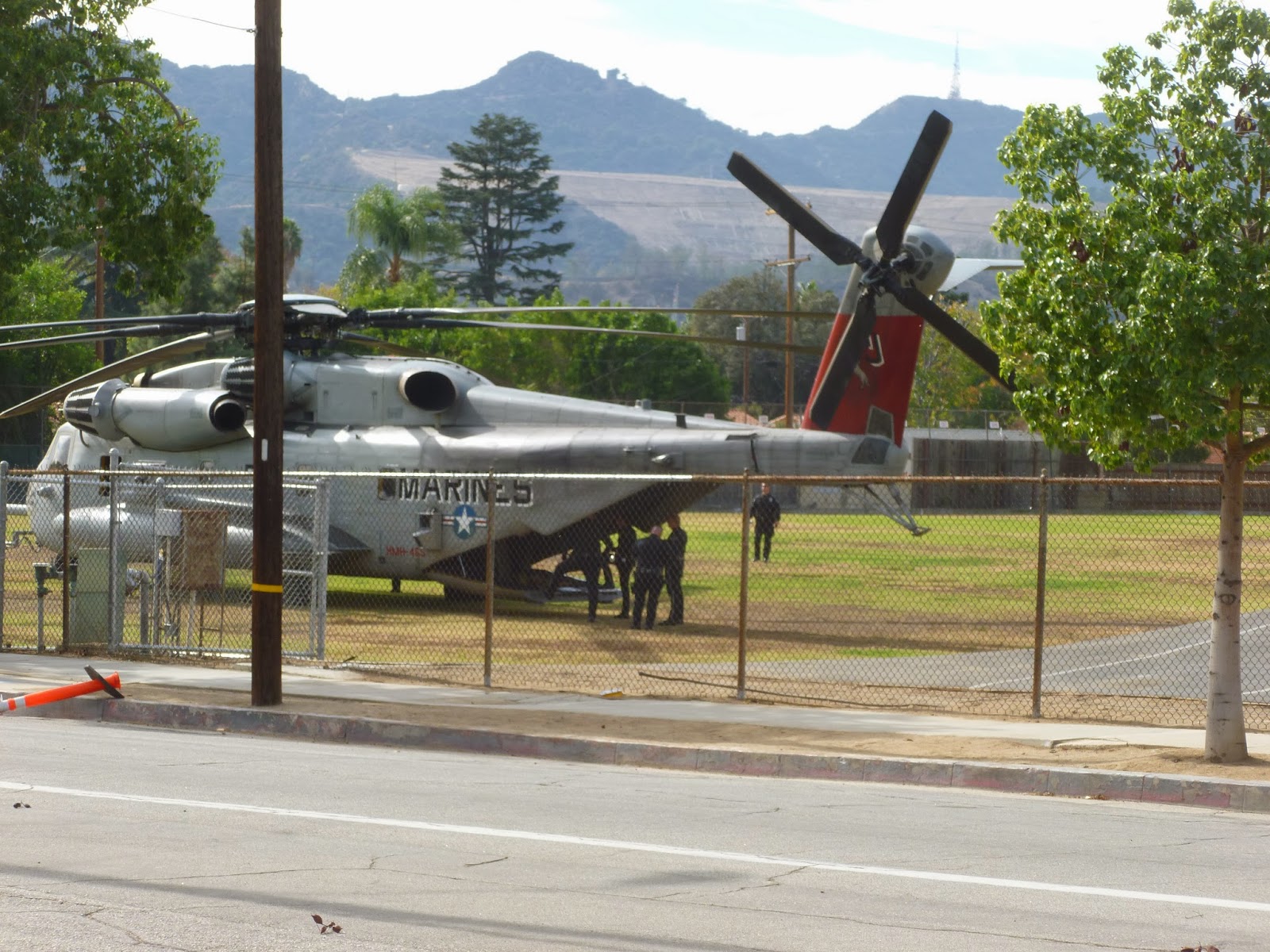
Our church faces the east fence of Toll Middle School in Glendale. The soccer field behind the fence is where hundreds of kids play throughout the week and see the Armenian cross on the roof of our church. This is the same field that the White House staff decided would be the best landing site for the Presidential helicopter, Marine 1.

Over the weekend, we noticed the temporary “No Parking” signs on the streets. Our neighborhood knew something was about to happen. Not sure exactly what, but we learned quickly when four military helicopters landed on the field. This was the practice run. It was to deliver the President of the United States to Glendale for a tour of DreamWorks studio, just up the street from us.

So we had a few days to speculate and even think of some cleaver scenarios.

Invite the President in for a cup of coffee? A parishioner even suggested that he might want to stop by the church for a prayer. Sure. Maybe Mr. Obama will even light a candle? OK. Enough.

Tuesday morning.
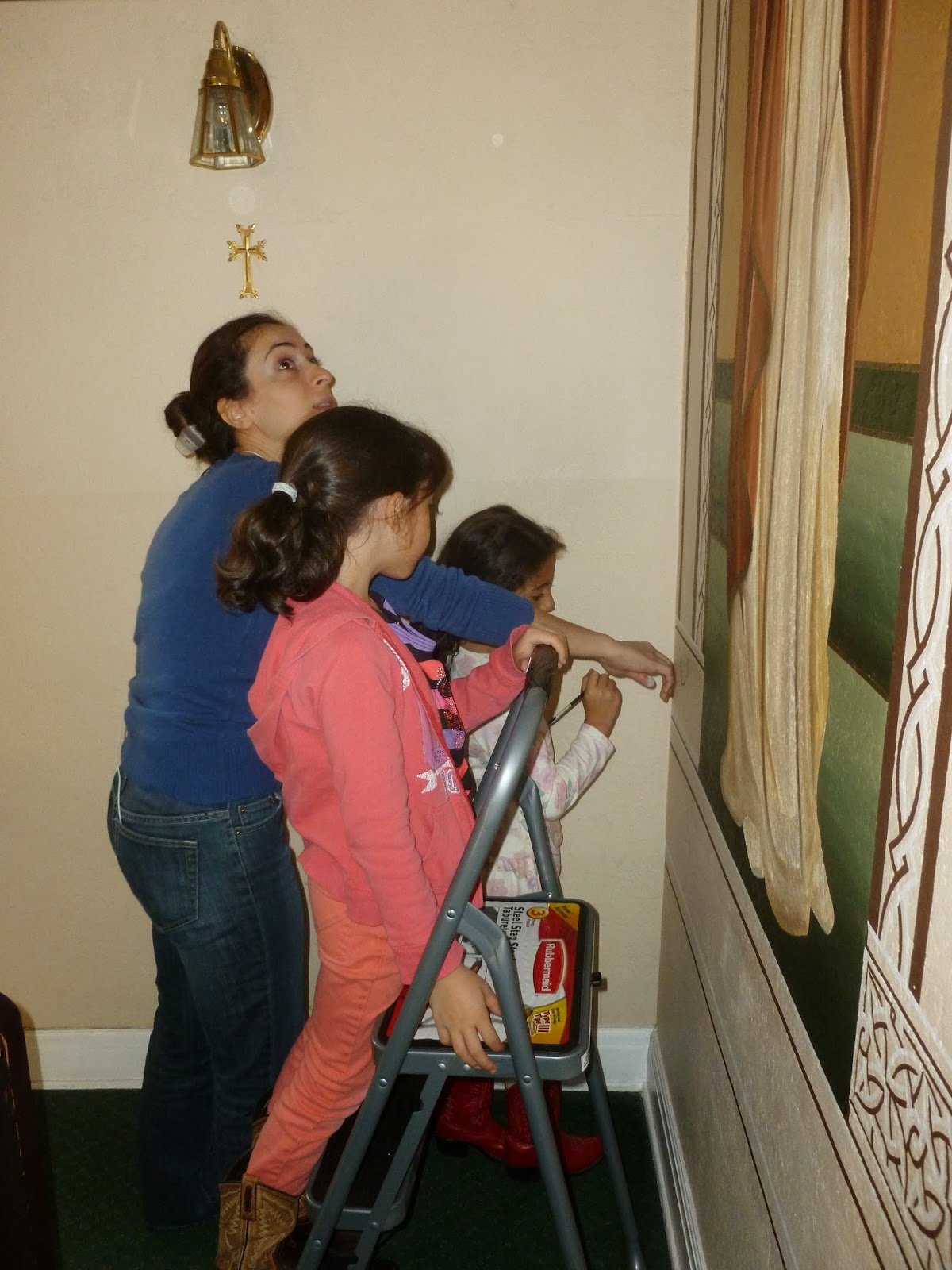
I wish we had put a banner in front of our church – Happy Thanksgiving Mr. President. Instead it was me and Arpine, the young lady finishing up a mural in the church, who would be there to witness the day Mr. Obama came by the Armenian Church.

Every jurisdiction was on the street. Sheriff, Highway Patrol, Glendale PD, SWAT Team, Search & Rescue, Hazmat, Bomb Squad and of course, the Secret Service. Later, I would learn that they have to anticipate any problem and be ready to react. This was an impressive set up. Maybe it was more than a hand-shake and a transportation exchange? Would he be speaking here? There certainly was an awful lot of protection and firepower here on this street.

Behind the police yellow tape boundary one of Arpine’s friends spots her and asks if she can join us on the porch in front of the church. We’re looking out at the field. We see the sharp

shooters on the roof of the school building. They look right at us with their long-range binoculars. I can only imagine they can read our expressions. Arpine’s friend waves at them with a big smile on her face. We can’t help but laugh but also I panic, “Don’t wave!”

The crowds are assembling. We’re told by Secret Service that when the helicopters arrive we will have to go inside the church. “It’s for your protection” they tell us. Hmmmm… my no-wave warning was in order.

The helicopters arrive. The two Marine helicopters are massive, almost the size of our church building. The grace with which the pilots handle them is remarkable. Then the two presidential helicopters arrive. They’re very grasshoppery. He came out of the second helicopter to land. All this detail was for a hand-shake and a transport-exchange. President Obama, tall and sleek, came out of Marine-1, walked over to a limo and took off. That was it. And along with him went the entourage of emergency and security vehicles.

An hour-and-a-half later, they returned. It was all in reverse now. Into the helicopters and off they went.

It was a few hours of excitement on our street corner. It happens now and then in Glendale.
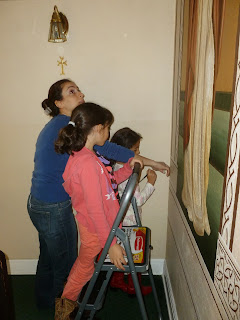
Arpine teaching a new
generation about
Armenian sacred art

A few hours later, there’s a news report on local TV about Obama’s visit. I listen inattentively as they described his trip to Dreamworks studio. But my ears perk when I heard the word “Armenian” in the report. No, it wasn’t about the little Armenian Church that sat across the landing strip. It was a story about a group of local Armenians who “ask President Obama to display the Orphan Rug at the Smithsonian.” What? What local Armenians? I was there. We were the local Armenians. What was this all about?

I did a quick Google search. What happened today? Did I miss something? No. The search led me to the unreliable pages of the Glendale Newspress. And there I read it for the first time. A group of local Armenians got together to ask President Obama to display the Orphan Rug. There they were. Clergy, laity, political leaders and the infamous Glendale School Board. One was missing: President Obama. Yes, they were “asking” President Obama for recognition, but he wasn’t there to hear them! What a non-story! And it was being reported! I expect non-stories from the Glendale Newspress, but I also heard it on NBC-4. Well, so goes their credibility.

Let’s think about this for a moment. A group of Armenians get together, they have a press-conference to address the president. The President is not there to answer back, so we know the answer is not going to change, that is, it will be no. So this sad group goes to battle, knowing it will be defeated and their message is one of complete dependence – asking someone else to verify their reality. (Underlying the Orphan Rug controversy is the bigger issue of Armenian Genocide recognition.)

Instead of the Non-Story…

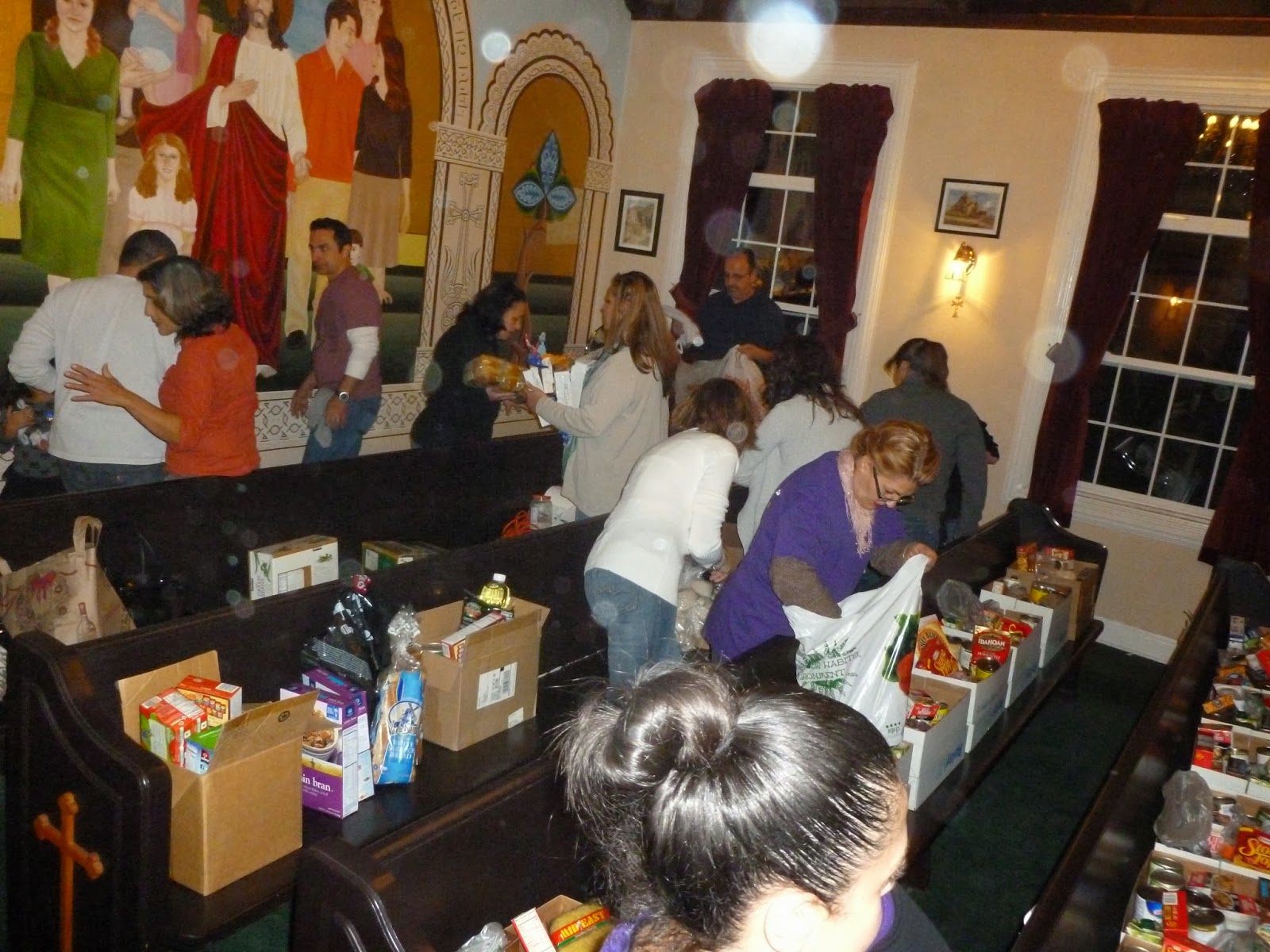
The bigger story would have been if a group of Armenians offered a message of Thanksgiving to the President. This evening, our small Church on the corner, packaged and delivered turkeys, and boxes of food to hungry people throughout the area. In fact, it’s something we do weekly as part of the parish’s outreach. We walk “In the Shoes” of the homeless and the hungry because we were once homeless and hungry. Yes, the same people who were once called the “Starving Armenians” are now feeding the starving. THERE is your answer to recognition. Why would I want to be a victim if I AM a victor? Why would I need someone else to verify my reality?

The President was standing across the street from an Armenian Church. This Armenian Church exists today because I exist. It exists because there are generations that didn’t die but live today. To the point, two little girls, four generations removed from the Genocide, came by during the presidential-visit. They laughed, spoke and sang in Armenian with me. They even learned some Armenian sacred painting techniques from Arpine. Yes, Armenians are not only here after Genocide, we’re creating and teaching the next generation. Who or what entity do I need to verify, recognize or acknowledge this reality? Our Armenian Church has a sign on it that proclaims its OUTREACH through Epostle, In His Shoes and Armodoxy. Simply put (and to the point): We are alive and creating.

So I offer a Thanksgiving message to President Obamba: Mr. President, to me you are a symbol of the United States of America. This Thanksgiving we take a moment not to complain about the things we don’t have but rather to be thankful for the things we do have. The freedoms that we enjoy here in the United States are empowering. I know. My grandparents were immigrants escaping the tyranny of the Turkish Ottoman state. They were survivor of the most heinous of all crimes, Genocide. They found refuge in this great country. My grandfather filled vending machines in New York City. He worked and supported my grandmother and two sons. Together they laid the foundation for my father’s education, career and life. My mother’s father cut hair. He took care of his family and laid the ground work for my mother’s life.

Sound familiar? Of course. It’s the story of America. Our parents gave us the necessary tools to become the people we are. This is a story of strength and growth.

Are there problems here in America. Of course. I’m looking at one of them right now. We’re so scared of ourselves that we have to protect our leaders with massive armor and might. That’s a price we pay. There’s inequality around us. There are economic issues and now, the battle for equitable health care opportunities. But in a society where we can dialogue and engage in conversation, all of our problems can be resolved. America is not a sinking ship
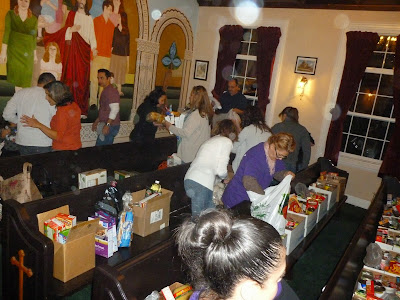
Preparing Thanksgiving Meals – Once starving, now feeding

because it is built on hope. That hope is what America gave to my grandparents. Hope is what gives me strength. I’m thankful to America for that Hope.

I wish everyone would know the story of the Armenians. It is not up for debate. It is a matter of history. If the president chooses to ignore it, we are hurt, but his ignorance doesn’t change the reality. We change the reality when we allow our documented and true stories become non-stories. That’s what happened today by the sad attempt to create a story out of something that wasn’t there.

Happy Thanksgiving. Thanks!

Video clips: https://www.youtube.com/watch?v=6XyLX_ref3I

Kennedy & the Armenian Church

Next Step #285 – November 21, 2013

A personal look at the Kennedy Assassination 50 years later. This is a story of Fr. Vazken in the making – the influences and the drives that formulated his world view and how Armenian Orthodoxy is being shaped today. This is about a process of being born again as a person and as an institution. Stories about a roller coaster ride with the priest on-board: Landing on the track or ready for another ride around the coaster, its pretty scary.
Song: “Too Young to Die” by David Crosby
Fr. Vazken’s blog about the week
Killing of Kennedy
Datev Outreach: http://datevoutreach.org
Engineered by Ken T. Nalik
Produced by Suzie Shatarevyan for epostle.net
Look for The Next Step on blubrry.com
Now on Stitcher Radio! 

No Sini/No Wonder…

A series and collection of events, every day-in and day-out

Thursday – Worked at the Ascencia homeless shelter. In the process of food distribution, thought about the place of responsibility. Sixteen kids lived in the shelter, seven of them from one family. Where’s the conversation about birth control and the need for personal responsibility?

As I walk out, I’m confronted by an ex-heroin addict. He tells me he’s cured by Jesus. In the same town, Glendale, on TV, the Church, clergy and Christ are being degraded and humiliated. People listen and applaud. People listen and support.

Meanwhile, a priest, his church and the love in the heart of the congregation has not asked any questions, only fed the hungry based on Christ’s message to help and have compassion.

Friday – I’m dealing all day with a woman victimized by her husband in an overt case of domestic abuse. We’re careful not to call it “violence” because she has not been beaten, but she has endured the wounds of words and neglect on her psyche and soul.

We reach out with wings. It’s “Datev” Outreach. A couple of us offer help and support. All of sudden she’s been given the greatest of all gifts, she has hope. She believes that things can get better. Her brows ease up and a smile appears on her face.

At what point do the husbands stop beating their wives? When do we identify problems of anger, lust, addictions and address the issues before those issues destroy lives? Where and when does the true “manliness” conversation begin to the responsibility to love?

And all the while, it’s a small group of the Church. It is the Body of Christ that is in motion.

Saturday – Funeral service. She’s lived for 89 years, married for 66 of those years. This woman radiated beauty. She was in church every Sunday until her dying day. She brought her children up in the Church. Some of the grandkids don’t speak Armenian, but no one would dare to question their ethnicity. They are Armenian all the way through – mind and soul without a question, without a doubt.

We’re a long way from Glendale: Fifty miles to the South, light years in mentality. This woman raised her family in the Armenian Church. There was no compromise when it came to the Armenian Church. It was the place where she lived. The same Armenian Church that today is passed up for the soccer field and the Armenian clubs on Sunday mornings.

Sunday – Divine Liturgy. We’re in another parish. It’s a brand new building. The priest’s voice is beautiful. Is there more to say? Some 20, maybe 30, people show up for worship. What do they get from the service? What is redeeming about it? It’s very difficult to sit through one of these. Here’s the question – why would anyone want to sit through a terrible opera?

We have a good thing in Glendale. It’s taken us several years to get it to that point. It’s a different understanding of spirituality at our church. It’s a process. It’s singing. It’s participating. But what do we find on the outside? Is this a unique reality? Or are we just seeing a smaller version of the norm throughout the Armenian Church world?

It’s depressing. It makes us depressed. We’ve done everything to make the Church accessible. It’s not being accessed and in other parishes, even that little access is denied. When do we reach critical mass to effectuate change?

We talk about the Church as the “Body of Christ.” Where else do you find or see this understanding of the Sacred Institution, the House of God?

I get it. I’m on another page. That’s why the need for Armodoxy. The Church if not there. It’s traditions and liturgy are beautiful. They speak to the angels. But to us mortals? The connection is lost. So before it’s too late we have to make sure we are there. The need for relevancy is ever more accented this day.

Before going to sleep that night I read a sorry story of ANOTHER loss. How many of these will it take before we say enough? Here we find a young woman who is unable to connect with her Church. She’s in a stand-off and rather than fight and expelling the people who don’t belong there, she jumps ship and finds expression elsewhere. How many more of these will it take?

I go to sleep, but I can’t. It’s a toss and turn night until a dot wakes me to consciousness.

Monday – We have a meeting to organize our work. It requires putting the pure entity into a box. The box gives it structure and also boundaries. That’s OK for an organization, a club or a fraternity, even for a hospital. What about the Body of Christ? Can that be put into a box?  We can’t. You see, I just got word that another 130 people were killed in Darfur and the Genocide continues. It’s been the enough moment too long. While the Armenians are going to commemorate 100 years of Genocide, the evil continues. There’s only one answer to evil. I know it. We have it. 


The box is there. It’s the structure that gives form. It’s the structure that fools us into believing the building is the church. It makes us lose sight of the mission that defines the Church. The box is the structure that gives the awards and accolades to people, while ignoring those who give a hand and those who need a hand. The box makes us believe that the Institution is corrupt, and even prevents us from supporting the sacredness of Church, i.e., the Body and its Mission. Yes, support is withheld in the guise of thoughtful giving.

And so… when someone criticizes the Church and shies away from using the name of Jesus Christ, I have to think it’s due to a fundamental misunderstanding of terms and function. But I also feel it is due to our betrayal of the fundamental foundation of our Faith.

I’m done. It will not be a stand-off this time.

The name of Love is Jesus. Crush my cold and stony heart with your love. -St. Neress Shnorhali


Listen to Dad. Listen to the Heroin Addict. Listen.

As I was leaving our monthly homeless feed at Ascencia this evening, a man approached me – he was wiry, wearing an Indian necklaces, long uncombed hair, clean with a scraggly beard. “Father – I was a heroin addict for 37 years, living on the streets. Jesus saved me. I want to share my story. It’s been documented and I have this art project. It would be an honor for me to present it to your church – especially to the kids, so they won’t wind up like me….” he said. 
I just sighed. I actually heard my sigh. I didn’t want to leave any more, but had to. I looked back at our ladies – those fabulous ladies. I saw them generically. Not as individuals, but as “our group.” They were dealing food. They were answering the hunger and loneliness of these people with the power of love. They weren’t victims of a long suffering nation. They were in control. Their hands are full and giving life to others.
I walked out the building and on the right, an Amtrak train whisked by. I looked over and the lights were on inside the train so that you can see the people. It’s 6:00PM, the sun has set. The bright windows along with the figures of people in them – reading and sleeping – were contrasted by the silhouette of the train. They were just moving along, oblivious to anything that was happening on the streets. They had no clue what’s going on at Ascensia – why should they? 
Same night, in the same town of Glendale, Armenian TV’s are turned on. They’re bashing the Church, bashing the clergy and bashing Jesus Christ as nonsense. They’ll never get the power that’s waiting to be tapped. They’ll never get it.