New Year, Discipline and Theophany

Armodoxy for Today: The New Year, Discipline and Theophany

All good things come with discipline. The New Year brings with it a convenient mark on the calendar – a before and after moment, a restart button, so to speak, and discipline seems to somehow be connected to everyone’s resolutions.

Discipline for the Christina includes a regular prayer life, engaging with the Teachings of Jesus, and regular participatory practice in community worship. Christianity engages the body, soul and mind with its teachings and practices.

Toward the discipline of the body, the Church prescribes fasting. We are now in the fasting period for Theophany.

Every major event in the Armenian Church, is preceded by a period of fasting. The practice can take different forms. Whether you fast completely or partially, the matter is between you and God, and no one else. In the Sermon on the Mount (Matthew 5-7) Jesus instructs us to keep our religious practices, including fasting, between ourselves and God.

When you fast you only naturally think of food. Hunger brings pain physically and psychology you experience discomfort because you know that food is only a few steps or minutes and yet you are being deprived of food of your own will. In that discomfort you understand Christ’s words, “Man shall not live by bread alone, but by every word that proceeds from the mouth of God.” (Matthew 4:4)

The first day of fasting is truly the hardest because your body is acclimating to the hunger. On the second and third days your body begins to understand that there is a change and accepts hunger and focuses on strengthening the spiritual and psychological senses.

Theophany is in sight. It is the revelation of God, the Creator, Jesus Christ on earth, in our midst. Being ready psychologically and emotionally has been the journey of the last several weeks. This last week, with the addition of fasting, we bring these all elements together to meet and greet Christ in his Incarnation.

If you were to see Christ in your midst, that is, with you and your family and friends, what would be your reaction? Would you say, “Merry Christmas?” Would you say, “Christ is in our midst?” or would your reaction be more profound? Would you be shocked and in awe? Finding that perfect expression of joy in meeting the Christ Child in our midst is the focus of this Advent Journey.

Let us pray, Lord Jesus, you were born and revealed, bringing Light into the world. Fill the darkness that surrounds me with the Light that is you. Fill my heart with your Love, so that there is no room for hatred, disease and evil. Strengthen me, allow me to grow in discipline so that I may meet you as disciple of your love. Amen.

Lightning: Sons of Thunder

Armodoxy for Today: Sons of Thunder: Disciples

“The Sons of Thunder” is how Jesus referred to two of his disciples, two sons of a man named Zebedee, according to the Gospel of Mark (3)

We can imagine why Jesus gave them such a nickname. Perhaps, like thunder they were uncontrollably loud? Brash? Maybe ready for a brawl? Or perhaps like Thunder they didn’t care if their message was welcome or not, they were ready to yell it out. Aggressive? Confrontational? Jesus called James and John the “The Sons of Thunder.”

St. Luke records an event when the people of Samaria did not want to receive the message of Christ, James and John seeing this said, “Lord, do You want us to command fire to come down from heaven and consume them, just as Elijah did?”

In the Gospel according to St. Mark we see Jesus telling his disciples (chapter 10) that  “We are going up to Jerusalem, and the Son of Man will be betrayed to the chief priests and to the scribes; and they will condemn Him to death and deliver Him to the Gentiles;  and they will mock Him, and scourge Him, and spit on Him, and kill Him. And the third day He will rise again.” Perhaps a bit of surprise, discomfort, disbelief might have been the case for the disciples. Not so with the sons of Zebedee who came to Jesus and asked, “Teacher, we want You … to grant us that we may sit, one on Your right hand and the other on Your left, in Your glory.” Definitely low on the sensitivity scale. Imagine, your friend of 3 years tells you he’s going to die and you first question to him is about status in the afterlife?

But at the same time, we know that Jesus welcomed them. They were in the “Inner Circle” of friends, who, along with Peter, Jesus invited to join him at some very critical moments of his ministry, such as when he resurrected the young girl, (Matthew 9) or at the Transfiguration which revealed the Light of the Creator (Mark 9).

The Sons of Thunder, in the years after the Resurrection went on to witness for the Resurrected Christ. James became the first disciple to be martyred for the faith, while John went on to be known for the manner in which he articulated the Love of God. He was the author of the fourth Gospel and the letters at the end of the New Testament. This thunderous voice expounded the message of love as the ultimate God connection.

During these last days of the year, and in preparation for the Theophany, the Armenian Church remembers James and John, the Sons of Thunder. For us, we ask ourselves, how comfortable are we with the message of Christ and his love? Are we able to unashamedly proclaim it? How thunderous is our voice when we speak about Christ and the Love of God?

We pray from the 10th hour of St. Nersess Shnorhali’s prayers, O Christ, who are the Living Fire, inflame my soul with the fire of Your love, which You did send forth upon the earth, that it may burn the stains of my soul, sanctify my conscience, purge the sins of my body, and kindle in my heart the light of Your knowledge. Amen.

James and John: Sons of Thunder (copy)

Armodoxy for Today: Sons of Thunder: Disciples

“The Sons of Thunder” is how Jesus referred to two of his disciples, two sons of a man named Zebedee, according to the Gospel of Mark (3)

We can imagine why Jesus gave them such a nickname. Perhaps, like thunder they were uncontrollably loud? Brash? Maybe ready for a brawl? Or perhaps like Thunder they didn’t care if their message was welcome or not, they were ready to yell it out. Aggressive? Confrontational? Jesus called James and John the “The Sons of Thunder.”

St. Luke records an event when the people of Samaria did not want to receive the message of Christ, James and John seeing this said, “Lord, do You want us to command fire to come down from heaven and consume them, just as Elijah did?”

In the Gospel according to St. Mark we see Jesus telling his disciples (chapter 10) that  “We are going up to Jerusalem, and the Son of Man will be betrayed to the chief priests and to the scribes; and they will condemn Him to death and deliver Him to the Gentiles;  and they will mock Him, and scourge Him, and spit on Him, and kill Him. And the third day He will rise again.” Perhaps a bit of surprise, discomfort, disbelief might have been the case for the disciples. Not so with the sons of Zebedee who came to Jesus and asked, “Teacher, we want You … to grant us that we may sit, one on Your right hand and the other on Your left, in Your glory.” Definitely low on the sensitivity scale. Imagine, your friend of 3 years tells you he’s going to die and you first question to him is about status in the afterlife?

But at the same time, we know that Jesus welcomed them. They were in the “Inner Circle” of friends, who, along with Peter, Jesus invited to join him at some very critical moments of his ministry, such as when he resurrected the young girl, (Matthew 9) or at the Transfiguration which revealed the Light of the Creator (Mark 9).

The Sons of Thunder, in the years after the Resurrection went on to witness for the Resurrected Christ. James became the first disciple to be martyred for the faith, while John went on to be known for the manner in which he articulated the Love of God. He was the author of the fourth Gospel and the letters at the end of the New Testament. This thunderous voice expounded the message of love as the ultimate God connection.

During these last days of the year, and in preparation for the Theophany, the Armenian Church remembers James and John, the Sons of Thunder. For us, we ask ourselves, how comfortable are we with the message of Christ and his love? Are we able to unashamedly proclaim it? How thunderous is our voice when we speak about Christ and the Love of God?

We pray from the 10th hour of St. Nersess Shnorhali’s prayers, O Christ, who are the Living Fire, inflame my soul with the fire of Your love, which You did send forth upon the earth, that it may burn the stains of my soul, sanctify my conscience, purge the sins of my body, and kindle in my heart the light of Your knowledge. Amen.

Giants: Peter and Paul

During this week, the Church commemorates a group of leaders of the early Christian movement, the Church. The Apostles Peter and Paul are remembered on the same day because they shared in a ministry at Rome, where they were also martyred for their faith.

Peter was one of the disciples chosen by Christ to become a “fisher of men.” He was a member of the original twelve disciples and part of the entourage that accompanied Jesus from town to town. Paul, on the other hand, was a persecutor of Christians in the post-Resurrection era but converted to Christianity following an encounter with the Lord on the road to Damascus. Their stories are documented in scripture, in the Book of the Acts of the Apostles. This is a continuation of the Gospel of St. Luke. Think of it as a part 2 of the Gospel, where the first part followed Jesus from Birth to Resurrection, the Book of Acts is the story of the post-Resurrection trial of the early Church. Their story is further documented in the epistles and letters which make up the bulk of the New Testament. Most notably, St. Paul wrote letters to the different spawning and growing Christian communities in Rome, Corinth, Ephesus, Thessalonica and elsewhere. In his writings he encourages the believes of the new religion, to stay faithful to the person of Jesus Christ, and therefore, to God. He uses stories of his own trials and tribulations, his imprisonment, and his salvation through Christ, to encourage the members of these young communities.

The Epistles of St. Paul are some of the oldest Christian writings, giving us a unique view of the early Church community. By remembering the Apostles Peter and Paul we are called to look at the difference and similarities of these two giants of the Christian Church. They come to Christ in two different ways, they served in the same arena and in the end, they left an indelible mark on the history of the Christian Church and therefore Western Civilization. Their lives and ministries intersected at the point of suffering for the Kingdom. Both were persecuted for their faith and belief in Jesus Christ.

Where is our faith today? As we take the Advent Journey, we should examine the uncomfortable moments in our life, where faith in God might be mocked or challenged. How do we deal with those challenges?

We pray today, Psalm 63, O God, you are my God, early will I seek You, my soul thirsts for You, my flesh longs for You in a dry and thirsty land where there is no water. I have looked for You in the sanctuary, to see Your Power and Your Glory. Because your loving kindness is better than life, my lips shall praise You. Thus, I will bless You while I live, I will lift up my hands in Your name.

Reflections on Peace, Technology, and the Human Soul

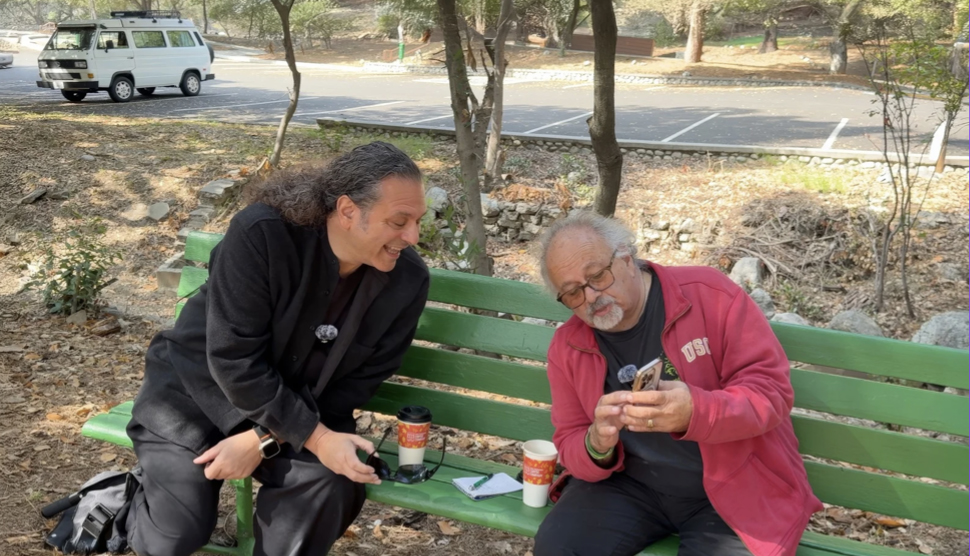
A conversation at Monrovia Canyon Park with Father Vazken Movsesian and Gregory Beylerian, October 27th, 20025

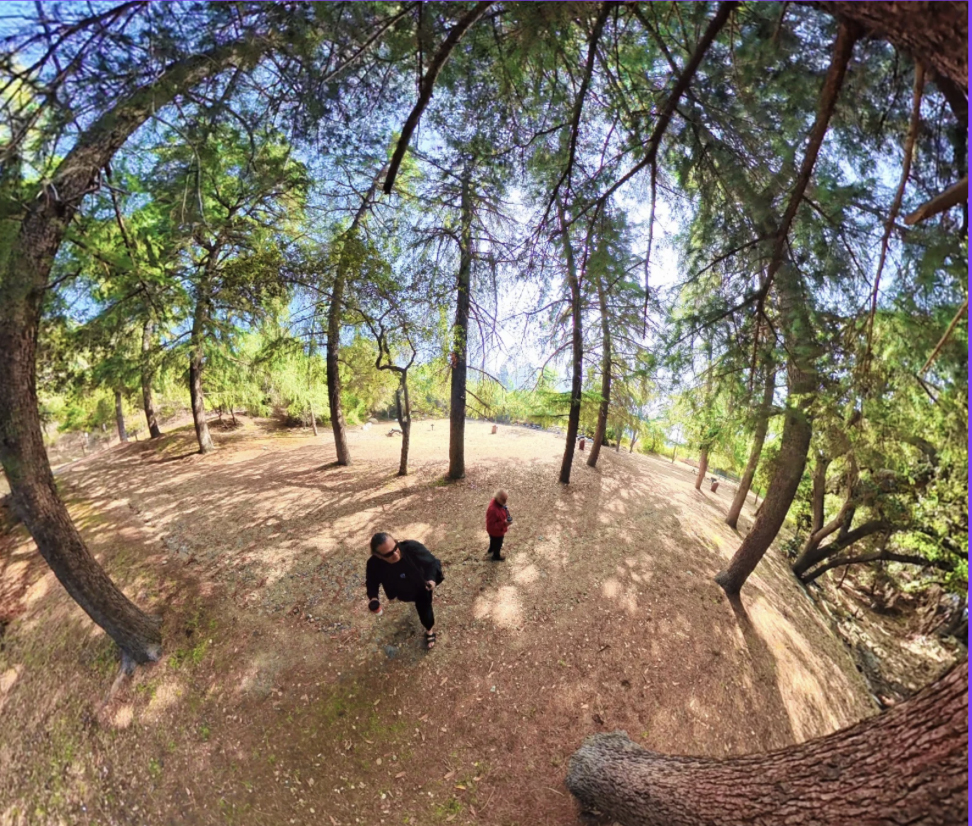
n the serene embrace of Monrovia Canyon Park, under a canopy of rustling leaves and birdsong, Father Vazken Movsesian and Gregory Beylerian shared a simple cup of coffee. What unfolded on that crisp October morning in 2025 was more than casual chatter, it was a profound exploration of life’s deepest questions. Amid the quiet rustle of nature, their dialogue wove together threads of spirituality, innovation, and human connection, reminding us that true wisdom often blooms in unexpected places. As they reflected on their three-year journey with the Epostle project, a visionary blend of technology and ancient faith, they uncovered timeless truths about reclaiming peace in a fragmented world.

Rediscovering Nature’s Embrace

The conversation began with a heartfelt appreciation for the natural world, a sanctuary far removed from the digital hum of everyday life. Father Vazken marveled at how we’ve become tethered to screens, even in virtual realms like the Metaverse, yet nothing can replicate the restorative power of being outdoors. “There’s something about just being out here,” he said, noting the subtle symphony of birds chirping and sunlight filtering through branches, a sensory richness that AI might mimic but never fully capture. 

Gregory introduced the concept of “grounding,” the practice of connecting barefoot to the Earth to restore energetic balance, disrupted by modern rubber soles and synthetic materials. He shared how, before the mid-20th century, humans lived in harmony with the ground’s natural frequencies. Today, amid microplastics infiltrating our bodies and unseen electromagnetic waves, this return to nature feels like therapy. Yet, they pondered a poignant question: Can the planet sustain billions if we all sought such purity? It’s a delicate dance, nature nourishes the soul, but technology enables our survival. Their exchange inspires us to seek small acts of reconnection, like ditching shoes for grass or choosing organic fabrics, as gateways to inner calm.

The Double-Edged Sword of Technology

As innovators at heart, Father Vazken and Gregory celebrated technology’s potential while cautioning against its pitfalls. Gregory recalled the fear surrounding early digital cameras, which revolutionized photography within years, much like atomic energy can power cities or destroy them. “It’s not the burden of the technology,” he emphasized, “it’s the burden of us to become responsible with the tools we’re developing.” Their Epostle project embodies this ethos: using AI, apps, and global connectivity to broadcast “OG” (original gospel) messages of love and unity. In a world where billions carry smartphones, even those without bank accounts, Epostle (electronic apostle) bridges divides, turning pockets into portals for spiritual reunification. Yet, they lamented the disconnection bred by unchecked innovation: synthetic materials polluting our bodies, news cycles fueling anxiety, and leaders wielding power irresponsibly. The key? Infusing technology with heart-centered responsibility. It’s a call to action: Harness tools not for division, but for healing, reminding us that true progress blooms when humanity leads the way.

Overcoming Fear: The Path to Inner Peace

At the core of their discussion lay a powerful antidote to modern malaise: transcending fear through trust and love. Gregory shared his artist’s journey, where creativity flows only in a state of relaxation, uncrimped by tension. Drawing from Shaolin training and ancient Armenian symbols like “Eh” (presence with an open heart), he described fear as “false evidence appearing real”, a mental construct that blocks divine guidance. Father Vazken recounted a serendipitous story: Amid health worries, a photo from Rome bore an Armenian inscription translating to “not even a thorn will hurt you.” It arrived precisely when needed, reinforcing faith’s role in surrendering worry. “God talks to us; we just don’t listen,” he reflected. Peace, they agreed, isn’t fought for but cultivated by relinquishing judgment and embracing the present. In a world gripped by political instability and global conflicts, this message shines as a beacon: Fear divides, but love unifies. By practicing non-judgment and openness, we invite grace into chaos, transforming personal and collective turmoil.
The Epostle Vision: Reuniting Humanity

Three years into their Epostle initiative, Father Vazken and Gregory revealed its essence: a digital network fostering reunification, with nature, community, and the divine. To be in practice, pioneers in using tech for spiritual outreach, they envision Epostle as a bridge, not a barrier. “Peace is a consequence of reunification,” Gregory noted, whether in Christian terms as oneness with God or broadly as human connection.

Their unorthodox paths, Father Vazken’s blend of theology and social ethics, Gregory’s creative explorations, converge here. Influenced by Beatles lyrics, jazz spirituality, and ancient masters, they challenge rigid dogmas. Epostle isn’t about exclusion; it’s an invitation to all, transcending borders via affordable tech. Imagine a world where messages of love reach every pocket, dissolving hatred like morning mist. It’s an inspiring blueprint: Technology, guided by compassion, can heal divisions and amplify what’s true and beautiful.

Echoes of Faith and Unity

Woven throughout were personal anecdotes that humanized their insights. From cramming friends into vintage VWs to channeling inspiration during sermons, they illustrated how life’s “unorthodox” moments shape orthodoxy. Father Vazken’s quest for a unified field theory evolved into recognizing love as the ultimate force, binding gravity, quantum mechanics, and human hearts.

They critiqued superficial judgments, urging appreciation for diverse paths. “All religions are reflections of God,” Father Vazken said, emphasizing respect over rivalry. In conflicts like Gaza or Ukraine, they see echoes of unhealed trauma, advocating love as the remedy. Gregory’s frequency chart, topped by unconditional love, bottomed by fear, underscores this: Align with love to rise above discord.

A Call to Awaken

As their coffee cooled and the sun began to set, Father Vazken and Gregory left us with a profound invitation: Step into nature, embrace technology with heart, and choose love over fear. In a world of synthetic distractions and manufactured divisions, peace awaits those who trust the flow within. Their conversation isn’t just words, it’s a spark for our own journeys. What if we, too, grounded ourselves, surrendered judgments, and unified our fragmented lives through Epostle and beyond? The path to harmony begins now, one inspired step at a time.

 

Vanadzor: Thank You for Hope!

“Thank you for giving me hope…” It’s the expression that is being heard from the participants in the “Gar” Sewing program, part of the Vibrance for Vanadzor outreach of Epostle. Watch this short expression of appreciation, prepared as a year-end thank you to all those who made this happen.

“Thank you for Giving Me Hope!”


Immanuel, Birthing Pains

Armodoxy for Today: Advent – Immanuel, Birthing Pains

Birthing pains are a signal that new life is close at hand. We have been through this Advent season preparing ourselves for the arrival of Christmas and the message of the Christ Child. These last days of the Advent Season are the birthing pains in our spiritual journey. Christmas lies ahead. Jesus Christ, is about to enter into our lives, how do we greet this awesome event? Armodoxy demands that we interact with the Nativity message beyond a nod and a tip of the hat. We are called to celebrate Christmas in a manner that points to the reason of the season.

In Holy Scripture we find three narratives of the Nativity, in the Gospel of Matthew, Luke and John. Only St. Mark, the oldest of all the Gospels omits the Nativity narrative. It is the Evangelist St. Matthew who clearly expresses with the words, “Now the birth of Jesus Christ was as follows,” and with that preface he gives the narrative, “After His mother Mary was betrothed to Joseph, before they came together, she was found with child of the Holy Spirit. Then Joseph her husband, being a just man, and not wanting to make her a public example, was minded to put her away secretly. But while he thought about these things, behold, an angel of the Lord appeared to him in a dream, saying, “Joseph, son of David, do not be afraid to take to you Mary your wife, for that which is conceived in her is of the Holy Spirit. And she will bring forth a Son, and you shall call His name Jesus, for He will save His people from their sins.”

So all this was done that it might be fulfilled which was spoken by the Lord through the prophet, saying: “Behold, the virgin shall be with child, and bear a Son, and they shall call His name Immanuel,” which is translated, “God with us.” Then Joseph, being aroused from sleep, did as the angel of the Lord commanded him and took to him his wife, and did not know her till she had brought forth her firstborn Son. And he called His name Jesus.”

The birthing pains in our Advent Journey have now begun. We are at the point of no-return. We hear the message of the Gospel. He who is being born is the Savior. Immanuel, God with us, Creator, He who is without beginning and without end, in His Love for us is coming to be in our midst.

For Joseph, he had to deal with the social norms of the day which might have embarrassed him to take the Mary as his wife. For us, we deal with the social norms of today, which might betray us to the same kind of fear and embarrassment to proclaim an unwavering faith and commitment to the Christ Child that is coming. The message given to Joseph is now our message: Do not be afraid!

The first step to make your dream come true is to wake up, and Joseph did exactly that. He moved to action and named his dream-come-true, Jesus. Like Joseph, today we wake from our sleep and move to action. We proclaim the Child as Jesus and understand that our salvation is tied in with to this moment of singularity, when the virgin conceives, and a Son is born.

It is the birth of Jesus Christ, and we are here to honor him with the greatest gift that we can offer him, our love and commitment to his teachings.

Today we pray an intercessory prayer to St. Mary, the Holy Mother of God. O Asdvadzazin, today you bring to our world our Savior. Along with Joseph, you put fear aside and proclaimed the presence of God in our midst with the birth of Jesus Christ. Pray for us, at this moment that we may stand in awe of God’s infinite Love for us, that we may cast aside doubts and fears, and grow in faith for the blessings we are about to receive. In the name of Jesus we pray. Amen.

Christmas, 12 days begin

Armodoxy for Today: Advent – Merry Christmas!

On this day of our Advent Journey we encounter Christmas. December 25 is widely accepted as the day of Christmas. For us, we will continue in the period of Advent considering our target is January 6, the Theophany. Tragically, no one can say with certainty what is the feast of Christmas today. For some it is the Birthday of Jesus, for others it is a purely secular holiday with holly leaves and beautiful ornaments. Between the religious and the secular celebration there are many different degrees and categories of the festival. Some agree that it is Jesus’ Birthday but it’s not necessarily tied with any religious significance; Jesus was a good man, nothing more. Others define themselves as Christian because on this day they decorate a tree and attend a Christmas service. Indeed, there are many different degrees and categories of the festival. And every one of those expressions can argue on legitimate grounds that they are celebrating Christmas.

We are content to call today, Christmas. In contrast, the name we use to express the holiday is Asdvadzahaydnutiun  which literally means God’s Revelation, or Theophany, explains the position of the Church. It is for the Theophany that we are preparing ourselves on this Advent Journey. The Creator of the Universe and the Author of Life is revealed in our midst! And while we officially recognize the original date – January 6 – as the day to celebrate the Theophany, as Christians we must be ready, willing and able to celebrate the Revelation of God every day, January 6, 7 and 8. February 11, 12 and 13, April 14, 15 and 16 and every day and every opportunity we have to proclaim our joy and thankfulness for the life we enjoy through Jesus Christ.

It is for this reason we are on this Advent Journey, so that when we arrive at January 6, we understand the Essential Teachings of Jesus, and apply them to our life every day we breathe and live.

Merry Christmas, today and tomorrow. Celebrate the Birth, and enter now into the 12 days of Christmas to January 6. Far from pipers pipping, lords a leaping, maidens milking and a partridge in a pear tree, these next 12 days will conclude for you, as promised, on January 6, when you say “Christ is Born and Revealed” the words will have meaning for your life and the world you touch with your love.

A Christmas wish for you and our world…

May the joy of the angels,
the eagerness of the shepherds,
the perseverance of the wise men,
the obedience of Joseph and Mary,
and the peace of the Christ child
be yours this Christmas.
And the blessing of God almighty,
the Father, the Son, and the Holy Spirit,
be upon you and remain with you always. Amen.

Two to (not too) Many

Armodoxy for Today: Advent – Two to (not too) Many

As we move closer to Christmas on our Advent Journey, it becomes apparent that we will be meeting for Christmas on December 25th and then again on January 6th. Yesterday we spoke about the Winter Solstice, the birth of the sun and the Birth of the Son. Sometimes people, in their zeal to strike a conversation about Armenian Orthodoxy, will make a statement to the effect that Armenians are fortunate, they have two Christmas’ to celebrate. The statement is somewhat true, for in reality the Armodox understanding is even greater than two celebrations.

December 25th in the West and January 6th in Armenia are only dates of convenience, that is, dates on which the Birth of Christ may be marked and celebrated with official festivity, whether a worship service, a concert, or a party. Calendars are convenient means by which we measure time. There are groups that organize services by other calendars, for instance the Julian calendar, in which case their December 25th is on our January 7. Even within the Armenian Church there are differences of calendars. In Jerusalem the feast of Theophany – the Revelation of God – which we celebrate on January 6 is celebrated on the 19th of January.

Armodoxy, cuts through the conversion tables and date calculations and presents a very simplified – even more meaningful – proclamation of the date of Christmas. For a Christian, Christ is born every day. Imagine a world in which every day is celebrated as Christmas? The fundamental Faith that was expounded by Jesus Christ was exactly this! You don’t preach one thing, and live another way. You don’t turn on God today and forget about Him tomorrow. Christ is born and in our midst every day. The Christian lives with the celebration of God and man reconciled. The Christian every day strives for the message heralded by the angels on the night of Jesus’ birth, “Peace on Earth and goodwill toward one another.” (Luke 2:14) Looked at it another way, is there a day in our lives when we would not proclaim the Christmas greeting that Christ is born and revealed?

We learn today that Christmas is on December 25 and on January 6, but it also must be on February 11, August 31, September 7, in a word, every day. Armodoxy converts the two days of Christmas one final time to many days, to every day. It is with this understanding that we now proceed into the final days of the Advent season and our journey through it.

Let us pray, Lord God, help us to live as Christians every day of our lives. Celebrations of your birth are important markers on our calendars and reminders of a salvific event. Allow me to live my life so that I am marking every day as a day of celebration of the love you have for me and humanity. Amen.

Solstice: Light of Light

A few years back, I found myself in a village in Rwanda working with genocide survivors. We conducted some informal interviews, became familiar with their daily activities and then, as the sun went down, people wound down, and pretty soon, 7:00PM, in the dark of the night, people were in their homes preparing for their evening rest. There was no sound throughout the village. I thought it odd that people would be preparing to sleep at this early hour. And then it occurred to me, that without electricity, without the artificial lighting that the electricity provides, for all intents and purposes the day was over with the sun set.

Today we celebrate the Winter Solstice. It is the shortest day of the year in the Northern Hemisphere. From the Summer Solstice to this day, the days have gotten shorter and shorter, and now, moving forward, there will be more hours of daylight per day to live and enjoy. In a world without electricity, you might imagine how welcomed the longer days ahead would be, so welcomed, that this day would be celebrated as the “birth of the sun.” Indeed, the sun stays out longer giving more possibilities for work, play, socializing, that is, possibilities for life!

To facilitate the spread of Christianity, the date of the Birth of Christ was moved to December 25 in the Roman Empire during the fourth century. Celebrating the birth of the Sun was replaced with the Christmas festivities, in honor of the birth of the Son! Meanwhile in Armenia, during the fourth century, the Winter Solstice was not celebrated to the extent it was in the Roman Empire. The date of Christmas was not changed and January 6 remains as the celebration date for Theophany. There are more factors for the different Christmas dates, but for today, suffice it to say, that Armenia was not touched by the date change. Until today, the Armenian Church celebrates the Nativity and Baptism of Christ on the same date, January 6.

The Solstice points to the cosmic time clock that has seasons and times changing over the globe. It’s a reminder that some of the great treasures of our Faith are found in the simplest phenomena of nature. Whether the birth of the sun or the birth of the son, there is a common thread that runs through both, namely, light. They are both gifts of light to the world.

How we process this revelation in the Christmas message, is how Armodoxy fits into our cosmology.