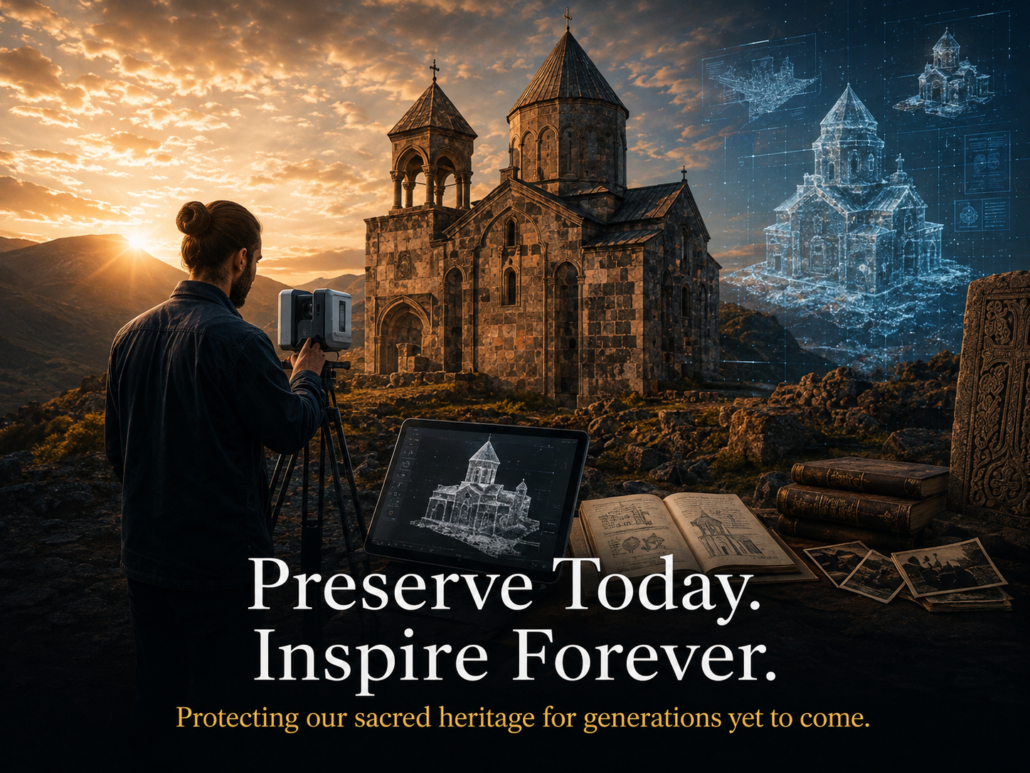
Reclaim 2026 – Monasticism

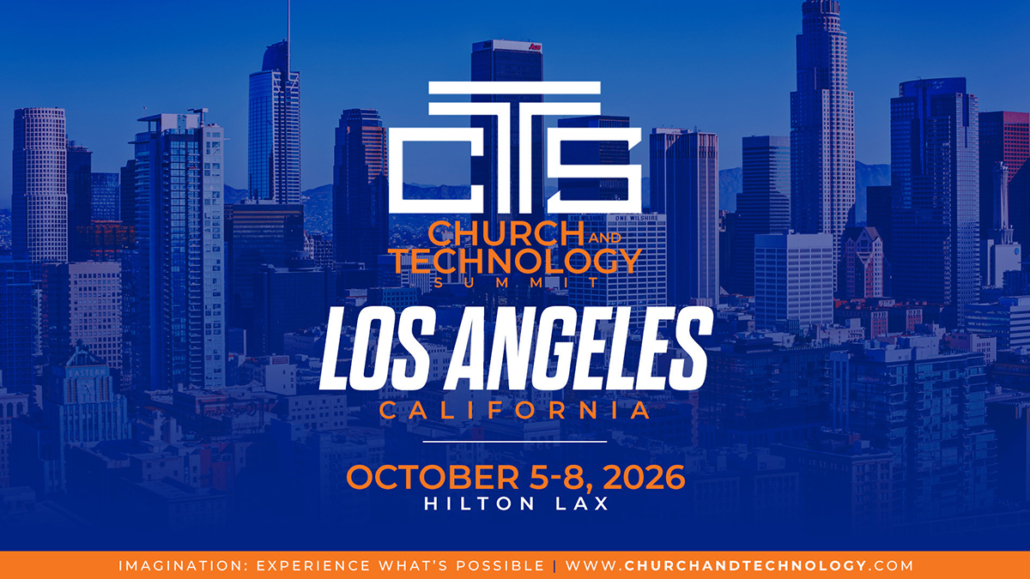
10th Annual Reclaim Conference: “Reclaim Monasticism”

March 6,7,8, 2026

Under the auspices of

Archbishop Hovnan Derderian, Primate

at the St. Mary Armenian Church, Yettem California

Bishop Daniel Findikyan, Keynote Speaker

Fr. Vazken Movsesian, Fr. Avedis Abovian, Fr. Mesrop Ash
Dr. Hratch Tchilingirian, Dr. George Stepaniants
Special Yettem Presentation by David Menendian

Conference: $125/person (Earlybird $100 to 2/20) Includes: All conference events,
welcome reception, speakers, presentations, materials, discussions and meals

tiny.cc/Reclaim2026


Hotel: Residence Inn, Visalia  tiny.cc/Reclaim_Hotel

Bus transportation available – Rd trip: Burbank ~ Yettem and transportation to and
from hotel and events for all three days, return to Burbank

Mountain Talk

A Conversation with Father Vazken Movsesian and Gregory Beylerian on Identity, Creativity, and the Mystery of Being.

On a quiet mountaintop overlooking the vastness of creation, Father Vazken Movsesian and artist Gregory Beylerian shared tea and reflection, an unscripted exploration of life, identity, spirituality, and the state of humanity. What emerged was a deeply human conversation, rich with humor, humility, and insight into the challenges and beauty of modern existence.

Roots and Identity

Their dialogue began with something simple, homemade rojig, a sweet made from Armenian grapes grown in Pasadena. From there, they explored the meaning of cultural connection and belonging. How does identity shape who we are, and how can it both liberate and limit us?

For both men, identity is not merely ethnicity or history, but a living bridge between past and present. As Father Vazken observed, “It’s not only for yourself, but in defining who you are in the bigger picture.” Gregory expanded the thought, recalling how ancient Indian mystics once taught children to identify first with the cosmos, to root their identity in the whole of creation before nation or tribe. Such a perspective, he said, inspires unity rather than division, compassion instead of competition.

Living in the Now

Father Vazken reflected on how religion often misdirects people’s attention toward “a time to come,” missing the spiritual essence of the present moment. “Jesus wasn’t teaching about something far away,” he said. “He was showing us how to live right now, peace on earth, goodwill toward one another.”

Gregory connected this with the need to evolve beyond survival thinking. Humanity’s progress, he suggested, requires cooperation, mirroring the harmony already present in nature. “Nature doesn’t show survival of the fittest,” he said. “It shows a cooperative relationship. That’s the wisdom we’ve forgotten.”

Education, Creativity, and the Human Spirit

Their conversation naturally turned toward education, how systems built on competition stifle creativity and curiosity. As a teacher and parent, Gregory lamented how children’s innate creativity is often the first thing cut from school budgets. “The art class isn’t just for making Picassos,” he said. “It’s where problem-solving, innovation, and social vision are born.”Father Vazken agreed, describing education not as a means to make money, but a way to connect, understand, and participate in the human story. “Education’s purpose is knowing that you’re not alone here, that you’re part of something bigger.”

Mass Formation and Higher Intelligence

Gregory introduced the concept of mass formation, the way collective consciousness can be manipulated when intellect is disconnected from higher intelligence. Propaganda works not because people lack intelligence, he explained, but because their awareness is confined by identity.

He drew a distinction between intellectual and divine intelligence: “Our intellect can be shaped by the world, but imagination, the higher mind, connects us to creation itself.” Father Vazken reflected that the danger lies in forgetting vision. “Where there is no vision, the people perish,” he said. “Knowledge is important, but that’s not education’s purpose. It’s about learning how to live, connect, and find meaning.”

The World at a Crossroads

Their conversation moved to the state of the world, war, environmental degradation, and political corruption. Both men agreed that humanity has the resources to heal these problems, yet lacks the creativity and moral vision to apply them. Father Vazken spoke passionately: “We fight fire with fire, and that just makes more fire. We’ve convinced ourselves there’s no other way, but there is.” Gregory noted that despite our technological evolution, consciousness has lagged behind. “We’re entering a time when people are waking up,” he said. “Maybe this isn’t a revolution of violence, but a revolution of awareness.”

The Return of Myth and Meaning

Gregory invoked Joseph Campbell’s reminder that societies survive through their myths, living stories that help people understand who they are and where they’re going. “Without vision,” he said, “a culture perishes. We need to retell the old stories in new ways.”

Father Vazken agreed: “Without relevance, even religion loses purpose. These stories were created to help us explain the mystery, to remind us of something beyond ourselves.”

They discussed the vastness of creation, from the first spark of light to the latest discoveries of modern science. “This isn’t just a 2,000-year-old story,” said Father Vazken. “It’s a 13-billion-year-old one. Everything we see, all of it, is part of that same beginning.”

The Hero’s Journey

Gregory reflected on Campbell’s Hero’s Journey as a metaphor for spiritual awakening. “You leave the comfort of your village, your security, and face the unknown,” he said. “The monsters you meet are really your own fears. When you conquer them, you return to your community with wisdom and gifts.”

Father Vazken added that different traditions describe this same journey in different language, “Follow God’s will,” “Listen to the universe.” , Gregoy responded “ ahh, trust the flow”. Each points to the same truth: we are guided when we open to mystery.

Eh, The Presence of Being

Among the most profound moments in their mountaintop dialogue was the exploration of the ancient Armenian letter “Eh” (Է), a symbol carved for centuries above the altars of Armenia’s oldest churches.

Gregory recalled asking Father Vazken what the mysterious sign meant, seeing it over and over in monasteries built atop mountains and inside caves. “It’s Eh,” Father Vazken explained, “the verb to be in the present tense.” In that one syllable lies the heart of Armenian spiritual philosophy: presence. It is not a noun or a static identity, but an active state, being.

Father Vazken described Eh as the essence of reality itself. “It is the ultimate verb, the living now,” he said. “Everything else passes. The past is gone, the future may not come, but this moment, this presence, is real. This is where life is.”

Gregory reflected that this symbol captures what mystics and teachers across traditions have tried to convey for millennia: the invitation to be here now. From the teachings of Jesus to the insights of Eckhart Tolle, the message is universal, the eternal resides in the present.

They both noted how children embody this truth effortlessly. “A child lives in the eternal,” said Father Vazken. “They wake up to a new day without carrying yesterday. What a beautiful way to live.” In this way, the Eh becomes more than a letter, it is a map back to consciousness, a reminder that God, existence, and awareness all meet in the same timeless point: Now.

The Power of Mystery and Presence

Both men concluded that the greatest loss of modern times is our comfort with not knowing. “We’ve forgotten how to live with mystery,” said Father Vazken. “Not everything can be solved or Googled.”

Gregory emphasized the need to remain open, to cultivate a “beginner’s mind,” even after decades of experience. “That’s how discovery continues,” he said. Their conversation ended as it began, simple, grounded, human. They spoke of the wisdom of children, who live fully in the present, unburdened by yesterday or tomorrow.

A Shared Vision

As the sun dipped below the mountain, their tea cooled, and the conversation settled into silence. Two friends, a priest and an artist, had traced the arc of human experience, from cosmic identity to earthly compassion, from intellect to mystery. In their exchange was a quiet reminder: that the way forward for humanity is not through more technology or ideology, but through awakening the heart, nurturing creativity, and remembering our shared belonging in the great cosmic story, in the eternal Eh of being.

Screenshot


The Vanadzor Team

Epostle Welcomes the Vanadzor Team

2025 marked a transformative year of growth for Epostle. We launched new initiatives, sharpened our focus, and reaffirmed our essential mission: to bring the light of Christ’s wisdom, the O.G. (original gospel) message uniquely preserved by the Armenian Church, to people around the world today. At Epostle, we view this mission as a bridge, a vehicle to guide humanity forward into the light. In an era when the world grapples with crisis, questions truth, and witnesses the consequences of polarization and division, this unifying light is needed more than ever. Like a lighthouse guiding ships through the night, Epostle aspires to be that steady beacon, beyond politics, untouched by societal drama, and unwavering in our commitment to the mission. When in doubt, follow the light. This is our message, our protocol for healing, evolving, innovating, and finding solutions amid darkness.

To fulfill this vision, we are intentionally building a borderless team, one that draws strength from diverse locations and shared purpose. After introducing our social media team in Yerevan, we are proud to present our Vanadzor Team, based in Armenia’s third-largest city. In March 2025, shortly after the Reclaim Conference, a small Epostle delegation traveled to Vanadzor to meet our newest members and lay the foundation for thriving outreach programs. We were warmly received by Bishop Hovnan Hakopian, Primate of the Gougark Diocese of the Armenian Apostolic Church, who shared his vision for the diocese’s future. This visit deepened our collaboration, focusing on real needs: spiritual and emotional support for refugees from Artsakh, a sewing center empowering displaced women to earn income and build self-reliance, and a children’s art center where young ones create freely, healing through expression.

At the heart of these efforts are two exceptional women whose experience aligns perfectly with Epostle’s goals and the community’s needs: Arevik Yeghiazaryan and Hripsime Mirzoyan, our Project Managers in Vanadzor. They serve as the vital bridge connecting Epostle’s main hub in Los Angeles with on-the-ground action in Armenia.

Arevik Yeghiazaryan brings strong project leadership and organizational skills. She holds a Master’s in Business Administration from the Public Administration Academy of Armenia and a Bachelor’s in Management from Vanadzor State University (with studies in Romania). Since 2021, she has been Project Manager at the Gougark Diocese, while leading “Bolor sar” NGO as President/Project Manager (2017–2025) and serving as founding member/Program Coordinator of WINNET Vanadzor (since 2020). Backed by trainings in CSO management and collaborative policy, she excels in communication, leadership, teamwork, and problem-solving, perfect for driving sustainable Epostle initiatives.

Hripsime Mirzoyan, a dedicated social worker born in Vanadzor, brings deep compassion and extensive community experience. Educated in Social Work and Social Policy at Yerevan State University’s Lori Regional Center, she has led the Social Programs Department at the Gougark Diocese since 2018. She coordinates programs like “Her Power, Her Future” (with CARE Caucasus and WINNET, 2023–present), psychosocial support, children’s education, and refugee aid. As Founding Member and President of WINNET Vanadzor (since 2020), she focuses on women’s and youth empowerment. Hripsime excels in communication, leadership, organization, and conflict management, making her an ideal heart-led partner for Epostle’s work.

During our March visit, these programs truly came alive. We met refugee women in the basement of Narekatsi Cathedral, listening to their stories of loss and exile while honoring their hope to return home. Dr. Talar Tejirian, our accomplished physician and surgeon from Los Angeles, spoke candidly about staying active and positive. She offered gentle assessments and introduced gratitude journaling. Her magnetic presence and professionalism left a lasting impression, embodying the empowered woman as a beacon of perseverance and possibility. To many Artsakh refugee women, Talar represents hope and what’s achievable through committed action, a living example of Epostle’s vision: light over darkness, possibility over fear.

Our refugee support began last year with fundraising like the Cars and Coffee event at St. Leon Ghevontyants Cathedral in Burbank, channeling funds to the sewing center and self-sustainability efforts. At the children’s art center, we saw joyful creativity and held open conversations with youth about faith and adolescence. Gregory Beylerian, Epostle’s creative director, shared insights on the children’s drawings, underscoring art’s role in healing and power of creative expression. We also reflected at the tomb of beloved former Primate Archbishop Sebu Chuljian, whose legacy of leadership and youth exchanges, including our continuing sister-camp programs, endures with our support.

With Arevik and Hripsime as our heart-led liaisons in Vanadzor, Epostle is achieving these goals with remarkable effectiveness. Teamwork is central: we co-create in rhythm, guided by conscious orientation and faith. Our team is built not on need or security, but on the heart, aligned with the teachings preserved by the Armenian Church at the base of Mount Ararat 2000 years ago. As a heart-led team rooted in divine intelligence, creativity, and action, the sky is not our limit; we reach beyond to the stars and further.

Looking to 2026 and beyond, we see a canvas of possibility. We are not dissuaded by society’s challenges because we choose to be part of the solution, a choice open to everyone. At Epostle, we have chosen to preserve and honor our past while shaping an illuminated future. We are deeply grateful for Arevik and Hripsime, whose dedication brings the light of Christ to life in Vanadzor. Their work uplifts families, empowers women and youth, and strengthens the global Armenian community’s bonds of faith and solidarity.

Together, we follow the light.

A Day at the Meta Lab

Inspiration In The Making: From coffee rituals to AR Breakthroughs, how innovation fuels the Epostle Vision.

There’s a kind of rhythm that forms when Father Vazken Movsesian and I (Gregory Beylerian) meet. Our gatherings have never been casual catch-ups, they’re rituals. Moments where ideas spark like flares in the night sky, where conversation becomes its own creative engine, and where inspiration flows as freely as the coffee we always share. Sometimes it’s his legendary Armenian brew, strong enough to alter the fabric of time, or an artisanal cup from a local roaster. Either way, coffee has become our silent companion, a symbol of the warmth and intention behind our partnership.

So when we stepped into the Meta Flagship store on Melrose Avenue in Los Angeles, we had to laugh. There, tucked between glistening devices and clean lines of futuristic design, was a full coffee bar, gourmet doughnuts, curated seating, the works. Whoever dreamed this up must have been tuned in to our wavelength. After our guided walkthrough with the Meta team, it became the perfect place to sit, sip, and let our minds stretch into the horizon of possibility.

We were there to test-drive Meta’s newest creation, released just a month prior, the Meta Ray-Ban Display glasses and their accompanying neural wristband. As two longtime lovers of tech, and as the visionaries behind Epostle, these moments speak to us. Innovation, when guided by purpose, has always been one of our greatest tools. And Epostle’s work in education, outreach, and heritage preservation has been deeply intertwined with emerging technologies from the very beginning.

Today’s visit was no different. It was a look forward, a vision-quest into the future of how Epostle might evolve and serve in new ways.

We’re already immersed in virtual reality experiences through Meta’s Quest 3 system and Apple’s Vision Pro. But this was different. This was the edge of what’s coming in augmented reality, something lighter, more intuitive, more seamlessly integrated into daily life. And from the moment the Meta Lab team fitted us with the neural wristbands and placed the glasses in our hands, we could feel it: we were entering the first moments of a new chapter.

The experience was astonishing. Standing side-by-side, guided by the warm enthusiasm of the Meta team, we watched as a new world quietly shimmered into view. Messages appearing directly in the lens. Turn-by-turn directions floating before us like subtle constellations. Hands-free photo capture triggered with a simple gesture. And then the moment that truly stunned us: live translation, unfolding in real time as someone spoke.

Words materializing before our eyes, clear, instant, and deeply human. We looked at each other and immediately understood the scope of what this could mean. Not someday. Now!

Ideas poured out faster than we could articulate them. Each feature hinted at new possibilities for connection, storytelling, teaching, and reaching communities scattered across the world.

And yet, for all its brilliance, the technology is still in its infancy. Much of what we asked about is “too new,” still behind closed doors, not yet ready for release. Standing there, we felt the unmistakable sense of being at the frontier, witnesses to something both powerful and fragile in its beginning stages.

But with that excitement comes a recognition of the moment we’re living in. The past twenty years have unfolded at a pace the human mind was never designed to absorb. Today we see the consequences, disconnection, doubt, identity confusion, and a pervasive sense that the ground beneath us is shifting faster than we can stabilize. Younger generations, who never knew a world without constant digital stimuli, face these challenges in even deeper ways.

Yet this is not a reason to reject technology. It is an invitation, a call to remember what it means to be human.

This is where Epostle steps in.

Our mission has always been to reconnect people to the root source of existence, the light from which all spiritual insight emanates. Armenia’s monastic culture preserved this wisdom, the OG Christian message, through centuries of sacrifice, carrying it intact from 301 AD to today. Epostle exists to share this treasure with the world, in its clarity and its original form.

And so, when we explore new technologies, we do it not to add more noise to a noisy world,

but to build a bridge. In Armenian tradition, this bridge is symbolized by the sacred “Eh”,

the eternal vowel placed above every altar, signifying presence, open-heartedness, the divine spark within us.

Technology itself is neutral. It doesn’t judge. It amplifies the intention of the one who wields it.

Our calling is to infuse these tools with the essence of Eh, using them to uplift, reconnect, and remind humanity of its inherent light. To bring people closer not to distraction, but to depth.

Not to fragmentation, but to unity.

As we walked out of the Meta Flagship store that day, Father Vazken and I felt it clearly: this future rushing toward us can be a force for incredible good. If held with heart, it becomes a conduit for peace, understanding, and community across continents.

That afternoon, over coffee in the most unexpected of places, we caught a glimpse of a world where technology becomes a companion to spirituality, not its competitor. A world where Epostle continues its mission as a bridge, guiding humanity not toward fear and disconnect, but toward its highest potential.

And this is only the beginning.

Welcome Epostle’s Latest Team Members.

Epostle’s Social Media & Marketing Team: 

Bridging Humanity Through Faith, Technology, and Service

In a historic proclamation, His Eminence Archbishop Hovnan Derderian affirmed Epostle as a global mission of the Armenian Apostolic Church, an initiative devoted to carrying the original Gospel message of Jesus Christ into the modern world. Rooted in ancient faith and empowered by contemporary tools, Epostle stands at the intersection of sacred tradition, technological innovation, and compassionate service.

For over two millennia, the Armenian Church has safeguarded the integrity of Christ’s original teachings, preserving a spiritual lineage that began when Armenia became the first nation to adopt Christianity. These teachings, endured through persecution, displacement, and cultural upheaval, were never preserved for history alone, but for humanity’s present moment. Today, Epostle exists so that anyone, anywhere in the world, can access these treasures of the heart.

At its core, Epostle is a mission of service. Its vision extends far beyond geographic boundaries, beyond Armenia, Glendale, the United States, and Europe, reaching toward a truly global community. With the guidance of advisory board member Jim Kaplan, retired Chief Engineer at Lockheed Martin, Epostle has embraced data-driven insight to better understand today’s spiritual landscape. Through analytics and research, the organization identified a growing population of the “unchurched”: individuals seeking a connection to Apostolic Christianity without access to a physical church, or those separated by language, culture, or circumstance.

Epostle’s response has been clear and courageous, to become a bridge. A bridge between tradition and innovation. Between ancient wisdom and modern life. Between humanity and the divine, no longer limited by geography, language, or culture. With little more than a phone in one’s pocket, the teachings, voice, and presence of the Church can now travel instantly across oceans and time zones.

Epostle is not afraid of technology. It understands technology not as a replacement for human connection, but as a tool, one that, when guided by integrity and love, can amplify human potential. Just as Christ once traveled by donkey, today we travel by digital pathways, carrying the same message through new means. Technology itself is neutral; its impact is shaped by intention. At Epostle, these tools are used in service of unity, compassion, and the guiding light of Jesus Christ.

This understanding is where social media becomes essential, not as marketing alone, but as ministry, outreach, and presence. As Epostle’s global initiatives continue to expand, from the United States and Armenia to regions such as Darfur and beyond, the need for thoughtful, values-aligned communication has never been greater.

In 2025, Epostle proudly expanded its Social Media and Marketing Department with the addition of Lilit Avdalyan and Gohar Voskanyan. They are bachelor and master’s-level university students in Armenia, specializing in social media strategy and marketing, and both bring a rare combination of technical skill, creative vision, and heartfelt devotion to service.

Working remotely through a virtual office, Lilit and Gohar have helped build a living digital bridge between Los Angeles and Yerevan. Their youthful perspective, innovative thinking, and enthusiasm have brought tremendous value to the organization. Deeply rooted in love for their country, culture, and church, yet globally minded and service-oriented, they embody the spirit Epostle seeks in its team members.

At Epostle, attitude matters. An open heart. A willingness to explore, experiment, and innovate. The courage to try new ideas while holding firm to integrity. This is the essence of creativity, an intangible yet sacred asset that fuels meaningful innovation and real solutions for humanity’s needs. When this spirit is found in working relationships, it is something to be honored and celebrated.

We are honored to officially welcome Lilit Avdalyan and Gohar Voskanyan as leaders of Epostle’s Social Media and Marketing Department. Their work stands as a living testament to what is possible when technology is guided by aligned hearts and a shared mission.

Weekly meetings across continents, collaboration across time zones, and unity across cultures, this is the power of technology when used in service of love. From Mount Ararat to Los Angeles, and onward to the world, Epostle continues to bridge humanity through faith, creativity, and innovation, carrying light through fiber-optic cables and wireless transmissions, and into the hearts of people everywhere.

MLK Virtual Retreat 2026

Western Diocese Hosts Special Livestream for Armenian Christmas

Western Diocese Hosts Special Livestream for Armenian Christmas at St. Leon Cathedral

Burbank, CA.  January 8, 2026

During the Theophany service, Archbishop Derderian proclaims Epostle as a global Missionary of the Armenian Church.

On January 6, 2026, the Western Diocese of the Armenian Apostolic Church hosted a meaningful live event and livestream from St. Leon Cathedral in Burbank, titled “Christ is born and revealed”. The celebration marked the Feast of the Holy Nativity and Theophany of Our Lord Jesus Christ, a cherished tradition for Armenians worldwide.

This unique feast combines the commemoration of Jesus Christ’s birth in Bethlehem with His baptism in the Jordan River. In Armenian tradition, the day is known as Astvadzahaydnootyoon (“Revelation of God”), emphasizing the manifestation of the divine in both the Incarnation and the appearance of the Holy Trinity at Christ’s baptism, where the Father’s voice proclaimed Him as the beloved Son, and the Holy Spirit descended like a dove.

The Divine Liturgy (Badarak), sermons, and the traditional Blessing of Water ceremony highlighted themes of spiritual renewal, light overcoming darkness, and God’s revelation to humanity. Faithful gathered to exchange the joyful greeting: “Christ is born and revealed!” (Krisdos dznav yev haydnetsav!), with the response “Blessed is the revelation of Christ!” (Orhnyal eh haydnootyunun Krisdosee!).

Why January 6th instead of December 25th?

Unlike most Western Christian traditions that celebrate Christmas on December 25, the Armenian Apostolic Church observes the Nativity on January 6. This practice preserves one of the oldest Christian traditions: in the early centuries of Christianity, all churches celebrated Christ’s birth and baptism together on January 6 as a single feast of Epiphany/Theophany (“revelation of God”).

By the fourth century, the Western Church (particularly Rome) shifted the Nativity to December 25 to coincide with, and Christianize, existing pagan festivals, such as the birth of the sun god. Most Eastern churches eventually adopted this change. However, the Armenian Church, which was not under Roman influence and had no such pagan observances to counter, faithfully retained the ancient unified celebration on January 6. This enduring tradition reflects the Armenian Church’s deep commitment to early Christian liturgical roots.

The January 6 event at St. James Cathedral served as a beautiful reminder of this heritage, bringing together the community in prayer, reflection, and joy. Many parishes across the Western Diocese and beyond continue this sacred observance each year, keeping alive a timeless expression of faith.

Click To Watch Recorded Livestream.

Here are some glimpses from Armenian Theophany celebrations, capturing the liturgy:


Reflections on Peace, Technology, and the Human Soul

A conversation at Monrovia Canyon Park with Father Vazken Movsesian and Gregory Beylerian, October 27th, 20025

n the serene embrace of Monrovia Canyon Park, under a canopy of rustling leaves and birdsong, Father Vazken Movsesian and Gregory Beylerian shared a simple cup of coffee. What unfolded on that crisp October morning in 2025 was more than casual chatter, it was a profound exploration of life’s deepest questions. Amid the quiet rustle of nature, their dialogue wove together threads of spirituality, innovation, and human connection, reminding us that true wisdom often blooms in unexpected places. As they reflected on their three-year journey with the Epostle project, a visionary blend of technology and ancient faith, they uncovered timeless truths about reclaiming peace in a fragmented world.

Rediscovering Nature’s Embrace

The conversation began with a heartfelt appreciation for the natural world, a sanctuary far removed from the digital hum of everyday life. Father Vazken marveled at how we’ve become tethered to screens, even in virtual realms like the Metaverse, yet nothing can replicate the restorative power of being outdoors. “There’s something about just being out here,” he said, noting the subtle symphony of birds chirping and sunlight filtering through branches, a sensory richness that AI might mimic but never fully capture. 

Gregory introduced the concept of “grounding,” the practice of connecting barefoot to the Earth to restore energetic balance, disrupted by modern rubber soles and synthetic materials. He shared how, before the mid-20th century, humans lived in harmony with the ground’s natural frequencies. Today, amid microplastics infiltrating our bodies and unseen electromagnetic waves, this return to nature feels like therapy. Yet, they pondered a poignant question: Can the planet sustain billions if we all sought such purity? It’s a delicate dance, nature nourishes the soul, but technology enables our survival. Their exchange inspires us to seek small acts of reconnection, like ditching shoes for grass or choosing organic fabrics, as gateways to inner calm.

The Double-Edged Sword of Technology

As innovators at heart, Father Vazken and Gregory celebrated technology’s potential while cautioning against its pitfalls. Gregory recalled the fear surrounding early digital cameras, which revolutionized photography within years, much like atomic energy can power cities or destroy them. “It’s not the burden of the technology,” he emphasized, “it’s the burden of us to become responsible with the tools we’re developing.” Their Epostle project embodies this ethos: using AI, apps, and global connectivity to broadcast “OG” (original gospel) messages of love and unity. In a world where billions carry smartphones, even those without bank accounts, Epostle (electronic apostle) bridges divides, turning pockets into portals for spiritual reunification. Yet, they lamented the disconnection bred by unchecked innovation: synthetic materials polluting our bodies, news cycles fueling anxiety, and leaders wielding power irresponsibly. The key? Infusing technology with heart-centered responsibility. It’s a call to action: Harness tools not for division, but for healing, reminding us that true progress blooms when humanity leads the way.

Overcoming Fear: The Path to Inner Peace

At the core of their discussion lay a powerful antidote to modern malaise: transcending fear through trust and love. Gregory shared his artist’s journey, where creativity flows only in a state of relaxation, uncrimped by tension. Drawing from Shaolin training and ancient Armenian symbols like “Eh” (presence with an open heart), he described fear as “false evidence appearing real”, a mental construct that blocks divine guidance. Father Vazken recounted a serendipitous story: Amid health worries, a photo from Rome bore an Armenian inscription translating to “not even a thorn will hurt you.” It arrived precisely when needed, reinforcing faith’s role in surrendering worry. “God talks to us; we just don’t listen,” he reflected. Peace, they agreed, isn’t fought for but cultivated by relinquishing judgment and embracing the present. In a world gripped by political instability and global conflicts, this message shines as a beacon: Fear divides, but love unifies. By practicing non-judgment and openness, we invite grace into chaos, transforming personal and collective turmoil.

The Epostle Vision: Reuniting Humanity

Three years into their Epostle initiative, Father Vazken and Gregory revealed its essence: a digital network fostering reunification, with nature, community, and the divine. To be in practice, pioneers in using tech for spiritual outreach, they envision Epostle as a bridge, not a barrier. “Peace is a consequence of reunification,” Gregory noted, whether in Christian terms as oneness with God or broadly as human connection.

Their unorthodox paths, Father Vazken’s blend of theology and social ethics, Gregory’s creative explorations, converge here. Influenced by Beatles lyrics, jazz spirituality, and ancient masters, they challenge rigid dogmas. Epostle isn’t about exclusion; it’s an invitation to all, transcending borders via affordable tech. Imagine a world where messages of love reach every pocket, dissolving hatred like morning mist. It’s an inspiring blueprint: Technology, guided by compassion, can heal divisions and amplify what’s true and beautiful.

Echoes of Faith and Unity

Woven throughout were personal anecdotes that humanized their insights. From cramming friends into vintage VWs to channeling inspiration during sermons, they illustrated how life’s “unorthodox” moments shape orthodoxy. Father Vazken’s quest for a unified field theory evolved into recognizing love as the ultimate force, binding gravity, quantum mechanics, and human hearts.

They critiqued superficial judgments, urging appreciation for diverse paths. “All religions are reflections of God,” Father Vazken said, emphasizing respect over rivalry. In conflicts like Gaza or Ukraine, they see echoes of unhealed trauma, advocating love as the remedy. Gregory’s frequency chart, topped by unconditional love, bottomed by fear, underscores this: Align with love to rise above discord.

A Call to Awaken

As their coffee cooled and the sun began to set, Father Vazken and Gregory left us with a profound invitation: Step into nature, embrace technology with heart, and choose love over fear. In a world of synthetic distractions and manufactured divisions, peace awaits those who trust the flow within. Their conversation isn’t just words, it’s a spark for our own journeys. What if we, too, grounded ourselves, surrendered judgments, and unified our fragmented lives through Epostle and beyond? The path to harmony begins now, one inspired step at a time.


Vanadzor: Thank You for Hope!

“Thank you for giving me hope…” It’s the expression that is being heard from the participants in the “Gar” Sewing program, part of the Vibrance for Vanadzor outreach of Epostle. Watch this short expression of appreciation, prepared as a year-end thank you to all those who made this happen.

“Thank you for Giving Me Hope!”


Epostle Test Flight in the Metaverse

Creative Director for Epostle.net, Gregory Beylerian boarded the Boeing 737-800, donning a Meta Quest 3 VR headset, on a coast-to-coast cross-country exploration of possibilities and opportunities to expand Epostle’s horizons in the Metaverse. Epostle.net is recognized as a leader and pioneer in setting up environments where the virtual meets reality, to promote the OG Christian experience. Watch for details coming soon from Beylerian and the Epostle team.

Photo: Gregory Beylerian testing the friendly skies…