

Reclaim The Eh
Reclaim the Eh
Heaven Is Not Up There. It Is All Around Us.
We were taught to look up for heaven. Jesus taught that the kingdom is within us and all around us. On the altar of every Armenian church, a single letter has been saying it all along: Է — Eh, He Is.
Think about how we learned to picture heaven. We looked up. The sky was above us, so heaven must be up there, beyond the clouds. Even the Ascension was read that way: Jesus was taken up, and we kept looking up after him.
But that is not where Jesus points. The kingdom of heaven, he says, is within you. It is all around you. You are not waiting to be admitted one day. You are part of it, now. That is closer to what the East has long understood: if you are part of it, then He is in it, with you.
So in this conversation, Fr. Vazken Movsesian and Gregory Beylerian give the work a name: Reclaim the Eh. Though you hear the breath of it when you say the letter aloud. Eh is the letter itself, and what it means.
Eh: the seventh letter
Է (Eh) means He Is. Being itself. God not as an idea, but as presence, in the present tense.
For centuries it has been placed at the centre of the altar in Armenian churches, and carved into khachkars and manuscripts. Fr. Vazken calls it a code left in plain sight: “Our church fathers put the Eh right on top of the altars. It was there all along. We had it.”
We walk past it because familiarity closes our eyes. A child sees everything as new, alert and present. An adult returns to the same church a hundred times and stops looking. Nothing sacred went away. We did. To reclaim the Eh is to return to presence, and look again.

The conversation. Fr. Vazken Movsesian (left) and Gregory Beylerian (right), in the Conversations in the Clouds dialogue from which this post is drawn.
——————————————————————————————————————-
Montebello, 1968
“Go back in time with me,” Fr. Vazken says. This is where he first learned what the Eh means.
In 1968 the Armenian Genocide Martyrs Monument was dedicated in Montebello, California. Thousands gathered. Among the council who built it was Varujan Movsesian, Fr. Vazken’s father. Vazken was twelve.
The Catholicos of All Armenians had flown in from Soviet Armenia to dedicate it. Everyone wondered what he could say. Coming from a state that forbade religious expression, how could he speak of faith at all?
He did not need a speech. He brought a khachkar, a carved cross-stone, and placed it on the side of the monument. On it, in the place of honor, was a single letter.

Snapshot of the Google search during the Zoom conversation.
FATHER TO SON, AGE 12
His father pointed: “They wouldn’t allow him to put anything religious on it. But on the khachkar, what does he put? Look, there it is. The Eh.”
“Dad, what’s the big deal? The seventh letter of the alphabet.”
“No. That’s the symbol of God. There it is.”
“It’s almost like a secret,” Gregory says. “You don’t know unless someone points it out.”
That was the point. No sermon could be censored, because no sermon was given. The stone said it: He Is, here, even here, even now. As Fr. Vazken puts it, Armenians carry a collective memory of genocide, but “the Eh rises above it. It rises above these things.”
——————————————————————————————————————-
What We Are Really Seeking
Strip away the language, Gregory says, and every adult is seeking the same three things. We just keep looking for them outside, where they never quite arrive.
-
Security
To be safe, and not live in fear. We chase it with money and control, and can still lie awake at night.
-
Peace
Inner well-being. A heart not at war with itself. Children, given love and a roof, find it almost naturally.
-
Freedom
For the soul to expand, not contract. Not the bigger house or more power, but liberation from within.
“What if the thing we are all seeking is liberation through Eh? What if those are the qualities of heaven?” Most of us say we do not know what heaven feels like, yet we know hell well enough: anxiety, fear, disconnection. Heaven, in this teaching, is the opposite state, found within. It is not something to memorise. It is a living practice: transform judgement, let the heart expand, and you can be at peace even in a turbulent world, because you are stabilised with God internally.
That includes the fears we carry for each other. Unresolved trauma, Gregory notes, is like a dog bite from childhood that still makes an adult fear every dog. It narrows what we can see, and whom we can trust. Healing it is not weakness. It is how we regain clarity in this moment, with this neighbour, on their own terms.
“The heaven is within. And when we face it within, we transform. Then you’re not contingent on external factors.”
Gregory Beylerian, in the conversation
——————————————————————————————————————-
Stay on the Vine
Jesus did not make big cases, Fr. Vazken says. He taught farmers in the language of the land. If you want to bear fruit, the branch must stay connected to the vine, and the vine to the land. A farmer understands that without being told heaven is millions of light years away. Go outside and look at a branch.
Connected, it is green and bears fruit. Disconnected, it dries. The grape shrivels into a raisin — “a great source of iron,” his grandmother used to say. Iron: the coldest metal, strong and heartless. Fr. Vazken laughs: “Who wants that? You are shrivelled up, finished. Your only chance is to stay on the vine. Stay connected.”
That is the whole picture in one image. Heaven is connection — unconditional love, the ultimate bridge. Hell is disconnection — fear, contraction, a branch on the ground. We complicate what is simple and foundationally obvious. Jesus left it simple on purpose, and then let the land finish the sermon.
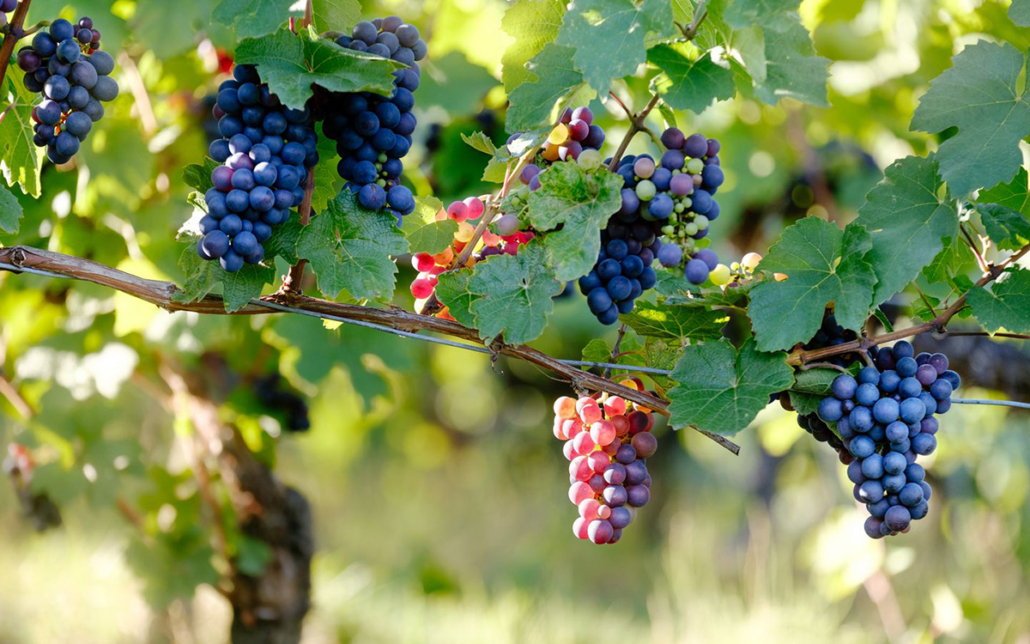
Connected, it bears fruit. “I am the vine; you are the branches. Those who abide in me and I in them bear much fruit.” — John 15
——————————————————————————————————————-
A Short Practice
Nothing here asks for a grand gesture. It asks for return, in three small ways.
- Pause at a threshold.
One conscious breath before you enter a familiar place — a doorway, a church, a room. Arrive on purpose. - Look for the Eh.
In church, let your eyes go to the centre of the altar first. Anywhere else, find the one true, present thing you have stopped seeing, and name it: He Is, here. -
Choose connection over judgement.
Notice one fear that generalises, and let this moment, this person, be met on its own terms. Stay on the vine.
The Eh has been waiting, unhurried, the whole time — on the altar, on a khachkar in Montebello, and in the present moment itself.
“We have to reclaim the Eh.
And realize it’s everywhere within and around us.”
Fr. Vazken Movsesian & Gregory Beylerian · Conversations in the Clouds · For Epostle.net


 2024 Fr. Vazken
Leave a Reply
Want to join the discussion?Feel free to contribute!