
Epostle Shares a Borderless Vision at the Church and Technology Summit
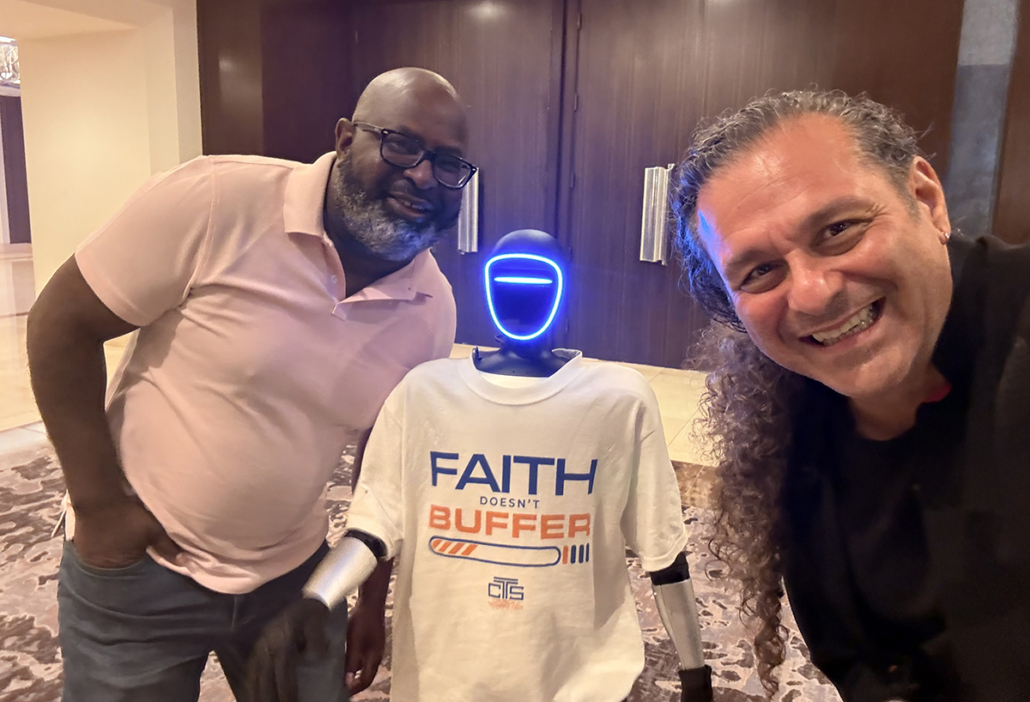
Summit founder Keith Odom, left, and Epostle Creative Director Gregory Beylerian with a robot participant at the 2026 Church & Technology Summit in Los Angeles.
Epostle presents a vision of immersive ministry at the Church & Technology Summit – opening Armenian Christian heritage to the world
Gregory Beylerian brought a vision of faith without borders to the 2026 Church & Technology Summit in Los Angeles, inviting the wider Christian community to discover how immersive technology can connect people with Armenia’s sacred places, living traditions, and one another. Held October 5–8 at the Hilton Los Angeles Airport, the summit provided a setting for Epostle Creative Director Gregory Beylerian to share a conviction at the heart of the ministry: technology fulfills its purpose when it serves humanity.
His presentation, “Virtual Reality and the Church: Engaging the Next Generation Through Immersive Technology,” connected the possibilities of virtual reality with a deeply human question: how can the Church reach people whose access to community is limited by geography, health, or circumstance?
“Technology is dear to my heart, but it never replaces the heart. Without the heart, this technology is just an empty box.”
— Gregory Beylerian
A vision lab for the Armenian Church
Under the leadership and encouragement of His Eminence Archbishop Hovnan Derderian, Primate of the Western Diocese, Epostle is developing as a vision lab for the Armenian Church: a place to explore emerging tools, test possibilities, and prepare pathways for future generations.
The Archbishop’s support gives this work a long horizon. Epostle’s experiments in education, outreach, and heritage preservation look toward a globally connected Armenian Church, where distance need not prevent a family from participating in its spiritual and cultural life. For Armenians dispersed across continents, that digital bridge can sustain a relationship with the motherland and the faith that remains central to their identity.
The “e” in Epostle expresses its electronic ministry, formally described as “apostolic evangelism for an electronic world.” Drawing on Father Vazken Movsesian’s ministry and his longstanding creative collaboration with Beylerian, Epostle brings spiritual teaching together with artistic imagination and technological exploration. Its purpose is to place these tools in the service of love, compassion, and human connection.
An ancient Christian inheritance shared with the world
For participants less familiar with Armenian Christianity, the presentation also opened a door into an ancient spiritual inheritance. Armenia is recognized as the first nation to adopt Christianity as its state religion, traditionally dated to AD 301. Beylerian’s informal description, “OG Christianity,” offered an approachable introduction to a tradition that continues to shape Armenian life.
He spoke of Mount Ararat, a sacred symbol of Armenian identity associated in Christian tradition with Noah’s Ark; Genesis (chapter 8) describes the Ark resting upon the mountains of Ararat. Armenia’s monasteries, sacred music, and traditions of worship gave participants further points of connection with a Christian heritage that may have been unfamiliar to them.
At the summit, Epostle extended a welcome beyond the Armenian community. The treasures preserved in Armenian churches and monasteries belong within the wider story of Christianity and can enrich the spiritual lives of people everywhere. Through immersive recordings and digital environments, Epostle is working to make encounters with these places possible from a living room thousands of miles away. The invitation is to connect with the place, its people, and Jesus Christ.
Beylerian explored how virtual reality can engage younger generations and connect those separated from church community by distance, age-related limitations, disability, illness, etc.
Making connection something people can experience
Beylerian illustrated this vision through Epostle’s experiments with a virtual Sunday school, a memorial environment, an amphitheater, and an exhibition. He recalled introducing children at St. James Armenian Church to a virtual learning space on Chromebooks. When invited to join him at a gathering point inside the environment, they moved there readily, bringing the familiarity of digital play into a shared educational experience.
The group’s questions turned these examples into a practical conversation. Participants asked about cameras, headsets, access from phones and computers, and the possibility of an immersive Resurrection Sunday experience. Beylerian explained the distinction between viewing an environment on a screen and experiencing a stronger sense of presence through a headset.
That sense of presence was especially meaningful in his account of recording Armenian sacred spaces with 360-degree imagery and carefully captured sound. He described a listener moved to tears while experiencing a recording of Armenian sacred singing in a resonant stone chamber. For Beylerian, the response suggested that an immersive recording could carry something of a place’s emotional and spiritual power across great distances.
The possibilities extend across generations: a young person discovering ancestral heritage, an older adult unable to travel, or a worshipper living far from a parish. Each offers a reason to explore how technology can deepen participation in community.
Exploring possibility through the heart
Founded by Keith L. Odom, the Church & Technology Summit brought ministry into conversation with innovation as part of the broader Experia Summit, alongside its AI and Entrepreneur summits. Odom’s background spans pastoral leadership, technology consulting, and service as Senior Fiscal Officer at MIT’s Media Lab. Through Axtegrity Consulting and TechChurch, he helps faith communities consider how emerging tools can support their mission.
The spirit of exploration extended beyond the sessions. A robot introduced itself to guests, interacted with Beylerian, and demonstrated martial arts before joining him and Odom for a photograph. Its shirt read “Faith Doesn’t Buffer,” adding a playful note to an encounter that made emerging technology immediate and tangible.
Throughout his talk, Beylerian returned to the intention guiding the tools. He encouraged participants to approach the future through the heart, understanding Christ’s example as an invitation to meet uncertainty with love, courage, and a willingness to serve. Fear can close off possibilities; creative exploration can give them form.
“We’re here to overcome fear and bring people together and raise the collective spirit of the world.”
— Gregory Beylerian
Epostle’s presence at the summit carried the spirit of the Armenian Church into a wider Christian conversation. With Archbishop Derderian’s encouragement, the ministry is building toward a future in which a dispersed people remain connected to their spiritual home and others are welcomed into its riches. Its invitation is open: discover Armenian Christianity, enter the conversation, and explore how ancient faith can illuminate the possibilities ahead.
Visit Epostle.net to explore its teachings, heritage projects, and developing vision for a borderless Christian community. And visit this page to find links to the Beylerian’s presentation at the Summit (coming soon).
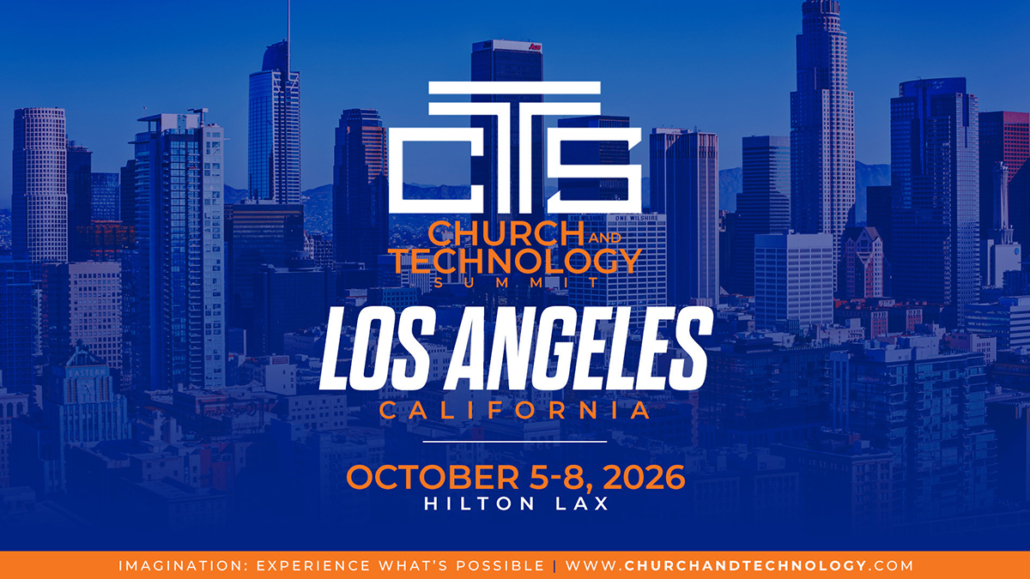
The 2026 Church & Technology Summit took place October 5–8 at the Hilton Los Angeles Airport under the theme “Imagination: Experience What’s Possible.”