Forgiveness 2 – Raul

Road to Healing – Lenten Journey 2014
Day 18:
Play Now: 

There would soon be nothing to celebrate on Cinco de Mayo. It was in the year 2000 on May 5 that a young man named Raul Aguirre died outside his High School. In an effort to break-up a gang-related scuffle, Raul got caught in the mix and a knife meant for another boy killed him instead. Raul was not a gang member. He was a student. He was only 17 years old.

All this took place directly across the street from the church where I serve as Pastor in Glendale, California. Our church had not yet opened in 2000 and so, I came to know Raul from the stories I heard, but more so from a demonstration of compassion, love and forgiveness offered by his mother, Leticia Aguirre.

On that day, Raul was late coming home from school. The phone rang and she received the first news that her son had been hurt in a fight. Only three hours later, Raul died on an operating table.

Mrs. Aguirre recounted, “That moment was the most horrible in my life…. I felt that I would die, but the worst is that I didn’t die…”

When we opened our Armenian Church and youth ministry center in 2003, the community was very much talking about this murder. The trial was underway. The minor tensions that existed between the Armenian and Latino communities were even more pronounced by some of the students at the school. The boys who killed Raul were Armenian.

Day after grueling day of testimony Mrs. Aguirre attended the trial of her boy’s killers. And then the unexpected happened, at least it was unexpected for me. In fact, so much so, that I invited her to come and speak at our church – to explain this unexpected event – to a sanctuary filled with Armenian women, men, mothers, fathers and children. She spoke in Spanish, we translated in English and Armenian, and everyone – yes, everyone – heard the story in a language called Love.

“I wanted justice to be done,” said Mrs. Aguirre. “In court I saw the mothers of the gang members kissing crosses and praying to God to forgive their sons and I thought how difficult this must be for God.”

But when Rafael Gevorgyan, one of three gang members being tried begged for Mrs. Aguirre’s forgiveness on the final day of his trial, she gave it to him.

“I saw a boy, almost a child, in a situation so grave asking for forgiveness,” she said. “I felt huge compassion and huge tenderness.”

As we move toward healing, we assume that the wounds of life will be closed and repaired. Some of our hurt and pain is so intense that they may never go away, but healing is not about forgetting. Healing is about completing. It’s about finding the supernatural miracle, that is, rising above the expected and achieving the spectacular. Forgiveness is supernatural. Forgiveness is going beyond the expected and therefore the result is spectacular. It’s healing and completing. Mrs. Aguirre’s actions were supernatural, that is, they rose above the expected argument of hatred and acknowledged the power of love. There’s not much higher healing than this.

On our Road to Healing we stop to reflect today on yet another lesson in the art of healing through forgiveness. Our illness, our disease and misunderstandings come in many forms and shapes. To be healed we need to rise above the expected to achieve the spectacular. You’re looking for a healing. You’ve asked for a healing. Now ask yourself, how can I make this happen by rising above the expected? By being greater than the natural, that is, by being supernatural? Is there room for love and forgiveness in my life and if I opt for them, is there healing?

I look forward to meeting with you again tomorrow as we continue on the Road to Healing.

Produced by Suzie Shatarevyan for epostle.net
More about Raul Aguirre at http://7×77.org
Get A Lenten Journey with Fr. Vazken delivered by email
View in iTunes
Now Playing on BluBrry
Forgiveness 1

Road to Healing – Lenten Journey 2014 Day 17

Play Now: 

Nobel Peace Prize winner Archbishop Desmond Tutu, says that there is no future without forgiveness. You merely have to think about the phrase briefly to understand how profoundly true it is. Forgiveness is about the past and unless the past is resolved, that is, unless it is at peace, there can be no harmony and healing in the future.

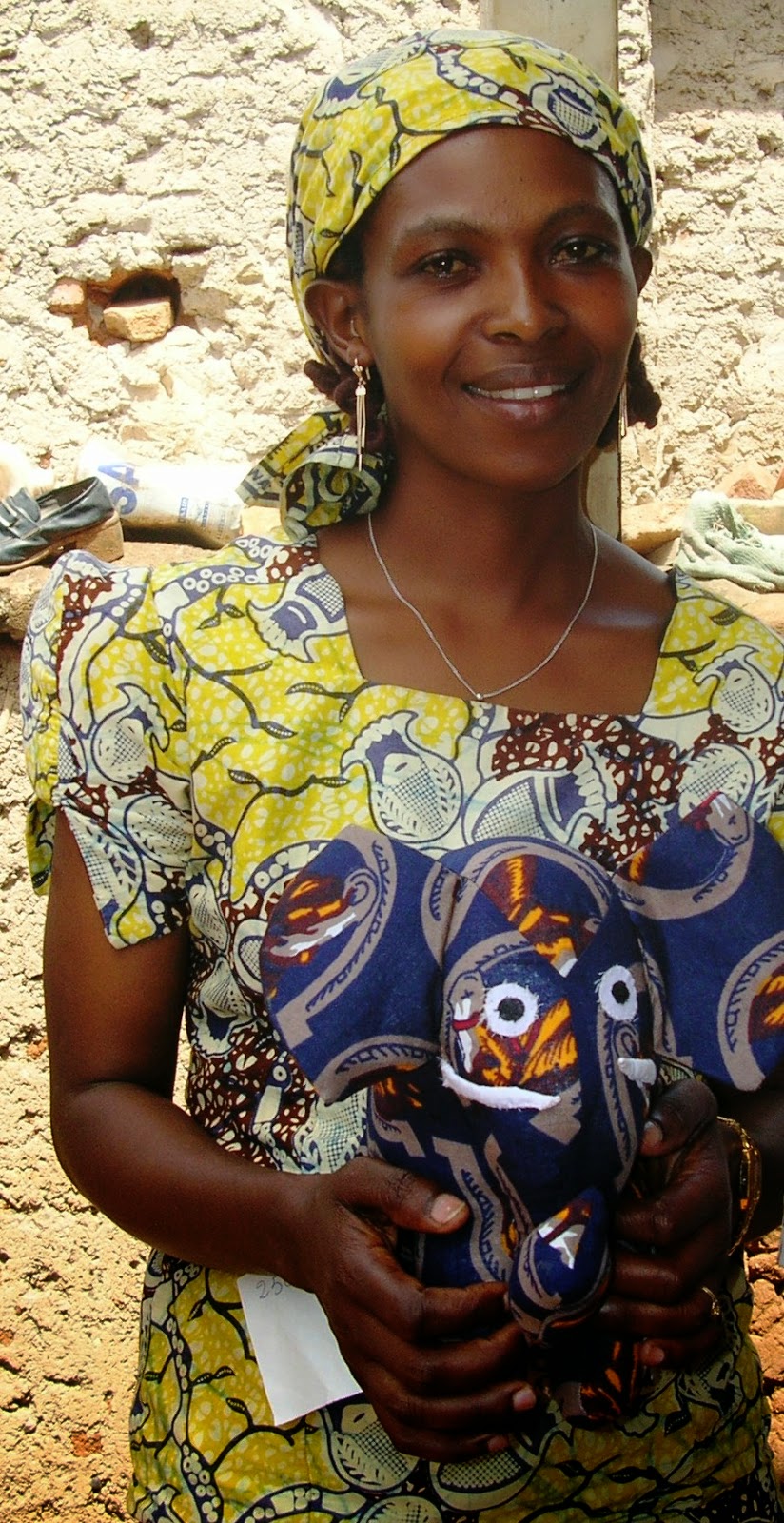
Back in 2006, I was walking down a street in the city of Kigali, the capital of Rwanda when I had a very special awakening and revelation. The streets were full of people. A little over a decade earlier, the streets and beautiful countryside were lined with corpses, the remains of the victims of genocide. I come from a background of genocide. My grandparents escaped the Genocide nearly a hundred years ago. Unlike my grandparents and hundreds of thousands of other Armenians who escaped their homeland to seek safe haven, the survivors of the Rwandan Genocide had to live in the same neighborhoods and in close proximity to perpetrators the mass killing. In other words they have found a means of healing even after such a barbaric and unimaginable crime as genocide.* The power of forgiveness in the case of Rwanda is huge and undeniable when witnessed directly amidst the people. And I witnessed the power of that healing on that street.

I speak on the large scale but the same truth and power of forgiveness is applicable to us on an individual scale as well. If we’re looking for healing – physical, emotional, psychological – there is a vital step in the process that means reconciling with our condition. This does not mean we give in, give up or accept any of the language of victimization. Quite the opposite, it means finding the courage to rise and forgive. “There is no future without forgiveness.”

Last Sunday our Journey took us past a father and son who offered us a lesson in forgiveness. In fact, the lesson was so intense that I called for a day of rest and a day of preparation for the road ahead. Forgiveness is not for the weak and faint at heart. Forgiveness, we find, is another building block on which our healing is dependent upon.

Forgiveness is an action that you need to give and receive. We all need to be forgiven and at the same time we need to forgive. In both instances we have issues because of our egos. We need to be forgiven but we’re cautious and ask who gave that person the right to forgive me? We want to forgive, but we remember the pain and get stuck in the past. Who’s past? Well, it’s a past that only we have control over.

To make the process understandable Archbishop Tutu suggests** that there are four important steps toward healing, namely, admitting to the wrong, articulating it, asking and granting forgiveness and finally renewing the relationship. We received a practical example of Tutu’s four steps in the parable of the “Prodigal Son.” If you remember (from Last Sunday) for the young man to be healed, that is, reconciled with his father, and healed, first he admitted to the wrong. He came to the point of awakening and realized his situation. Next he articulated it by setting out his plan for return. Third, he made the journey home, asking and granting forgiveness, and finally, the relationship was renewed as he entered into his father’s home.

Forgiveness may seem difficult to give and/or to receive, but just as we are doing on the Road to Healing, we’re not going to tackle this topic overnight. We’re taking our time. This is why we have spread out the Journey over 40 days. Forgiveness can be managed by breaking it up into parts and components. Forgiveness is essential to our overall health. Forgiveness is about us and others, others and us. Tomorrow we delve further into forgiveness.

The topic for today’s meditation a simple one: What future do you have without forgiveness? Contemplate this question today and I look forward to seeing you tomorrow when we continue on the Road to Healing.

* Victims and perpetrators of the Rwandan Genocide living together is akin to the small but significant community of Armenians who live in Istanbul today. The similarity between the Armenian and Rwandan Genocides are striking. The difference between the two is a simple one – in the case of the Rwandans, the perpetrators have accepted their crime, in the case of the Armenians the Turkish government has not. My reflections on Rwanda, as an Armenian Priest can be found at http://dervaz.blogspot.com/

** Archbishop Desmond Tutu’s newest book, The Book of Forgiving is “both a touchstone and a tool, offering Tutu’s wise advice and showing the way to experience forgiveness. Ultimately, forgiving is the only means we have to heal ourselves and our aching world.” – Amazon.com

Produced by Suzie Shatarevyan for epostle.net
Photo: New Life ©2006 Fr. Vazken Movsesian

Get A Lenten Journey with Fr. Vazken delivered by email
View in iTunes
Now Playing on BluBrry

The Foot-Mouth Dilemma

Road to Healing – Lenten Journey 2014
Day 16:
Play Now: 

“Hey, congratulations,” said Ed to Liddy. They hadn’t seen each other since they broke up during their senior year in college. They had dated for several years and even contemplated marriage. Things happened and they both went their separate ways.

No matter how much time goes by there is that initial nervousness that can leads to awkwardness when you first connect with someone so special from the past. It certainly was there at this chance meeting at the Starbucks in Lompoc, near the Air Force Base. After college Liddy had moved out of state, married, and built a lucrative career as an engineer, acquiring many government contracts. Her latest success involved a major deal with the Mars-Taurus project at Vandenberg.

After the initial surprise of seeing one another, the exchange of a hug and a soft kiss on the cheek, Ed started the conversation, “It’s great to see you here.”

“It’s great to be back here on the California coast. I missed the breeze and that gentle mist. I often wondered if you were still in the area.”

Ed smiled and after a brief pause, he offered his congratulations.

“Thanks. I’ve been waiting a long time for this.” It didn’t surprise her that he knew about her landing this sweet deal. She had been interviewed by the local newspaper and a radio station just about a month ago.

“How soon is it going to be?”

“Oh, everything is set for next week. And we’re set to move in then.”

“What’s it going to be?”

“What do you mean?”

“Boy or girl?”

There was an awkward pause along with her confused look. “Umm…” That’s when they both realized something was off. “Boy or girl? In my new job? I’m not sure what you mean.”

Ed looked down at her belly and asked, “What’s it going to be? Didn’t you find out already?”

Liddy put her hand on her tummy and in an uncomfortable manner replied, “Oh that. I guess that’s what happens after years of a desk job, not enough exercise and eating junk food.”

Now the awkwardness-ball was in Ed’s court. He had his foot in his mouth and needed to get it out quickly. He spotted her key chain; it had a small dog medallion on it. Pointing to it, he said, “Oh, I saw the charm on your ring. Is your dog a he or a she?”

Now this had to have been the most lame and stupidest come-back, but he was going for it. Liddy came back on her own, “It’s OK, I know I’ve gained quite a bit of weight since we last saw each other. Trust me; you’re not the first one to notice.”

“What are you talking about? You look as good as you did back then. A pound here, a few pounds there, with all the sugar and carbs people are taking in, you’ve rounded out well.” At this point, even he realized this wasn’t getting better.

“You’re being kind, Ed.” She was truly embarrassed and now the conversation was too personal for comfort. “It was nice seeing you today. Maybe we’ll run into each other soon.” She had had enough and needed get away.

He was embarrassed and in a last ditch effort to rectify the conversation, “If you really want to get out from behind the desk, there’s a great gym just up the street.” He was done. He wanted to kick himself in the mouth. Maybe that’s where the expression “putting your foot in your mouth” comes from.

Have you ever put your foot in your mouth? I know we’ve all said something that we’ve later regretted. I’m sure you’ll agree that the bigger regret is when we don’t acknowledge our mistake in the first place and make it worse by shoving our foot farther and farther in. Ed mistook Liddy’s weight gain for a pregnancy. Mistakes happened. Yes, he would have had a moment’s embarrassments, but friendships can survive embarrassments. They can’t survive insincerity. His cover up was the painful part. It was what pushed Liddy away and closed the conversation and closed the future for the two.

On our Road to Healing we are at a new plateau. Yesterday I asked you to take some time to reflect on all that we have learned thus far. We’re going to accelerate the trip and journey into some uncomfortable areas. We can either admit to our flaws and suffer a moment or two of embarrassment (but what is embarrassment among friends?) or we can fake it, twist and turn until we force that foot in our mouth. Let’s opt for the first way and keep an open mind and reflect openly – without fear of embarrassment.

Our prayer this day is to keep our soul and heart open. To find the courage to be upright and sincere, admitting our faults and refuse the stigma of embarrassment. We have no reason to reject this sincerity; we are with God and with our self.

This is Fr. Vazken inviting you to join me again tomorrow as we continue on the Road to Healing.

Produced by Suzie Shatarevyan for epostle.net
Get A Lenten Journey with Fr. Vazken delivered by email
View in iTunes
Now Playing on BluBrry

Last Cigarette

Road to Healing – Lenten Journey 2014
Day 15:
Play Now: 

The popular TV game show, “Family Feud” was started back in the mid 1970’s with a host named Richard Dawson. I remember the show quite well, perhaps because I had an opportunity a contestant on the series – an episode I’d be happy to forget, which says something about how we did… The show began with an introduction of the two families and then the announcer would say, to the sound of a cheering crowd, “…And here is the host of Family Feud, Richard Dawson.”

I remember in particular one episode Dawson came out to his name’s announcement and the applause of the crowd, puffing on a cigarette. He took to center stage with the crowd cheering, holding the cigarette between his thumb and index finger. He took a long drag and then threw it on the floor, stamped it out under his shoe.

He announced to the crowd, “That was my last cigarette!” The audience cheered even louder. And then, without missing a beat, he add, “… for the rest of the show.”

I don’t know why I remembered that particular scene because it wasn’t until many years later, when dealing with different addictive behaviors I’d come across with people throughout my ministry, I remembered that nicotine was so powerful that he couldn’t commit to stopping for more than a half an hour.

But it’s not about nicotine or because of addictions that I bring up this story. Instead it’s about sincerity and taking small steps on the Road to Healing.

It may be tempting to look for answers for the long term, but keep in mind, anything good and of value is not easy to acquire. If we are looking to treat the symptoms of our illness, there are many medications and gauze that we can take or place on the wound to ease the pain or fix the hurt. But healing is a process. We’ve already come to some basic understanding of that process.

We will use today as a day of rest. It’s been an interesting journey thus far and especially considering the latest revelation we had in our encounter with the father and son yesterday. There needs to be some time to digest all that we have learned. Today is the day where we throw out the “cigarette” (our problem) that is hurting us, and realize that it may be forever, it may be for a week, it may be for half an hour. Don’t be anxious. The road is ahead of us and it’s not going anywhere. Only we are. Let’s look forward to the new awakenings every day.

Take some time to absorb, breathe and relax. This is Fr. Vazken, I look forward to taking the next step in our journey with you tomorrow as we continue on the Road to Healing.

Produced by Suzie Shatarevyan for epostle.net
Photo: Waiting: Calm before the storm (c) 2004 Fr. Vazken Movsesian
Get A Lenten Journey with Fr. Vazken delivered by email
View in iTunes
Now Playing on BluBrry

Prodigal

Road to Healing – Lenten Journey 2014
Day 14:
Play Now: 

“Smile and the world smiles with you, cry and you cry alone.” (Stanley Gordon West).

Isn’t that true? A young man found out this truth the hard way. He convinced his father to give him a cut of his inheritance – quite a sizable amount – and he went out spending it. He was in fat-city. Night life, clubs, parties, fun, games, excitement! And on top of it, friends! Well of course, he was buying. He had friends right, left and center.

And then it happened. The economy turned. Things were rough and the young man’s money ran out. No money, no parties, no fun and games. No fun and games, no friends. They all abandoned him and he was left alone looking at his situation. It was a loneliness like none other. It was hard because he once lived so well and now everything was gone.

He became desperate. He was hungry and cold. In fact, one day he passed by some animals feeding in a yard. When he looked over and saw the slop that the pigs were eating and it looked good, he had a wake up moment! He was completely disgusted with himself and where he was in life. He couldn’t even fathom the idea that the disgusting and filthy hog-food was looking good to him.

It was in his wake up moment that he realized his father’s employees lived better than he did. So he came up with a simple plan. I’ll go back to my father, he thought to himself, and I’ll ask him for a job as an employee. Forget about asking him to take me back into the house, I’ll just ask to be tried out as a hired-hand. So with this scheme he heads home.

While on the road, the father seems him. He runs out and embraces his lost son with both arms and squeezes him emotionally and full of love. The son started to say, “Dad, I’m sorry. I messed up. Would you hire me as …” Before he could finish, the father called his workers. He ordered one to take the son and have him fitted for the finest clothes they could find. He ordered another worker to organize a huge celebration party, inviting friends and family. Then he ordered his family ring, to be placed on the son’s finger. His son was not going to be accepted as a servant, employee or worker. Absolutely nothing less than the blood relative – the son – he was.

“Today we celebrate,” said the father in emotions that could not be contained, “for my son was lost and he is found. He was dead and now he is alive.”

For the last several days of the Lenten Journey, we’ve been exploring the concept of God, that is, the Ultimate Perfection, the Total and Complete that touches our life, and is a factor in the formula for healing. Today, we receive the most special and true expression of God and it comes to us via a parable, a story, offered to us by Christ. “No one knows the Father except he that is come from the Father.” It is the story of the “Prodigal Son.” This story, as I have shared it with you, is the story of a wayward son, but even more it’s the story of a compassionate and loving Father. It’s the only understanding that is necessary on the Road to Recovery, because this understanding includes every other understanding and definition.

Is there anything more powerful than Love? Is there anything greater than Compassion? Is there anything more healing, comforting and completing than the Love that comes from outside and transforms us, to become the terminals and transmitters of love our self?

The story is so simple and yet so weighted with truths of human nature. But the example of the father shines. He is one who does not wait for the child to come home; in fact, he goes out to meet the son. He does not harbor anger nor does he seek vengeance. He’s not interested in the past, only in the here and now. He cherishes life.

When we look for God’s blessings in our life – a healing – realize you’ve already received the blessing and therefore the healing. Remember, when we first started this Journey two weeks ago, we heard the voice, “Do you want to be healed?” If we do, like the son, we to turn back, accept our circumstances and humble ourselves. Then, the healing begins. The love comes pouring out.

We have much to absorb. I look forward to continuing this journey with you tomorrow as we walk on the Road to Healing.

Produced by Suzie Shatarevyan for epostle.net
Get A Lenten Journey with Fr. Vazken delivered by email
View in iTunes
Now Playing on BluBrry

Reflections in Nature

Road to Healing – Lenten Journey 2014
Day 13:
Play Now: 

For the last few days we’ve been looking to God as a necessary part of this journey we are on. We have resolved that healing is from within and without. We look within and without to find the all the attributes of God, the completeness, the beauty and the perfection. In that perfection, illness and disease cannot exist, only good health and harmony prevail.

Today we take a look at a reflection written by Sirach which calls our attention to the God within nature and the seen universe. Listen in and do not get ahead of the path. Tomorrow, we will unfold one more secret that will give us the fullest understanding of God. This writing from Sirach comes to us from around 200 years before Christ. Here we see the beauty of nature and see the perfection of God.

I will now call to mind the works of the Lord, and will declare what I have seen. The sun looks down on everything with its light, and the work of the Lord is full of his glory. He searches out the abyss and the human heart; he understands their innermost secrets. How desirable are all his works, and how sparkling they are to see! Who could ever tire of seeing his glory?

The pride of the higher realms is the clear vault of the sky, as glorious to behold as the sight of the heavens. The sun, when it appears, proclaims as it rises what a marvelous instrument it is, the work of the Most High.

At noon it parches the land, and who can withstand its burning heat? A man tending a furnace works in burning heat, but three times as hot is the sun scorching the mountains; it breathes out fiery vapors, and its bright rays blind the eyes.

It is the moon that marks the changing seasons, governing the times, their everlasting sign. From the moon comes the sign for festal days, a light that wanes when it completes its course. The new moon, as its name suggests, renews itself; how marvelous it is in this change, a beacon to the hosts on high, shining in the vault of the heavens!

The glory of the stars is the beauty of heaven, a glittering array in the heights of the Lord. On the orders of the Holy One they stand in their appointed places; they never relax in their watches. Look at the rainbow, and praise him who made it; it is exceedingly beautiful in its brightness. It encircles the sky with its glorious arc; the hands of the Most High have stretched it out.

By his command he sends the driving snow and speeds the lightnings of his judgment. Therefore the storehouses are opened, and the clouds fly out like birds. In his majesty he gives the clouds their strength, and the hailstones are broken in pieces.

The voice of his thunder rebukes the earth; when he appears, the mountains shake. At his will the south wind blows; so do the storm from the north and the whirlwind.

He scatters the snow like birds flying down, and its descent is like locusts alighting. The eye is dazzled by the beauty of its whiteness, and the mind is amazed as it falls. He pours frost over the earth like salt, and icicles form like pointed thorns.

The cold north wind blows, and ice freezes on the water; it settles on every pool of water, and the water puts it on like a breastplate. He consumes the mountains and burns up the wilderness, and withers the tender grass like fire.

A mist quickly heals all things; the falling dew gives refreshment from the heat. By his plan he stilled the deep and planted islands in it. Those who sail the sea tell of its dangers, and we marvel at what we hear.

We could say more but could never say enough; let the final word be: “He is the all.” Where can we find the strength to praise him? For he is greater than all his works. (Sirac 42)

I leave you with this passage for you to contemplate on this 13th day of the Lenten Journey. Tomorrow, when we return, we will be instructed in the most profound expression and understanding of God. I look forward to greeting you then, and together, continuing on the Road to Healing.

Produced by Suzie Shatarevyan for epostle.net
Get A Lenten Journey with Fr. Vazken delivered by email
View in iTunes
Now Playing on BluBrry
Beauty

Road to Healing – Lenten Journey 2014
Day 12:
Play Now: 

How big is God? How big does God have to be to work the miracle for your healing? The miracle for your reconciliation? The miracle of your recovery?

We continue on the topic we introduced yesterday, on Day 11 of the Journey. We meditate on the I AM and discover it’s not about might or size, but I AM is about beauty.

Aleksandr Solzhenitsyn was a historian, Russian novelist and a tireless critic of Soviet totalitarianism. His writings and life targeted huge and giant problems. One of his essays is a short piece where he identifies God, without a mention of his name, his might or size. Rather he points to the beauty that is beyond all understanding and we find God.

The writing is called “The Duckling”

A little yellow duckling, flopping comically on its white belly in the wet grass and scarcely able to stand on its thin, feeble legs, runs in front of me and quacks: “Where’s my mommy? Where’s my family?”

He has no mommy, because he has been fostered by a hen: duck eggs were put in her nest, she sat on then and hatched them with her own. To shelter them from the bad weather, their home—an upturned basket without a bottom—has been moved into a shed and covered with sacking. They are all in there, but this one is lost. Come on then, little thing, let me take you in my hand.

What keeps it alive? It weighs nothing; its little black eyes are like beads, its feet are like sparrows’ feet, the slightest squeeze and it would be no more. Yet it is warm with life. Its little beak is pale pink and slightly splayed, like a manicured fingernail. Its feet are already webbed, there is yellow among its feathers, and its downy wings are starting to protrude. Its personality already sets it apart from its foster brothers.

And we men will soon be flying to Venus; if we pooled our efforts, we could plough up the whole world in twenty minutes.

Yet, with all our atomic might, we shall never-never! — be able to make this feeble speck of a yellow duckling in a test tube; even if we were given the feathers and bones, we could never put such a creature together.

On the Road to Healing we have stumbled upon something so great, so simple and so beautiful. How big does God have to work the miracle for your healing? The miracle for your reconciliation? For the miracle of your recovery?

This is Fr. Vazken inviting you to join us tomorrow as we continue to walk on the Road to Healing.

Produced by Suzie Shatarevyan for epostle.net
Get A Lenten Journey with Fr. Vazken delivered by email
View in iTunes
Now Playing on BluBrry

From Pawn to King in a Week

Next Step #301 – March 13, 2014

Exploring the definitions of God explored and then delivered via an unusual character, namely the squirrelly and squandering boy known as the Prodigal. This episode ties in with the healing process of within and without. It opens new ideas for Armodoxy, along with some cosmic math – tying up the mystery of the numbers and the episode.
Song: Der Voghormia – chant of forgiveness
Lenten Journey – Healing
Bland Lenten Page: http://www.armenianorthodoxy.org/lent/
Prodigal Son
Engineered by Ken Nalik
Produced by Suzie Shatarevyan for epostle.net
Look for The Next Step on blubrry.com
Now on Stitcher Radio! 

Mindfulness Code in Armodoxy

Road to Healing – Lenten Journey 2014
Day 11:
Play Now: 

Recently Time Magazine (February 3, 2014) wrote, “…We’re in the midst of a popular obsession with mindfulness as the secret to health and happiness—and a growing body of evidence suggests it has clear benefits.”

Mindfulness is about becoming aware of the present moment, and being less interested in the past or what is to come. Mindfulness is a means of coping with stress and anxiety, especially in a world caught up in blaming the past and projecting doom for the future.

During the past few days our Lenten Journey has taken us on a trip exploring the value of meditation. Certainly, meditation offers an important technique for clearing the mind and arriving at a state of mindfulness. Today, I wish to introduce the idea of God, as understood in Armodoxy. This understanding will be necessary as we continue the road to healing. Like the unexpected twists and turns of the journey, this will be a refreshing shift. First, put away preconceived notions and make the connection with the here and now.

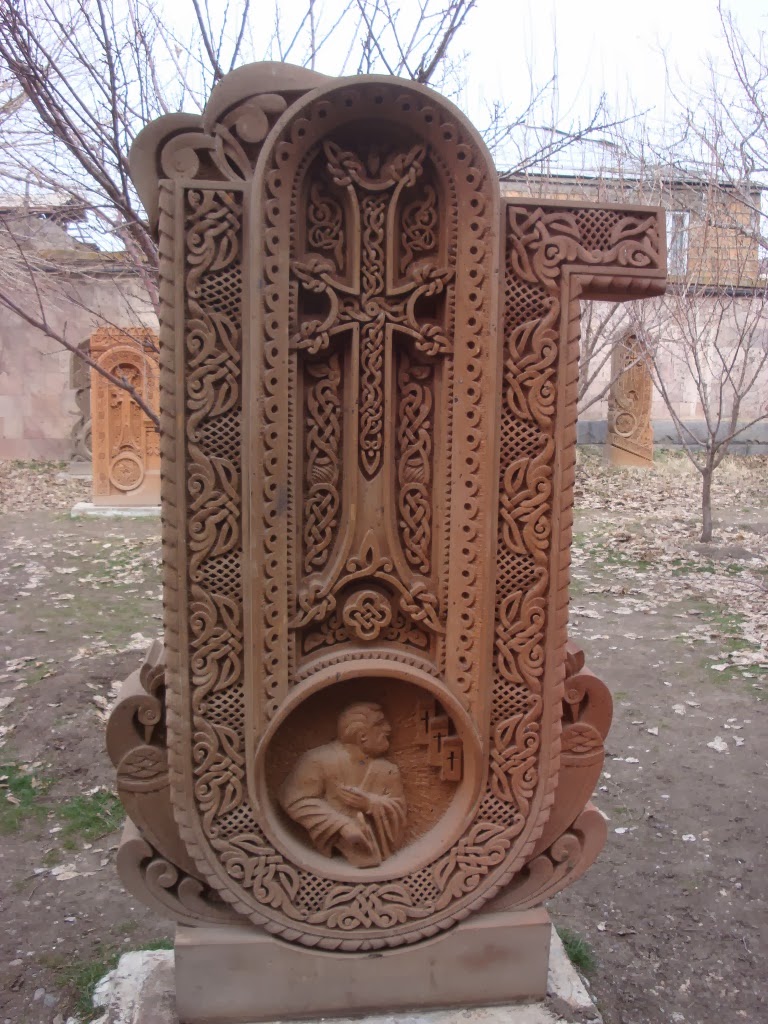
The Armenian alphabet was created for purposes of spirituality, primarily to interpret and understand the new message of love and hope as expressed by Jesus Christ. The alphabet was invented in the 5th century and consisted of 36 letters, defining a 6×6 matrix. The 7th letter of the alphabet is the letter “է” (pronounced ‘eh’ as in “eloquent”). The letter is also a word; specifically it is the present tense of the verb “to be” (is).

The verb to be, in the present tense, is the name of God. When God is asked “What is your name?” God answers, “I AM.”

“I AM” is to say “God IS.” It is a descriptive name as well as a direction to mindfulness, that is, “IS” focuses on what is the now. God is not what was, nor is God what will be, rather God is!

It is further significant that “է” is the 7th letter of the alphabet. Seven is the number of the universe. It is the sum of 3, the number of Heaven as in the Trinity, and 4, the number of the Earth as in the four directions.
3+4=7 is Heaven + Earth = Totality, Universe, Completeness

The common worship of the Armenian Church begins with the hymn, խորհուրդ խորին… the first words of which are “Deep mystery, inscrutable and without beginning…” In these words are expressed the understanding that God is not understandable, greater than the words that describe the Almighty power of the eternal.

When Jesus refers to himself as “I am the Light,” “I am the Good Shepherd,” “I am the Way,” “I am Truth,” “I am the Life,” he is speaking in the eternal present, connecting to the universal beginning of time and space by virtue of the light, way, truth, life and love. This is why the message he speaks is timeless and therefore can open the opportunity to “I am the Resurrection.”

On the Road to Healing, these last few days we’ve been speaking about meditation as a means of targeting the hurt and illness within and opening ourselves to the light from without. Today we are challenged by the call to mindfulness and connect to the Eternal Present, the IS.

During your daily meditation today, I offer you a simple and profound psalm to guide and direct your path. Turn off your distractions, find a state of physical quietness and contemplate, “Be still and know that I am God.” (Psalm 46:10)

What does that mean to you? What does it mean to your illness? Your situation? Your healing? Join me, Fr. Vazken, tomorrow as we continue on the Road to Healing.

Produced by Suzie Shatarevyan for epostle.net
Get A Lenten Journey with Fr. Vazken delivered by email
View in iTunes
Now Playing on BluBrry

Focus & Depth of Field

Road to Healing – Lenten Journey 2014
Day 10:

Being open to miracles means our senses are open to possibilities beyond our understanding. In this frame of mind, we can accept that all disciplines and sciences have something to contribute to any discussion. It is remarkable but true.

Today we will continue on our journey with a lesson from the world of photography. We have been talking about focus, specifically in mediation. Today we will continue to focus, on the term “focus.” Point-and-shoot cameras, and now smart phones have left less to chance when taking a picture. But still, if you’re willing to venture to the manual mode of the camera and tinker with some of the dials and switches, you’ll find pictures can be taken with a variety of effects.

For instance, you can adjust the depth of field within a picture based on the amount of light you allow in through the lens. Depth of field is the zone of sharpest focus in front of, behind and around the focused object. I’m sure you’ve seen these pictures, where one object is in focus and the rest is a nice blur.

When we focus on an object, it means we’re giving it extra special attention. It means we will shed more light on that particular object. The more light we place on an object, the sharper becomes the focus, and the more blurry – that is less in focus – become the other items in the picture. The aperture, (the F-stop) controls the amount of light coming into a camera, and the photographer, that is you and me, controls the aperture.

This is our second lesson about meditation. Like the photographer who opens the aperture of the camera, through meditation we are increasing the light, shedding it and thereby focusing on our illness, blurring-out everything else. The more light, the sharper the focus.

Yesterday, I asked you to set aside time for meditation. It was a time of day where background and peripheral activity was to be minimized or even better, completely eliminated. Today, use that time of meditation to focus in on your illness, disease, disagreement, separation, heartache, depression, bereavement, financial loss, addiction or self-worth. Meet at the appointed time you decided yesterday. Turn off everything around you and turn on the light within. Think of the healing you wish in your life. Focus on it. Now open yourself so that more light can come in. Feel that light – it is more than illuminating, it brings feeling to you. Some warmth and some fear. Focus sharper. The items in the background will be blurred out; they are not receiving light, they are not being nourished. They will die off, but for right now, they’re too obvious. In the long term they won’t survive without the light. Healing is both a process of focusing on the good and diminishing the light the bad.

This is a tough exercise, but today we begin on focused meditation. Imagine a large room filled with people and objects. You are standing in the center of the room with your head up and your palms turn out. Turn the light towards you and intensify that light. You’re getting more and more into focus. That person who hurt you, he’s standing by the wall. He’s no longer visible. We don’t need to discuss him anymore. That car that struck your child is fading in the shadow. The alcohol and drugs on the table next to the mounds of food, they’re close to you, but you don’t notice them any more. They’re out of focus and dimming out of sight. Even the cancer within is no match for this powerful light; it is dying and cannot survive.

Tomorrow we will continue with some more meditation practices. Keep in mind what we have learned thus far and let each day of this Lenten Journey build on the day before.

Let us pray,

Light of Light, True God of True God. I approach you in a thankful spirit. You have given me the power to love which opens my heart and soul to the Light that comes from without and lives within. Shine your light so that every ray hits the disease of my heart and soul, darkening the decay and disease and illuminating the life and wellness I so need. Amen.

This is Fr. Vazken, inviting you to join us tomorrow as we continue to walk on the Road to Healing.

Produced by Suzie Shatarevyan for epostle.net
Photo “Grandma flowers” (c)2012 Fr. Vazken Movsesian
Get A Lenten Journey with Fr. Vazken delivered by email
View in iTunes
Now Playing on BluBrry