Check up is a Tune Up

Next Step #538: Using birthdays and anniversaries to check-in and tune-up: A practical approach to your Sunday worship with Christ. Segments for the Service of Calling: Anathema and renounce these additions too. Read & know the mission before you invest: Luke 4:17f – walking in the shoes of the poor, the brokenhearted, the blind as the mission comes alive.
Jacob Armen “When Drums Conduct”
Mer Hooys – House of Hope
Luke 4:17f
Kavanaugh Testimony
Fr. Vazken’s New Video Series – AC202
Cover: House by Anush 1978
Engineered by Ken Nalik
Produced by Suzie Shatarevyan for InHisShoes.org
Subscribe to In His Shoes » Next Step with Fr. Vazken by Email
Look for The Next Step on blubrry.com
Listen via Stitcher Radio on demand!

Light Shadows: The Cross

Next Step #537: In the Presence of the Holy Cross of Christ, reflections from the Blessing in New York. What’s in the Shadow of the Holy Cross? Preposition-connection of “For” in John 3:16. Travelers who define the universe: the poet and the wise man revisited. While colors, words, melodies, mathematics all describe reality, the case for not discounting the power of religion.
Khorenian Divine Liturgy
Procession: Exaltation of the Holy Cross
Yusaku Maezawa to the Moon
Neil deGrasse Tyson – Power of Story Telling
AC202 Debut
Systematic Theology by Paul Tillich
Scripture for Holy Cross
Cover: JFK Sunrise, Susan Movsesian 2018
Engineered by Ken Nalik
Produced by Suzie Shatarevyan for InHisShoes.org
Subscribe to In His Shoes » Next Step with Fr. Vazken by Email
Look for The Next Step on blubrry.com
Listen via Stitcher Radio on demand!

Reflections on the Sasnashen Shoot-Down 60th Anniversary


Reflections on the US Air Force C-130 60528 Shoot Down over Sasnashen, Armenia
 
by Fr. Vazken Movsesian
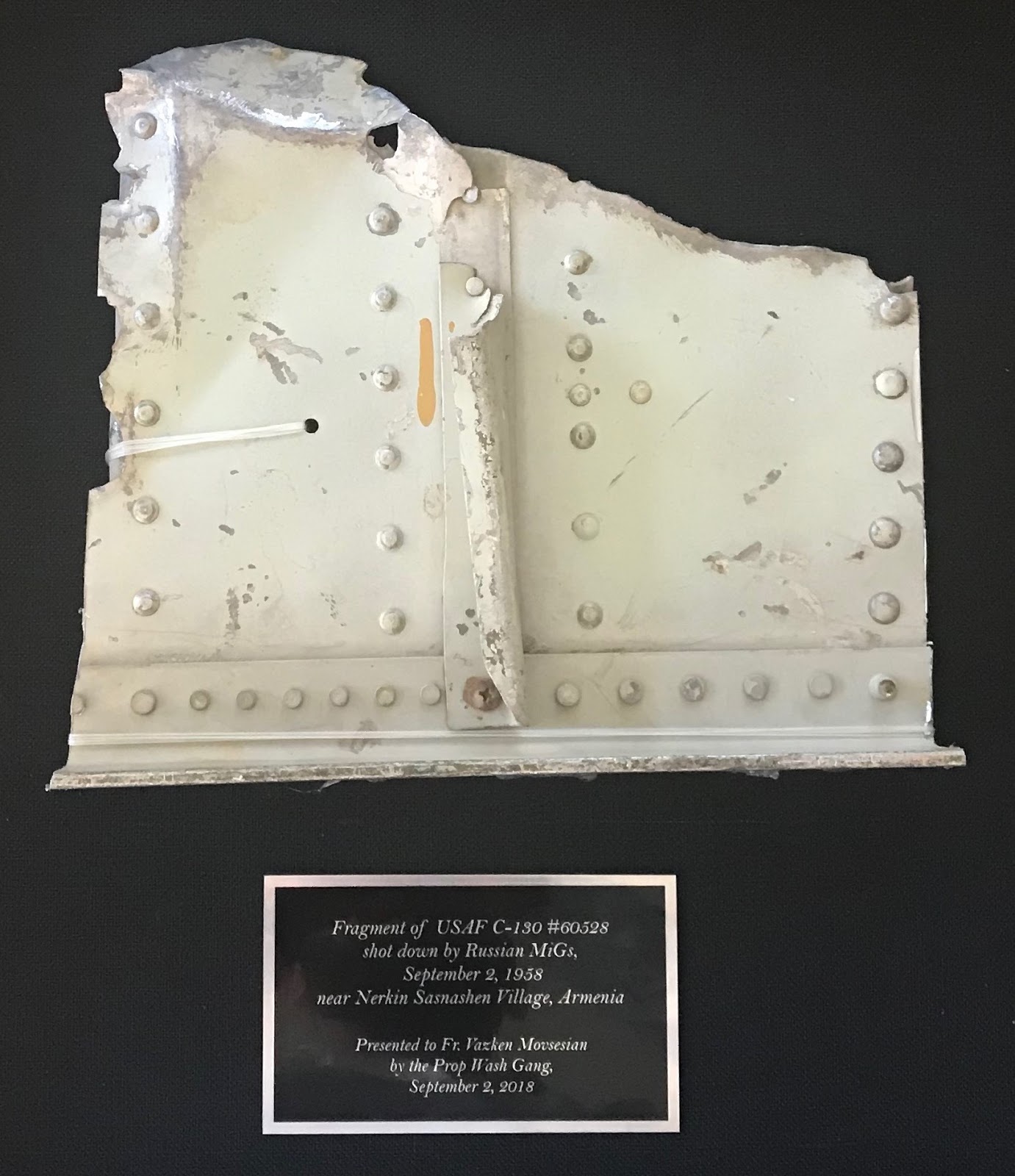
Piece of the wreckage –
shadowbox presented to Fr. Vazken


Kahanayk yev joghovort” are the first words of the requiem service of the Armenian Church.  The words translate to “the priests and people” referring to a gathering of those who remember the dead in prayer. And there we were, the priest and people, in solemn remembrance of 17 men who perished 60 years ago to the day. I was singing the hymn but this gathering was not in any Armenian church. Far from one, we were standing in the middle of America in Bellevue, Nebraska, near the Offutt Air Force Base. The gathering? Sixty years ago, in the height of the Cold War, a United States Air Force C-130 was shot out of the sky by the Soviet Union.  The plane crashed in the village of Nerkin Sasnashen, Armenia (about 60km Northwest of Yerevan).  

It was interesting that I sang the hymn in Armenian and no one in the audience understood the language, yet everyone knew very well what was happening. We were connecting as people. We were uniting the remote village of Sasnashen with Bellevue. Armenia was uniting with Nebraska and all of this to attest that a group of men were united with eternity.


Remembrance in Sasnashen

Like many Armenians, or many people in general, I had not heard of this shoot-down incident. We grew up in the Cold War fearing the worst, with duck-and-cover drills executed in our school hallways on a regular basis. But who knew that the Cold War was being played out with a shoot-down in Armenia? We should have known for in fact, this major international incident was the most publicized confrontation between the Soviet Union and the U.S. military during the Cold War!

On September 2, 1958, four Soviet MiG-17 pilots attacked and shot down an unarmed US reconnaissance aircraft after its crew inadvertently flew into Soviet airspace over Armenia. Seventeen United States Air Force airmen were killed in the crash at Sasnashen. The incident was covered up until the break up of the Soviet Union –  and then some – when the remains of the C-130 60528 Crew were excavated from the crash site and interred on the 40th anniversary of the shoot-down, with a headstone identifying the members of the Crew* at Arlington Cemetery in Virginia.
Fortunately, the details of the incident, the cover-up, the years of denial, the reconciling with the facts up to the present day have been meticulously documented by Larry Tart and have been published in his book, “The Price of Vigilance: Attacks on American Surveillance Flights” (2001 with Robert Keefe). The book and detailed information can be found at Mr. Tart’s website. He has also prepared a short briefing video (which was shown at the Bellevue gathering) where the main details of the incident are outlined.
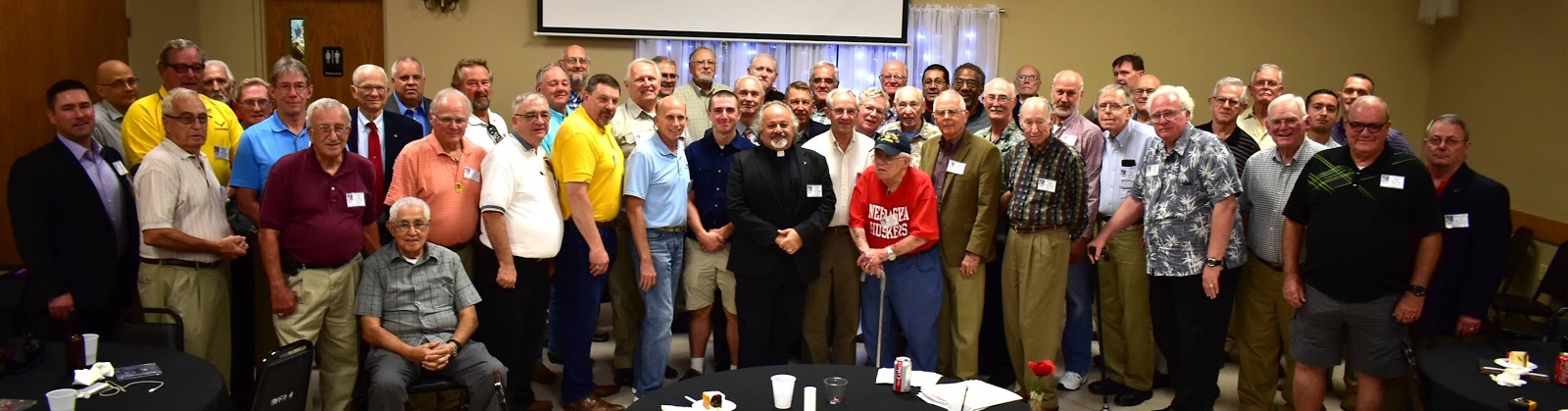
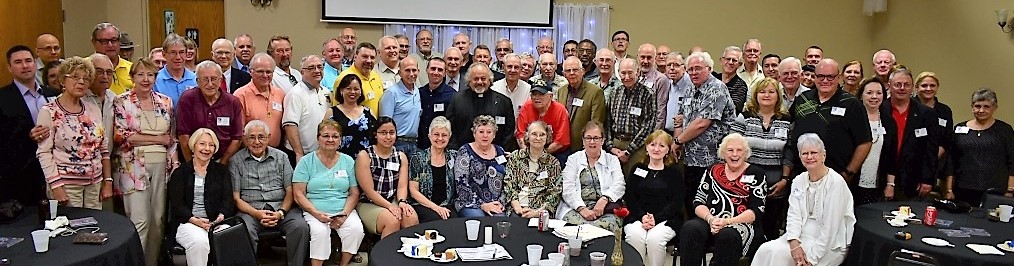
With the Prop Wash Gang – September 2, 2018, Bellevue, Nebraska


One of the eye-witnesses to the event was a young man, Martin Kakosian, a college student on a field trip in 1958. Kakosian, a skilled sculptor, later collaborated with the villagers to create a memorial — a khatchkar— honoring an unknown American crew that had died unceremoniously at the edge of their village. In late August 1993, Sasnashen village commemorated the 35th anniversary of the shoot-down during the unveiling of the khachkar.

Keynote
 
Mr. Tart, on behalf of the Prop Wash Gang, the organizers of this gathering, wrote to both the Eastern and Western Dioceses of the Armenian Church asking for a priest to offer the requiem prayer at this 60thanniversary. Archbishop Hovnan Derderian assigned me to this event. As mentioned, the incident was news to me; however, not for long. I was engaged in the story from my first reading of the account. After a few conversations with Mr. Tart, the PWG asked me to offer the Keynote Address for the Commemoration.
With Chief Lonnie Henderson
 
This invitation was a true honor for me on many levels. As a priest I was there to offer the prayer and even to reflect, but it was a personal experience at the time of my father’s death over 25 years ago that connected me directly to the story that was unfolding before me. My father was a veteran of the Korean War. I remember vividly to this day the overwhelming emotions that surged in me when at his funeral military personnel presented the flag of the United States to my mother, and said, “On behalf of the President of the United States, the United States Army and a grateful Nation, please accept this flag as a symbol of our appreciation for your husband’s honorable and faithful service.” I remember being moved to tears when realizing that great men are defined by the sacrifice they make. People in service to others truly define greatness. In the church we speak of martyrdom as an expression of sacrifice. As a priest I share the Gospel of Christ, and His words, “Greater love has no man than this, that he lay down his life for his friends.” (Jn 15:13) While Jesus refers to his own death in this passage, he also gives an opportunity for us to understand our service and sacrifice to others. It was the expression of that devotion and sacrifice that was moving the direction of the message I wanted to share.
Presentation of the Shadowbox with wreckage
 
Furthermore, as an Armenian, I wanted to also emphasize the diverse set of circumstance which have contributed to Armenian history and to the events of the shoot down. As history will attest, Armenia and Armenians are often caught in the middle of battles not by our choosing. The US Air Force plane took off from bases in Eastern Turkey, that is, occupied Armenia. The plane was shot down over Armenia, occupied by the Soviets. (And yes, the plane was shot down by a Mig-17, named after Migoyan.) In every way Armenians are the by-standers to this particular history; nevertheless, Armenian have a message to share that can lead to healing.
 
The day arrived and we met with people from throughout the United States. They had all come to commemorate, to remember, to re-connect with a story and with others who shared the same values and understanding of the sacrifice made by these 17 men.
 
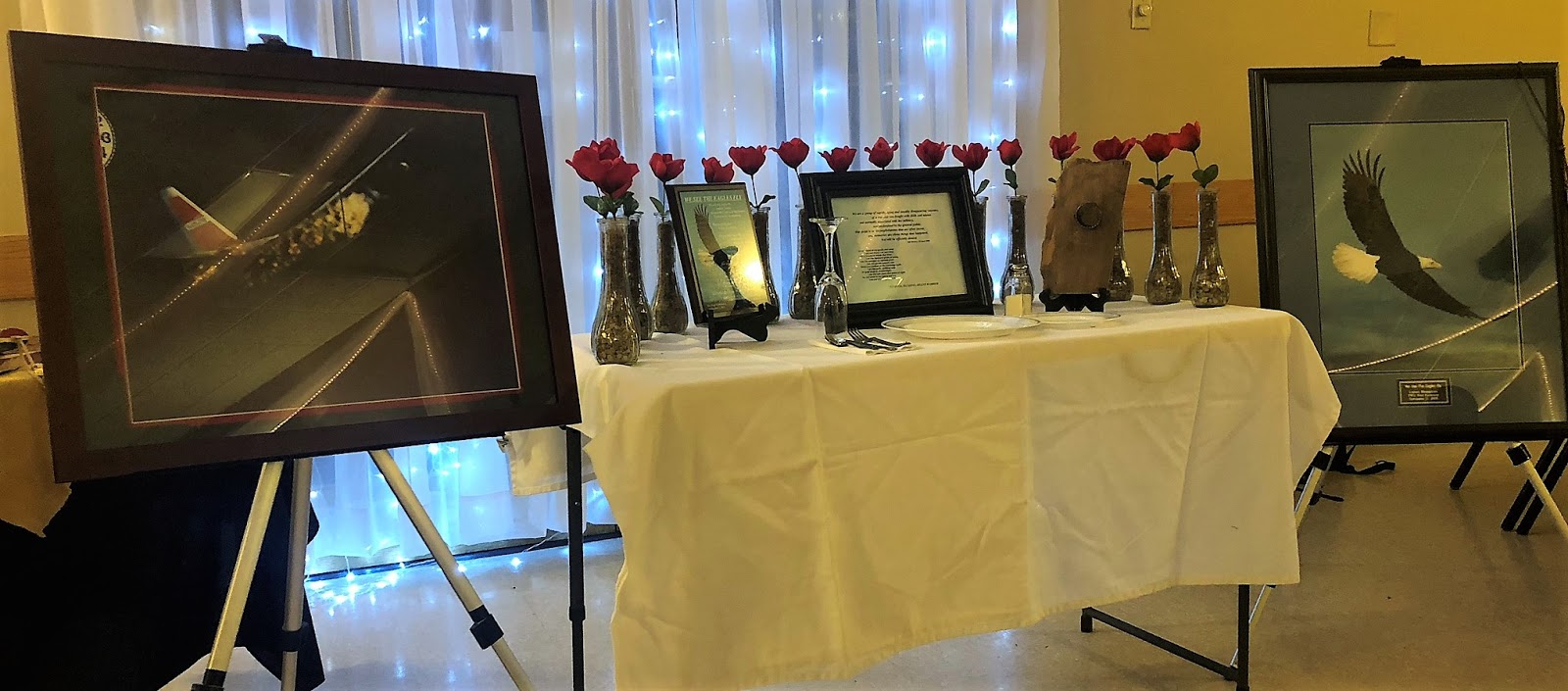
The acting President of the Prop Wash Gang, Chief Lonnie Henderson, emceed the program. He had set up a “Missing Man Table” at the center of the banquet hall. The table was set on a white tablecloth, containing 17 red roses in vases and a place setting for one – one representing them all. A shaker of salt next to the setting was a bitter reminder of what had transpired. There, the names of the 17 men were written along with the poem “We See the Eagles Fly.”
 
Tom Giroir, offered the invocation and introduced me as an Armenian priest. In referencing to my background he pointed to our ministry of “In His Shoes,” that is, those who have suffered evil have a unique responsibility to take action against injustice to others. It was on this premise that I shared my thoughts for the evening with the group.
 
Missing Man Table Setting
With a quick look at history, I spoke of the rich story of the Armenian people and the land. I spoke of the Armenian Genocide as an event but also as a spring-board to addressing the despicable reality of Genocide that continues to take place in our world. Most especially, I shared with the group the need to stay ever-vigilant in their resolve to remember the sacrifices of their fallen brothers. Vigilance and remembrance must have manifestations today in our actions to combat evil on all fronts.
 
After I offered the ancient requiem prayer of the Armenian Church and remembered all 17 of the fallen servicemen by name, Chief Lonnie honored me in a manner I will forever remember. On behalf of the Prop Wash Gang he presented a shadow box with an actual piece of the downed-plane. Here I would have a tangible reminder of the sacrifice made by these men and the ever-essential necessity to stay vigilant against injustice. He also gifted me Larry Tart’s book, “The Price of Vigilance” signed by the author. These are the treasures, coupled with the stories I heard, that I return to the Diocese to share so it may be known and never forgotten.
 
I confessed that in all my travels to Armenia I have never been to Sasnashen. Now, I don’t think I can go back to Armenian without visiting Sasnashen. I hope to do so in October of this year. There, I promised the group, I will take the spirit and the energy that was brewing in this room on September 2, 2018. It was a powerful and moving spirit.
 
Finally, with the recitation of the poem, “We See the Eagles” the Commemoration on the 60th Anniversary of the Shoot Down came to an end.
 
A plaque with the names of the 17 men and this poem was presented to me.
 
This evening we connected on a human level. We were there to honor sacrifice – the expression of love by these 17 men. We connected Bellevue Nebraska mystically to Sasnashen, Armenia.  This evening we understood that the most fundamental of all human expressions – to extend ourselves to others, to love and share is essential. It is the legacy that has been left to us by the 17 men who were shot down giving themselves for something greater than themselves, for our country and ultimately for humanity. And we accept the challenge to perpetuate and share this legacy beyond this evening.
WE SEE THE EAGLES FLY
We see the eagles fly…
lookin’ north
toward the Caucasus Mountains
‘bout nine in the morning
Warm September day
Clear
No clouds
We see the eagles fly…
…effortlessly
riding the currents
Soaring above all
Majestic
Supreme
We see the eagles fly…
…and those eagles
look a lot like
The Prop Wash Gang
September 2, 1997
The 17 services men of US Air Force C-130 60528 who were shot down on September 2, 1958 in Sasnashen, Armenia were A2C Joel H. Fields, A2C Gerald H. Medeiros, A2C James E. Ferguson, Jr., A2C Gerald C. Maggiacomo, Capt Paul E. Duncan, SSgt Laroy Price, 1Lt John E. Simpson, TSgt Arthur L. Mello, A2C Robert H. Moore, Capt Edward J. Jeruss, MSgt George P. Petrochilos, A2C Clement O. Mankins, 1Lt Ricardo M. Villarreal, A1C Robert J. Oshinskie, Capt Rudy J. Swiestra, A2C Harold T. Kamps, A2C Archie T. Bourg, Jr.

Photos courtesy of Pat Morrow.

911 Findings in NY

Next Step #536: Commemorating 911 in Manhattan: Fr. Daniel Findikyan’s 911 Message of hope, love and light. Midweek preparing for the Exaltation of the Holy Cross, Fr. Vazken finds some gems in the Empire State. West meets East in NY with the “Salt Lady” and the Khoren of the Khorenian Badarak. Prayers for the priest: Asdvadz Oknagan or Orhnya? Just get on with it. Is Armonk short for Armenian Monk? Or are all Armenian monk’s short. MENSA puzzle with the Sharagans.
Jacob Armen “When Drums Conduct”
Meeting the Khoren of Khorenian
Greeting the Priest
Bread & Salt: Stories from the Armenian Church
Eastern Diocese of the Armenian Church
St. Nersess Armenian Seminary
Reflections of the Shoot Down (Nebraska)
Cover: Looking out at Armonk by Fr. Vazken
Engineered by Ken Nalik
Produced by Suzie Shatarevyan for InHisShoes.org
Subscribe to In His Shoes » Next Step with Fr. Vazken by Email
Look for The Next Step on blubrry.com
Listen via Stitcher Radio on demand!

Meeting Khoren of Khorenian


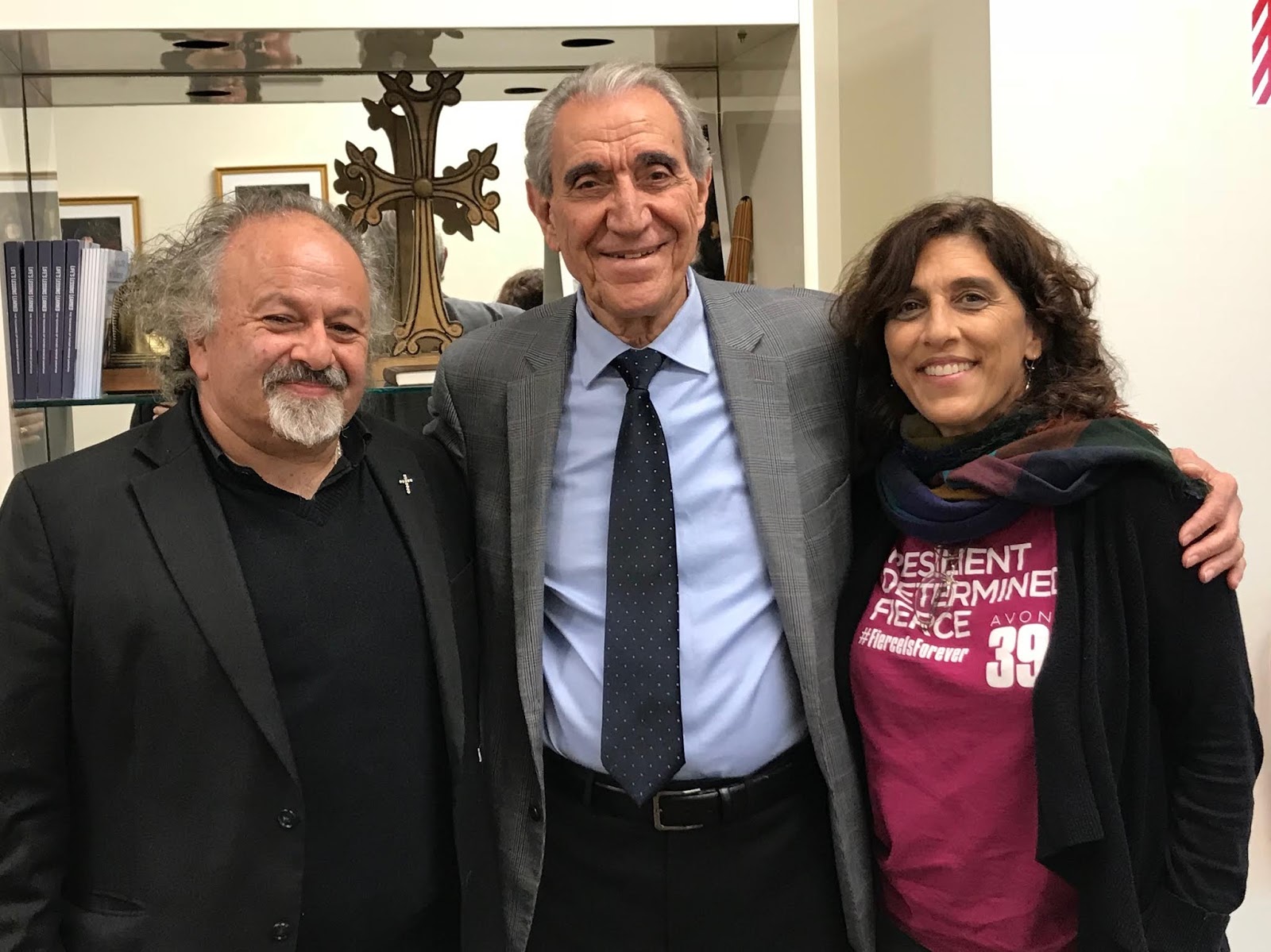
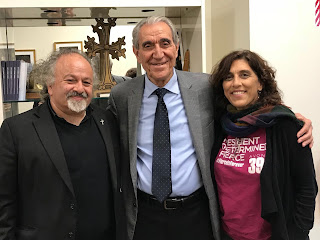
Maestro Khoren Mekanejian with Fr. Vazken & Susan
at the St. Nersess Armenian Seminary, Armonk, NY 2018
I wasn’t expecting this meeting. He introduced himself to me as Maestro Khoren. Could it be him? I thought. No. He was from long ago – a contemporary of Lusine Zakarian. He was at Holy Etchmiadzin when I was there in the 1970’s. The Maestro Khoren is the renowned and noted conductor of the Etchmiadzin Choir who has written one of the melodies and arrangements of the Divine Liturgies for the Armenian Church. If this was the Khoren of the Khorenian Badarak, what was he doing at the dining table at St. Nersess in Armonk, New York?
“He teaches us music and Armenian liturgical singing,” answered one of the students. Maestro extended his hand in introduction to me and said he was looking forward to celebrating the Liturgy together this coming Sunday at the Cathedral. I was still thinking: Could it be him? “Ah! You sound like you are a baritone,” said the Maestro to me as he walked out the door. “We will be able to sing in the higher keys.” I wish I understood how a low-note baritone gave permission to higher keys, but for that moment I gave a courtesy node and smile as he left the room.


“How often do you take classes with him,” I asked one of the seminarians. “Once a week. The rest of the week the Maestro is at the Cathedral.” It has to be him, I thought. Of course! That’s him.
 
An hour later we took a tour of the seminary. The seminarians were eager to show us around. I was anxious to check out my hunch. He was on break, between class sessions. He was challenging one of the students with a question about Aravod Looso: Which verse of the 36 verses (corresponding to each of the 36 letters of the Armenian alphabet) does not follow the rhythmic rhyme of repeating the first character (and therefore the phonetic sound)? I got into the act. I had not done my brain teaser for the day; it was a challenge I wasn’t going to pass up.*
 
Established: This is theMaestro Khoren. I’ve had a burning question that I’m sure he will be able to answer. I’ve kept this mp3 file in my Drop Box for just such an occasion. It is Zarouhi Vartian, singing Marmin Derounagan during my ordination Badarak. It is a unique melody which I have only heard sung in a few churches, including at my first parish in Cupertino. I play it for Maestro. He admits he’s never heard it but starts playing some chords on the 1990’s Yamaha keyboard in front of him. We’ve been invited to his classroom. He explains that the chord progressions suggest, what Komitas called “The Urbanized Armenian hymns.” Armenian hymns are sung and expressed by the villagers, who intertwine the spirit of the land and air into our prayers, he clarifies. Today, everyone wants to get out of church. They would not tolerate such a long and drawn out hymn. “Do you know how I came about to write the music for the Badarak?”
 
This is it!  We’re sitting one-on-one with the man who wrote one of three (Yegmalian, Komitasian, Khorenian) authorized melodies for our Divine Liturgy. And now, in front of this keyboard, we’re about to hear the story of how our Church took on a new form. Yes! It happened, not in the 21st century, but forty years earlier.
 
He shared his story. He begins by admitting, “I’m not a composer. I direct choirs. I’m a choral leader.” And from this humble admission he tells the story of what may seem like an accident of events, but in fact, as we found out, is how the Divine works through our lives.

Khoren Mekanejian was the choir director at the Mother Cathedral of Holy Etchmiadzin. Among his many singers was Lusine Zakarian, the “nightingale” of the Armenian Church, if not, of Armenia. The Catholicos of the time is the venerable Vazken I, who has a front row seat at every Badarak celebrated at Etchmiadzin. One Sunday, the Catholicos calls Maestro into his office following the Liturgy. He has a criticism of the way “Miayn Sourp” is sung. Lusine is accenting the first syllable of Mi~ayn and this conjures negative imagery. “Mi” = do not! “Mi nusdir” = do not sit! “Mi khosir” = do not talk! The Catholicos didn’t want the negative wording of “Mi” to be accented. He told Khoren to please instruct Lusine to accent the second syllable, draw out the second syllable, Miayn~.

After Badarak, in the mashutka that takes the singers back to Yerevan, Maestro tells his star singer to please accent the second syllable. She agrees.
 
The next Sunday, during Badarak, once again, Lusine accents the Mi in the Miayn. Vehapar hears the obvious. After church he summons Khoren into his office. “Didn’t you tell her?” “Yes I did Vehapar Der.” What happened? He sends a deacon to summon Lusine to his office. She arrives and admits that Khoren had told her but she did not comply. With a smile on his face Khoren tells us that at that point “I was relieved. The fault was off of me.”  
 
The following Sunday, the same thing happens: Lusine accents the Mi instead of the Ayn. Now Vehapar is truly upset. So much so that he did not come to church the following Sunday. This cannot happen, thinks Khoren. So he writes the music for Miayn Sourp, with the notation to cut the duration of the Mi and make up for it by extending the duration of ayn. He hands it to Lusine and they practice. Come Sunday morning she sings Miayn Sourp to the specification the Maestro had written. Vehapar is pleased and thanks the Maestro.
 
Now he says that there are variations of the Miayn (=only/along/unique), particularly as it is sung in Amen Hayr Sourp, Vorti Sourp, Hoki Sourp. Maestro contemplates the expression of the Trinity in the Armenian Church as Three Persons in One Nature. His challenge is to present three persons – Father, Son and Holy Spirit – as unique expressions and yet united in One Nature. He composes the music for the hymn and it flies! Vehapar loves it.
 
So now Vehapar asks for Der Voghormia. He wants a new expression appealing for the Lord’s Mercy. The Maestro has had enough. “I’m not a composer,” he protests. “I’m a choir leader.” But Vehapar wants to hear a new Der Voghormia.
 
Khoren lives by Dzidzernagabert. He prayed. The flames, the smoke, the air gave him the melody. He plays a few bars for us on the keyboard. We are moved to tears.

He took the music to Lusine’s house and played it for her on the piano. She sang and they worked together to perfect the harmonies. His head was hurting from the stressful demand of this project. He asked her to make him some coffee. She went to the kitchen and continued singing while he played the piano from inside. Minutes later she brought him his coffee. She had mistakenly mixed salt in it instead of sugar! The demand to produce this hymn was just as stressful for her.
 
The Khorenian Der Voghormia was being sung at the Sunday Badarak on a regular basis. Catholicos Vazken was drawn to tears every time he heard it. Once a group of nuns from Rome had come to Armenia and visited the Holy See. When they heard the Der Voghormia in the Mother Cathedral of Etchmiadzin they were all wiping away tears. Vehapar called Khoren to his side and pointed to the sisters saying, “Do you see, it’s not only me who feels this way about your rendition.”
 
Now Vehapar upped the ante; he wanted the entire Badarak written by Khoren. This was going over the top! How could I write a Badarak or even dare to be in the league with Yegmalian and Komitas? Khoren once again extended his humility in a request to Vehapar to abandon this project. And once again, the venerable Vazken I, in a display of his wisdom argued back, “The Catholics have 20, 30 maybe even 40 different renditions of the Divine Liturgy. Is it too much to ask for a third for us?”

“Your Holiness,” Khoren continued his protest, “There is Aram Khatchadourian. There is Babajanian. They are all composers. I’m a choir leader!” To which Vehapar answered, “Yes, but they have not breathed in the khung (incense) of our Armenian Church. The Church is in your system.”
 
The Khorenian Badarak was written. It was celebrated once a month in Etchmiadzin and in several churches throughout Armenia. He admits that that was the case only because Catholicos Vazken insisted upon it with his bishops, many of whom had expressed opposition to something new being introduced into the church. Today, it is regularly celebrated at the St. Gregory Cathedral in Yerevan and in other churches as requested.
 
It was a memorable moment we shared with Maestro, a reminder that new tunes, new harmonies and new melodies are all possible. Of course, for me, the musical expressions are a metaphor for things even greater. But this afternoon, our tears have choked us up to be in his presence and hear his story.
*Answer to Maestro’s challenge: The stanza that begins with the “vo” letter, since it is connected with the ‘vieun” and therefore makes the sound of “oo” in one of the verses.

Protocols and Faith

Next Step #535: Protocols are used in institutions and in life, but why the resistance in church? Back from Nebraska and the 60th Anniversary of the C-130 Shoot Down. Fr. Vazken shares thoughts and comments with this dedicated group from the US Air Force. Singing the Requiem Hymn in memory of the 17 victims of 1958. A look at the handing off the flag at the grave of fallen service people. Sharing the Faith: Evangelism or Dialogue? Also, topics from the links below:
Saren Kouga, Arax
Last Week’s Next Step (on US Air Force Shoot Down)
Larry Tart’s Message to the 60th Anniversary gathering of the C-130 Shootdown
Piece of the Plane Presented to Fr. Vazken
Sasnashen and the US Air Force Aircraft Shoot Down
Leon Gabrielian Thriving Life Club Podcast
John Lennon Stamp Release
Celebrating with the True Cross of Christ (in New York)
Flag Presentation Protocol
Engineered by Ken Nalik
Produced by Suzie Shatarevyan for InHisShoes.org
Subscribe to In His Shoes » Next Step with Fr. Vazken by Email
Look for The Next Step on blubrry.com
Listen via Stitcher Radio on demand!