Pentecost: Language after Asphyxiation
by Fr. Vazken Movsesian
Excerpts delivered at St. James Los Angeles, California, 31 May 2020
This morning, I came to this church with a lot on my mind. As I was preparing for my message for today – a message about the Pentecost and our lives today – the events of last night unfolded. Just a few days ago George Floyd was killed in Minneapolis and people have taken to the streets in protest. Unfortunately, some saw the opportunity to loot businesses and burn buildings.
 |
|
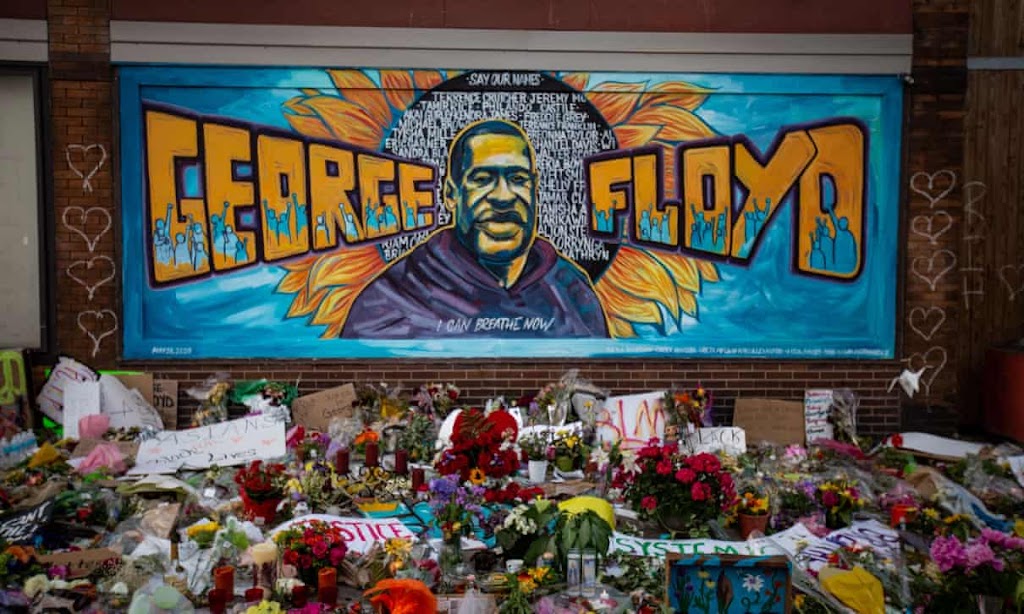
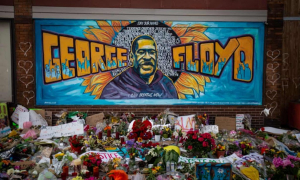
George Floyd makeshift memorial in Minneapolis
Cause of Death: Asphyxiation “I can’t breathe.”
|
Now, I should mention that I was born in Los Angeles. This city is home to me. I should also mention that throughout my life I have been an activist and taken to the streets on many occasions to protest the inequality or injustice that we have witnessed. But last night, the sounds of protest were diverted by the violence, the rioting and the looting. This morning to get to church I took those same streets that hours ago were trashed, torn and set on fire. This is my home that they are trashing. But I back up a bit and I see that it is in my home – in the United States of America – that racism still exists. It is here where we watched a man pinned down to the ground, begging for his life, saying, “I can’t breathe!” and left to die. And this morning, the world has taken notice.
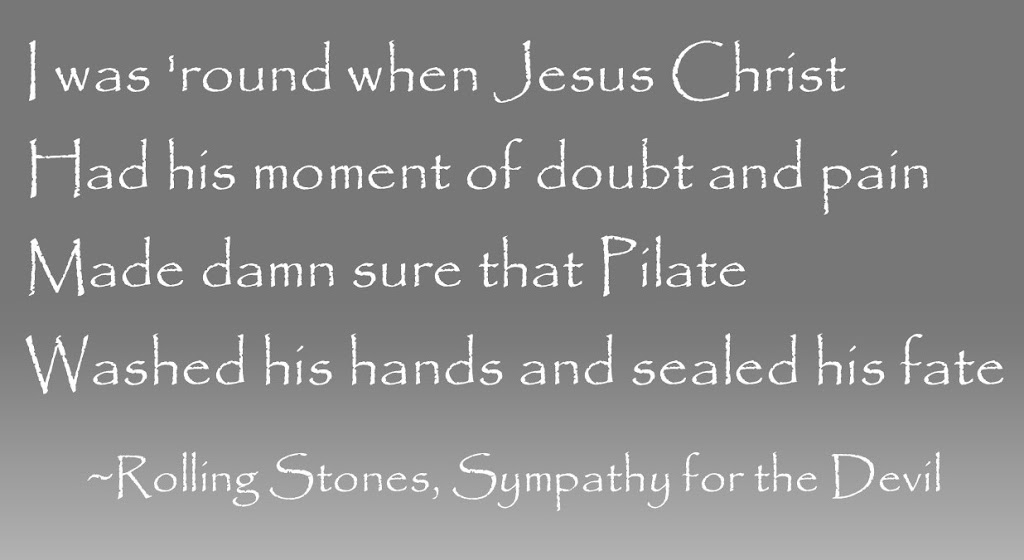
Today is Pentecost. Exactly 50 days after Easter. In Armenian we have a better and more descriptive name for this feast, we call it hokegalust which literally means the coming of the spirit. We read in Scripture (Acts 2) that on this day Jesus’ Disciples were assembled and dealing with the uncertainty of the times. This was the group of Disciples who only a few weeks earlier had witnessed their friend captured and beaten. They heard his plea as he gasped for air during the last torturous moments of his life on a cross, while authorities – both local and state officials – looked on, some with pleasure. After his death they pulled him off of the cross, not before pronouncing the cause of death: Asphyxiation.
Just when the Disciples had lost all hope in goodness, they heard that Jesus had resurrected from the dead. On that Pentecost – just a few weeks after those horrendous events – they were assembled and waiting for a message from their Lord.
Yes, we know that in this world there are different manifestations of evil. There is hatred, there is prejudice, intolerance, bigotry, racism, and injustice. These were present, at the time of Christ as they are now.
On top of everything else, we are in the middle of a pandemic. Along with the virus, there is fear in the air. We have been confined to our homes with this fear in our heart for several months now, our life and lifestyles have been disrupted.
When we feel uncomfortable because we have had to stay indoors, it is important to remember that this is only novel for us. Throughout the world there are so many different types of lock-downs. Our brothers and sisters in Syria right now have been in fear of their lives for the last several years, triggering a massive refugee problem throughout the world. Many of our families coming from the Middle East today have had to stay indoors because of a revolution here or a civil war there. In other countries, if it’s not COVID-19, it’s malaria. If not malaria it’s typhoid. And the list goes on. It is tempting to say these are unusual times, but not so when you look back on the history of the world. During the Genocide years (1915-23) it was not only okay to kill Armenians but it was the law to kill them.
Our church service today, with only a priest and a deacon – no choir, no music, no people – may seem unusual but in fact, the early Christians all celebrated the Holy Eucharist in similar quarantined circumstance. Today we are distanced from the Divine Liturgy because of the COVID-19 virus, but the early centuries of Christianity witnessed the viral infection of hatred and intolerance toward people of the Christian faith. In our history as Armenians we have had to celebrate the Badarak in secret – hidden – because of the invaders, their prejudices, intolerance of our differences and ultimately because of hatred.
Celebrating the Badarak continually has been our salvation. Through it we have kept our focus on the most important truth of all: That is, life is much more than this physical existence and all the goods and things that fill up our space. Perhaps that is why it bothers me when I hear people complain about simple matters such as missing a basketball game or a gathering at a comedy club, claiming that they are “missing out on life.” There are people who are missing out on life because of prisons imposed by dictators, unjust laws or economic conditions in their home lands. And, what is being made very clear this week is that there are people who are missing out on life and missing from life because of the color of their skin.
We Armenians were in the same situation not too long ago. During the Genocide people were exiled from their homes, hunted down and killed with no trial, no defense, just killed in cold blood. We as a nation yelled out “We can’t breathe” and the world just looked on with no response. In the United States of America, in the Fresno area after the Genocide, Armenians had to take the ‘ian’ off their names just so they could find work, make a living and support their families. And the examples are many, all the way up until today from the outskirts of Artsakh to the inner city of Glendale. We have seen prejudice. We have been on the receiving end of injustice. And tragically, the world looked on and did not care. And if we stay quiet at this moment, we are no different than anyone else. If by chance you think that by pressing on the little thumbs-up LIKE button on Facebook is a way of showing your concern, sorry, don’t fool yourself. It’s not only not enough it’s just contributing to big data collected by the company.
No, if we’re going to do something let’s do it in a manner that is fitting of the title “First Christian Nation.” Today is Pentecost. It is a Christian Feast. It is the celebration of the coming of the Holy Spirit. This is the event that empowered the Disciples to become Apostles. They were students who had learned from Jesus and were now in charge of the taking the message to the four corners of the world. According to the Book of Acts, the Holy Spirit gave the Disciples the gift of language. Imagine that. Jesus wanted the world to hear his message. He didn’t send the Holy Spirit to empower these men with guns, weapons, political power, or a sword. Instead he gave them a tool by which they could spread the message of love, namely, language. In other words, he gave them the tool to communicate and share a message of hope with others.
I ask you… what is necessary in our world today? What’s the tool that we need on our streets today? We need to talk. We need to learn to communicate with one another. Not hate, not hit, not hurt, not tear-down, but communicate with one another. It has been said that communications is the glue that holds society together. It brings order to chaos. It’s the basic lesson our moms taught us when we were young: Don’t fight, talk it out. When did we lose sight of this basic lesson?
That’s what happened on Pentecost, on hokegalust, on the feast of the coming of the Holy Spirit, we received the one tool that can unite us. It is a language with which we can tell one another, I understand your pain. I am with you.
In Armenia there is a beautiful expression that the people use. It’s an expression which let’s the other person know that you empathize with them. Dzav’t tanem. It literally means, “Let me take your pain.” Let me understand your pain. Let me walk in your shoes so I know what its like to be you.
Today Armenians have a mission. We can stay in our small little corner or we can get on the world-stage and tell people that yes, we have been there. We have done that. Our entire history is one of overcoming the worst odds. We have survived prejudice and intolerance that have manifest themselves in the form of barbarism, imprisonment, massacres and even Genocide. We have flourished without military might, without weapons of war, without diplomatic strength. What we have had is faith. We have had the tool – the ability to articulate and communicate with the world on many levels and in many forms.
Back in 1965 the world-renowned cultural anthropologist Margaret Mead proposed to the United Nations and to the world that Armenian should be adopted as an international language. But as we all know, it didn’t make it. Politically we weren’t there. English is an international language today as are the Chinese and the Russian languages. Why? Not because they are any purer than Armenian but because politically, their host countries are at the forefront of international relations. If I heard Margaret Mead’s call I would immediately go out and learn this most incredible language. But I certainly would not stop there because the entire purpose of that language is to communicate. It is the means by which we can get things done and therefore I will adapt the tool that will help to bring about my work, namely, to bring about peace and harmony.
The Holy Spirit came and gave the Disciples the gift of language so that they could go out to the four corners of the world and spread the message of Love. To Thaddeus and Bartholomew was given the gift of speaking Armenian so they could take the Gospel to Armenia. And to each Disciple a different variety of that gift was given, and they took that gift – that tool – to spread the message of love. Thomas went all the way to India, Andrew to Scotland, Peter to Rome and so on.
Each of the Disciples went to a different part of the world, speaking a different language but preaching the same message: Love one another! Take care of one another! And whether it is a pandemic or the riots on the streets instigated by hatred and intolerance, there is only one message that needs to be spread: Love one another. The languages are different, but the message is the same. You can overcome anything including hatred with the gift God has given you. It is love. Not with more hatred but love.
I leave you with this message today on this Pentecost as we are watching our cities go up in flames and intolerance and hatred escalating: Counteract evil not with more hatred but with love. Let your love begin by understanding. Put your foot in the shoes of others. Then communicate a simple message of love and friendship. This is sharing the love of God.
We will now conclude today’s service with a requiem (hokehangist). I will be including the name of George Floyd in those for whom we offer prayers today. George Floyd is, of course, the man who is at the center of all the protests. In other words, what I’m doing now is adding the name of a man who was killed because of racism, who was not Armenian, whose skin color is different than ours. He will be remembered today in this Armenian Church in the city of Los Angeles in an Armenian prayer. It is not the end of our problems, but it is a start. Every first step is taken when we extend ourselves. It is a way of saying we have different languages but only one main message. We will not allow his death to be in vain if at the very least we can learn to talk, communicate, and share some understanding and love with one another.