Last Day of the Catechumens
Armodoxy for Today: Last Day of the Catechumens
We are on the last day of a four-day period on the Armenian Church calendar called the Fast of the Catechumens. Established in the fourth century by St. Gregory the Illuminator, these four days are unique because they have no Bible readings assigned to them, begging the question, how can you have a church without a Bible?
To continue on yesterday’s message, the Gospels according to Saints Matthew, Mark, and Luke, including the Book of Acts, (called the synoptic gospels) were written during the middle of the first century and the Gospel according to St. John was written sometime toward the end of the century. Although these books were written, they had not yet been put into the form of a “Bible.”
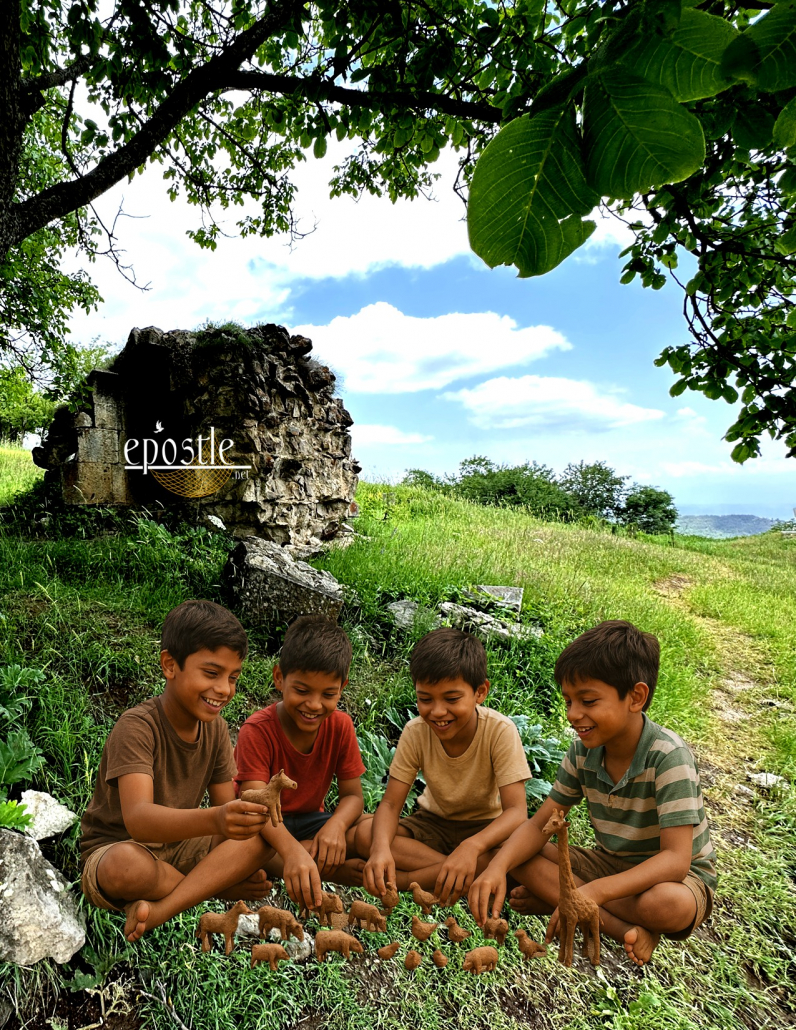
There were other books about Jesus’ life as well. For example, there was the Gospel of Thomas, or, as the author called his book, The Secret Words Which Jesus the Living Spoke and Jude Thomas Wrote Down. It might be thought of as a more complete Sermon on the Mount. There was also a book called the Gospel of the Infancy of Jesus Christ. It is one of the more fascinating books of what is called the New Testament “apocrypha” or “hidden books.” One story relates how Jesus, while still in the cradle looks up at his mother and says, “Mary, I am the Son of God.” Another story is generated from the account of the anointing of Jesus by Mary Magdalene. The story claims an old lady kept Jesus’ navel string in an alabaster box of old oil of spikenard. It was out of this box that Mary took the oil to anoint Jesus. Still another story relates how Jesus and some other young boys were molding clay figures of animals. Upon Jesus’ command, the clay figures begin to walk and fly. The entire book is filled with miraculous stories of this nature. This was one of many books that were circulating in the 2nd Century.
It was the Church that decided which books would be considered “The Bible,” designating them as scriptural canon. All of the books that are in The Bible as we know it today are in a list compiled in the 2nd century, except the Book of Revelation. It was in 419 AD, at the Regional Council held in Carthage that the Book of Revelation was accepted as being canonical. So, there was no Bible at the Crucifixion, Resurrection, Pentecost, end of the First Century, at the Council of Nicaea, all the way up until the 5th century. The Church existed without the Bible that we know.
These four days, the Fast of the Catechumens becomes another opportunity for us to focus on the True Center of our Faith: Jesus Christ. St. Gregory established this fast as the first fast for Catechumens who were entering the Christian Faith. It is meant as a period of learning and growing in Faith, which of course, is necessary for all of us.
We pray today, a prayer inspired by St. Gregory of Narek, O Lord of mercy, You who see the trembling of my heart, kindle in me a flame that does not fade. When doubt clouds my sight, let Your light break through like dawn over the hills. Teach me to trust not in my strength, but in the shelter of Your promise. Let my soul drink from the river of Your truth, until every thought and breath is steeped in Your love. May my faith grow like a tree by living waters— its roots hidden in Your grace, its branches lifted toward Your glory. And when the winds of trial come, hold me fast, that I may stand unshaken in You. Amen.

 2025 Fr Vazken
 2023 Epostle.net
 2023 Fr Vazken
 2023 Epostle.net

 2023 Epostle.net
 2026 Epostle
Leave a Reply
Want to join the discussion?Feel free to contribute!