
Tag Archive for: Politics

That’s too easy

Armodoxy for Today: Too Easy

Scripture recounts that the religious elite of the first century was constantly trying to trap Jesus into contradicting himself. Their traps were of no avail, Jesus’ responses to their questions were always precise and left them (and today, us) with new thoughts to ponder. Such was the case in this moment recorded in the Gospel of Mark (chapter 12).

They approached Jesus, but this time they buttered him up first with words of flattery. “Teacher, we know that you are a man of integrity. You aren’t swayed by others, because you pay no attention to who they are; but you teach the way of God in accordance with the truth.” This was probably Jesus’ first tip-off that a stinger was to follow.  They asked, “Is it right to pay the imperial tax to Caesar or not? Should we pay or shouldn’t we?”

Mark writes, “Jesus knew their hypocrisy. ‘Why are you trying to trap me?’ he asked. ‘Bring me a denarius and let me look at it.’ They brought the coin, and he asked them, “Whose image is this? And whose inscription?”

“Caesar’s,” they replied. Then Jesus said to them, “Give back to Caesar what is Caesar’s and to God what is God’s.” And they were amazed at him.

With this one statement, Jesus has continued to amaze generations until today. Render unto Ceasar what is Ceasar’s and what is God’s to God, is the phrases that is the foundation for concepts such as the separation of Church and State.

It is too easy to quote Jesus with this single line and claim that as Church, or people of Faith, we need to distance ourselves from politics. But as the history of Armodoxy demonstrates, everything is interconnected and certainly did not make this statement to distance himself from the reality of daily life.

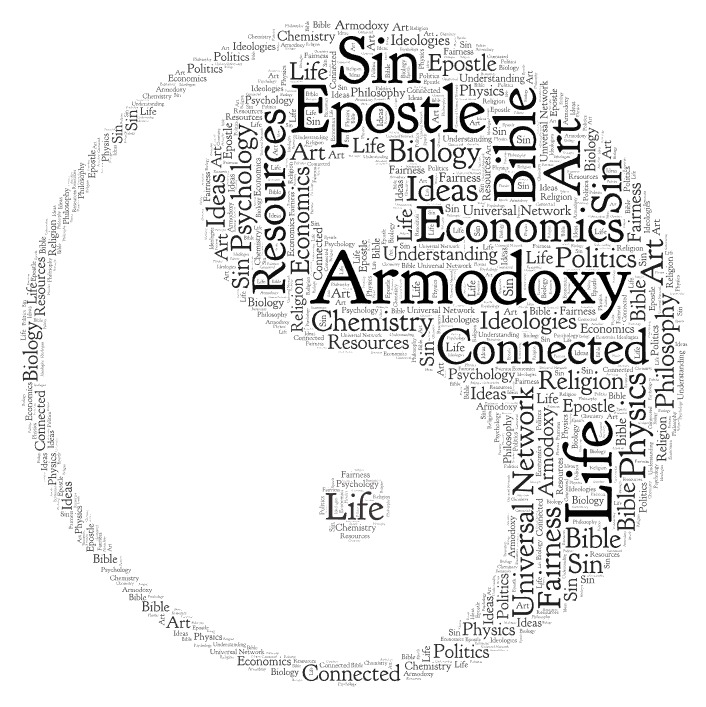
All things are connected to one another in a universal network of life. Economics gives us the resources to buy the Bible, which defines sin, which psychology attempts to diminish. Physics explains the movement of the building blocks which chemistry and biology exploit into physical realities, art presents in forms that express ideas that form ideologies that philosophy dissects and analyses. Politics creates systems that organize those ideologies, and religion is there to ensure the equity of distribution, claiming to have a connection to a higher understanding of fairness.

Yes, everything is connected. It is too easy to pretend that reality is void of spirituality or that religious entities do not have concerns for their community and world. Separation of Church and State does not mean that clergy should not and cannot comment on political realities. Quite the contrary, they are the ones who might align those realities to higher understandings of selfhood and responsibility.

It was not easy for Jesus to make this statement. Tomorrow we continue, today we pray, O Breath of All that Lives, You who move in the pulse of galaxies and in the quiet rhythm of a single human heart, open my eyes to the sacred thread that binds all creation. Amen.
Politics, Religions & Connections

Armodoxy for Today: It’s all connected

If you want to keep the peace in the family or among friends, you’ve been told from an early age to steer clear of discussing politics and religion. Even Peanuts character, Linus Van Pelt, with security blanket in hand, knows, “There are three things I have learned never to discuss with people – Religion, Politics, and the Great Pumpkin.”

It’s all connected

It was the 18th century satirist, Jonathan Swift who put his finger on the reason for this unfriendly mix when he wrote, “You cannot reason someone out of something he or she was not reasoned into.” Yes, most of the time we’re “born into” our persuasions, be they religious or political, we adopt them from our family and friends.

But the basic understanding in Armodoxy is that all things are connected in a universal network of life. Economics gives us the resources to buy the Bible, which defines sin, which psychology attempts to diminish. Physics explains the movement of the building blocks which chemistry and biology exploit into physical realities, that art presents in forms that express ideas that form ideologies that philosophy dissects and analyses. Politics creates systems that organize those ideologies, and religion is there to ensure the equity of distribution, claiming to have a connection to a higher understanding of fairness.

We get into trouble when we claim one system of distribution is better than another. An old Hindu proverb claims, “There are hundreds of paths up the mountain, all leading to the same place, so it doesn’t matter which path you take. The only person wasting time is the one who runs around the mountain, telling everyone that his or her path is wrong.”

Jesus avoids the discussion by turning the responsibility onto the individual. Equity is achieved by sacrifice – by giving of yourself. He teaches this, and then demonstrates with his own life. There is no argument here, for when we give, the giving is between us and God. We do not give to prove a system better than another, nor do we give to the justify the system. We give, because it is the expression of love, which is the expression of God. It is not up for discussion nor debate. If you want to practice Christianity, then love, then sacrifice yourself. Plainly, religion is not to be debated but is to be lived.

The Armenian Church saint, Hovhaness Voskeberan (= St. John Chrysostom) 4th century writes, “If you cannot find Christ in the beggar at the church door, you will not find Him in the chalice.”

We end with one of his prayers, Almighty God, you have promised through your Son that when two or three are gathered together in his Name you will be in the midst of them: Fulfill now, O Lord, our desires and petitions as may be best for us; granting us in this world knowledge of your truth, and in the age to come life everlasting. Amen.

Cover: WordArt

It’s all Connected

Armodoxy for Today: It’s all connected

If you want to keep the peace in the family or among friends, you’ve been told from an early age to steer clear of discussing politics and religion. Even Peanuts character, Linus Van Pelt, with security blanket in hand, knows, “There are three things I have learned never to discuss with people – Religion, Politics, and the Great Pumpkin.”

It was the 18th century satirist, Jonathan Swift who put his finger on the reason for this unfriendly mix when he wrote, “You cannot reason someone out of something he or she was not reasoned into.” Yes, most of the time we’re “born into” our persuasions, be they religious or political, we adopt them from our family and friends.

But the basic understanding in Armodoxy is that all things are connected in a universal network of life. Economics gives us the resources to buy the Bible, which defines sin, which psychology attempts to diminish. Physics explains the movement of the building blocks which chemistry and biology exploit into physical realities, that art presents in forms that express ideas that form ideologies that philosophy dissects and analyses. Politics creates systems that organize those ideologies, and religion is there to ensure the equity of distribution, claiming to have a connection to a higher understanding of fairness.

We get into trouble when we claim one system of distribution is better than another. An old Hindu proverb claims, “There are hundreds of paths up the mountain, all leading to the same place, so it doesn’t matter which path you take. The only person wasting time is the one who runs around the mountain, telling everyone that his or her path is wrong.”

Jesus avoids the discussion by turning the responsibility onto the individual. Equity is achieved by sacrifice – by giving of yourself. He teaches this, and then demonstrates with his own life. There is no argument here, for when we give it is between us and God. We do not give to prove a system better than another, nor do we give to the justify the system. We give, because it is the expression of love, which is the expression of God. It is not up for discussion nor debate. If you want to practice Christianity, then love, then sacrifice yourself. Plainly, religion is not to be debated but lived.

The Armenian Church saint, Hovhaness Voskeberan (= St. John Chrysostom) 4th century writes, “”If you cannot find Christ in the beggar at the church door, you will not find Him in the chalice.”

We end with one of his prayers, Almighty God, you have promised through your Son that when two or three are gathered together in his Name you will be in the midst of them: Fulfill now, O Lord, our desires and petitions as may be best for us; granting us in this world knowledge of your truth, and in the age to come life everlasting. Amen.

Declaring and Doing

Armodoxy for Today: Declaring and Doing

For years, part of my office decor has been a framed copy of the Declaration of Independence. This is the document that was signed on this day, the fourth of July in 1776, by a group of men who were expressing their dream of freedom and independence. They proclaimed that there were “self-evident” truths, “that all men are created equal, that they are endowed by their Creator with certain unalienable Rights, that among these are Life, Liberty and the pursuit of Happiness.” And with these words the experiment in democracy, the United States of America, was born.

I find these thoughtful and beautifully crafted words to be sacred, because they express the inner dreams of humankind. In the Declaration of Independence can be heard the cries of the human soul for rights and equalities. Certainly, true religion has and always must advocate for those rights.

The Armenian Church has lived within monarchies, kingdoms, dictatorships, oppressive and barbaric regimes, and even through atheistic Soviet society. The Gospel Message of Christ is greater than any political ideology and within the expression of the ancient Apostolic Church, that Message maintains its integrity despite the political climate of the age.

Declaring these truths is only half of the story. Living out the dream with our actions is the other half. The Independence Day celebration grants us an opportunity to reflect on our responsiveness to freedom and liberty, to the declarations we make, and to how those declarations are played out.

Today’s one-minute for Summertime and a bit for today’s Celebration.

We pray for America, we pray for ourselves, and we pray for our Armenian Church today. Heavenly Father, bless those who bless you. Give wisdom to leaders. Keep us vigilant in our commitment to pursue that which is necessary for our lives. And keep us focused on our commitment to work for peace on earth and good will toward one another. Amen.


Christ Call: Dare to Dream

Christ Call: Dare to Dream

Next Step #793 – June 8, 2024 – Christ calls us to dream, to explore avenues that have not been explored, in particular in a quest for peace. “Blessed are the Peace makers, for they shall be called children of God,” says Jesus (Matthew 5). Our world needs dreamers. Hear two dreams – one for the exchange of bombs for water and the other, to implement a pardon in the face of hatred. Testing Armodoxy in a world of war and in dog-eat-dog politics: a Paradox waiting to be explored.


Links
Earthrise from Apollo 8
Gor Mkhitarian Music (Paradox)
Produced by Suzie Shatarevyan for http://Epostle.net
Subscribe and listen on demand on your favorite pod-catcher!
We’re on PandoraSpotify and Apple Podcasts

Jesus Eyes

Next Step with Fr. Vazken #721: All the beauty of this world can be wiped out with the push of a couple of buttons. Playing by the rules of humanity instead of the rules of politics. You’d like to believe war is good for “absolutely nothing” until you stop and think how it grabs your attention. Conflict resolution with new metaphors. Imagine a modern day R&R prophet. Francis consecrates Ukraine and Russia. Tears shed over a rose in the rain. Dilemmas of the ethnic church(es). The cheap route of genocide recognition.
Francis Consecrates Russia and Ukraine
Kareem Abdul Jabar on Will Smith
The lost “four white guys”
Universal Soldier by Donovan
Cover: Tears shed over a rose in the rain, Fr. Vazken 2022
Produced by Suzie Shatarevyan for InHisShoes.org
Listen via Stitcher Radio on demand!
Listen on Apple Podcasts

Change

Next Step #678: What needs to change to bring about peace? Moving from the personal – habits – to the global – peace/harmony: the first steps of bringing about change. The myth of politics: why it fails. Bully to bully: Motives aren’t all focused on change nor maintaining the status quo.
Jesus on Priorities
Dalai Lama, Book of Inner Peace
Andrew Weil, MD, 8 Weeks to Optimum Health
Israeli Journalist regarding Peace
WD168 this week
Tracy Chapman
Cover: Joshua Tree, 2021 Fr. Vazken
Produced by Suzie Shatarevyan for InHisShoes.org
Listen via Stitcher Radio on demand!
Listen on Apple Podcasts

Downshifting

Next Step #673: Post Genocide-recognition- downshifting to use lower gears to go faster. Fr. Vazken talks about the importance of the genocide tag and some of the dangers of the designation. Comfort directed: Christian responsibility in the face of evil. Politics and the license to play with history. Philosophy, reason, God. First look at an old book: Tolstoy’s “My Religion”. Calculations for today: 4weekETB
In His Shoes Mission Statement 
Congressman Adam Schiff reads Pres. Biden’s Letter re: Genocide
Armenian Film Foundation
Survivors” by Don and Lorna Miller
Deitrich Bonhoeffer
Genocide Commemorative Concert
Leo Tolstoy, “My Religion”
We will not be erased
WD168 – this week: Post Genocide-Recognition
Ara Topouzian Stringed Tranquility
Cover photo: San Francisco Street downshifting
Produced by Suzie Shatarevyan for InHisShoes.org
Listen via Stitcher Radio on demand!
Listen on Apple Podcasts

To Dream 21

Next Step #659: The inauguration of Joseph Biden is the backdrop for a discussion about inspiration and the power to dream. It’s the ground-work for mystery and the holistic approach to worship shared in Armodoxy. Up close and personal, Fr. Vazken passes along the inspiration that is far from a political event.
Biden Inauguration Speech
Youth Poet Laureate Amanda Gorman
Benediction at Inauguration Dr. Beaman
Martin Luther King Retreat Archive
WD168 this Week
Langston Hughes, “I Dream a World” 
Reclaim 2021 Save the Date: March 6
Inner Light lyrics
Zen and the Art of Motorcycle Maintenance
Ladaniva Mini-concert
Pattern Language
Cover: 2021 NBClosangeles.com
Engineered by Ken Nalik
Produced by Suzie Shatarevyan for InHisShoes.org
Look for The Next Step on blubrry.com
Listen via Stitcher Radio on demand! 

Ink Knew Tune

Next Step #645: Identity in crisis during a crisis: How to cope with the horrors of war and move from hopelessness to hopefulness. Tackling the big questions of purpose by finding definition in work and identity. At the foot of the bed: cancer patients and the war. Power and knowledge beyond human capabilities? Moving from ‘or’ to ‘and’ in placing faith with science. Mesrop Mashtots in Artsakh and the 1903 Encyclopedia Britannica. All this and politics too.
Nairyan Vocal Ensemble
Nairyan Vocal Ensemble YouTube Channel
WD168 going viral
Priests going to war
Christianity Today on the War
Purple Tie Awards
Cover Photo: Ruins near Abovyan, 2014 Fr. Vazken
Technical Director: Ken Nalik
Produced by Suzie Shatarevyan for InHisShoes.org
Look for The Next Step on blubrry.com
Listen via Stitcher Radio on demand!