
 2025 Epostle
Pivot point -The time has come
Armodoxy for Today: The time has come…
Early on in Jesus’ ministry we learn of a wedding feast that takes place in the town of Cana of Galilee. Recorded in the second chapter of John, Jesus is there with his mother and disciples. The weddings is about to come to a halt because the wine has run out.
The Blessed Mother mentions this to Jesus, who responds, that his “hour has not yet come.” (vs. 4) Nevertheless he changes water to wine so the feast can continue. The Evangelist John remembers this miracle in Cana of Galilee as, “The first of the signs through which he revealed his glory; and his disciples believed in him.” (vs. 11)
Several times in the Gospel narratives Jesus is telling his followers that his time has not come. But things change when he enters Jerusalem on the day we refer to as Palm Sunday. St. John tells us that “…there were certain heathens among those who came up to worship at the feast.” (12:20) They requested an audience with Jesus to which he answers, “The hour has come that the Son of Man should be glorified.” (12:23)
This marks a pivotal point in the ministry of Christ. His hour has come. With the presence of the heathens, the preface to John’s Gospel is now finding definition.
He was in the world, and the world was made through Him, and the world did not know Him. He came to His own, and His own did not receive Him. But as many as received Him, to them He gave the right to become children of God, to those who believe in His name: who were born, not of blood, nor of the will of the flesh, nor of the will of man, but of God. (John 1:10-12)
On this Sunday between Ascension and Pentecost, the day the Armenian Church designates as the Second Palm Sunday, the Holy Universal and Apostolic Church branches out of Jerusalem. On Ascension the Apostles are given a commission to go to the world and on Pentecost, with the reception of the Holy Spirit, receive the tools – the language skills – to do their work.
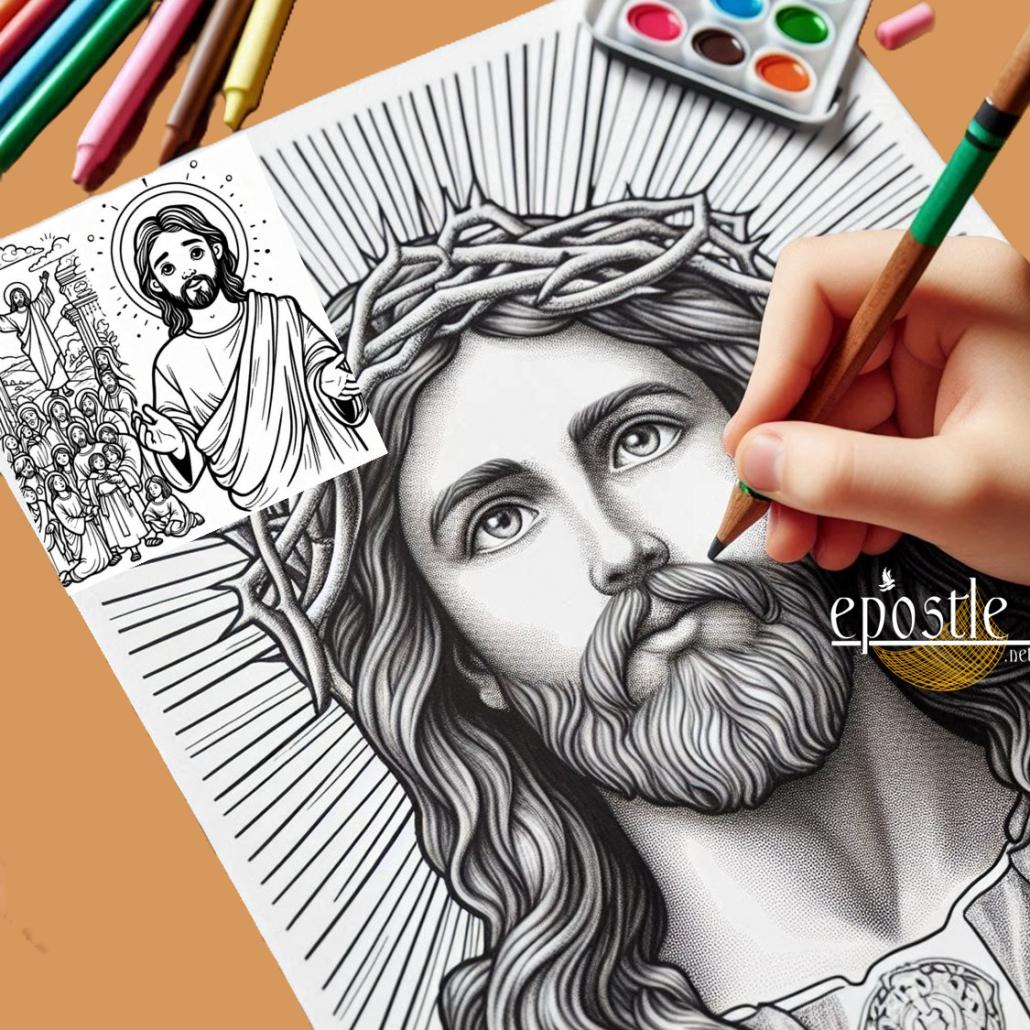
Jesus is recognized as God of the Universe. This is why in the Armenian Church his icon has ethnic characteristics of an Armenian, in the Greek Church he looks Greek, and in the churches in Africa, Asia or South America, Jesus is pictured with ethnic characterization that help us understand that his Divinity is beyond ethnicity or human characterization.
The Church, which Jesus Christ offered as His body was finding form in the time of the Apostles. Today, we repeat the words of the Nicene Creed every Sunday, “We believe in one, universal, Apostolic Church,” as a reminder that Jesus message belongs to humanity, and it is through that message of love and peace that we come to understand one another in this complex world.
We pray today, O Lord our God, You have planted Your Church as the living Body of Christ, the place where heaven touches earth, where Your Word becomes action, and where Your love becomes service.
Make Your holy Church the radiant center from which Your healing, justice, mercy, and truth flow into every corner of the world. Unite us in the bond of peace, keep us steadfast in apostolic teaching, and send us forth as living instruments of Your will. Amen.
 2025 Epostle
 2025 Fr Vazken
 2025 Epostle
 2024 Fr. Vazken
 2009 Varoujan Movsesian

 2026 Epostle
 2026 Epostle
Leave a Reply
Want to join the discussion?Feel free to contribute!