
 2026 Epostle
Groundhogs, Pagans and Celebrations
Armodoxy for Today: Candlemas, Groundhog Day and the Celebrations
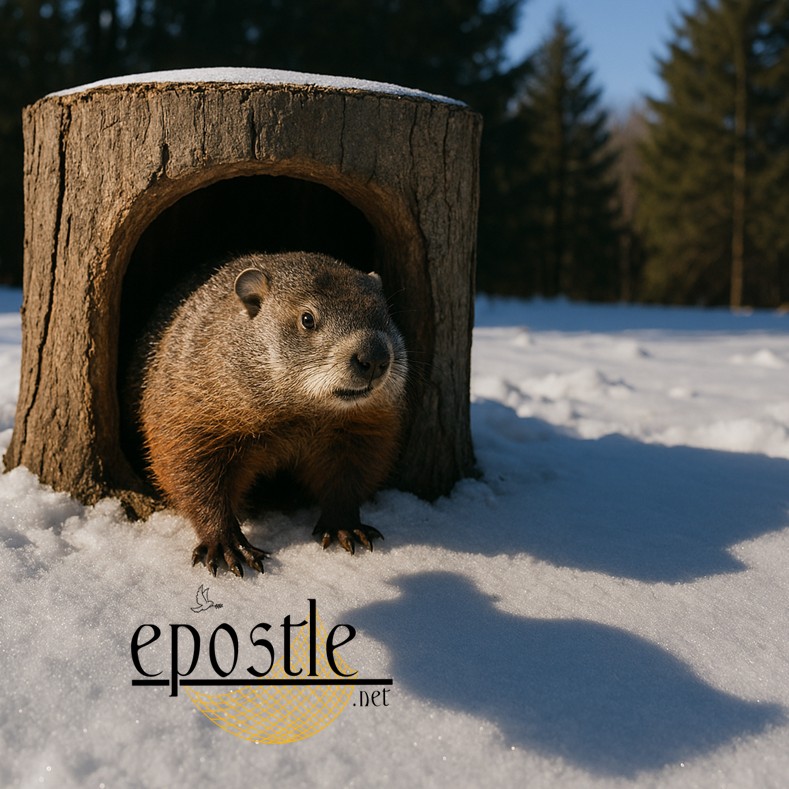
A shadow is worth six weeks, at least if the shadow is that of Punxsutawney Phil. Yes, it’s Groundhog Day here in America and the little rodent came out of his hole with all the fanfare of the local community and those watching virtually on monitors throughout the country. Before you think that you’ve tuned into the weather forecast or a small animal’s nature show, let me mention that today, February 2nd also has religious significance.
In Christianity, February 2nd marks 40 days after Christmas. In Scripture, the Evangelist St. Luke tells us that Joseph and Mary took the baby Jesus to the Temple as was the custom on the fortieth day after birth for all babies to be presented to the Temple, hence, the name “The Presentation.” In the West, it is referred to as Candlemas.
Candlemas and Groundhog Day share deep roots in ancient pagan traditions that marked the midpoint between winter and spring. Candlemas—linked to the festival of Imbolc—originated as a pagan observance in the Roman world before becoming a Christian feast celebrating the presentation of Jesus in the Temple, observed for ty days after Christmas on February 2. In German folklore, weather predictions were tied to the behavior of a badger, a tradition that German immigrants carried to Pennsylvania, where the groundhog eventually took the badger’s place. The belief that a groundhog’s shadow on February 2 foretells either six more weeks of winter or an early spring became formalized in Punxsutawney in 1887, evolving into the cherished American custom celebrated today.
Because we in the Armenian Church celebrate the Nativity of Christ on January 6th as part of the Theophany Celebration, the Presentation is celebrated in 12 days, on February 14, with rituals that take from other pagan observances.
There is no need to hide the pagan roots of any of our celebrations. They are pointers to life being lived and enjoyed. Jesus came into the world, in his words, so that we may have life and have it abundantly, (John 10:10), celebrations are outward expressions of the abundance of joy in our lives. Pagan society had their rituals and their enjoyment according to many of the cycles of nature. Whether it’s the midwinter, the Equinox, the Solstice, rituals celebrate the possibility of new life, of forgiveness, of moving forward in the face of adversity.
Christ’s message is celebratory. It celebrates the defeat of darkness by light, evil by good and hate by love.
We pray, a prayer of St. Mesrop Mashdots of the 5th Century: Mighty King, refuge to the thirsty, Savior of the troubled, who succumbed to suffering for us at the hands of rulers. Prohibit Satan from enslaving those whom You have saved. Forbid the Evil One from seeking refuge in the House of God. With Your divine love, have mercy upon your creation. Amen.
 2004 Fr. Vazken
 2009 Fr. Vazken Movsesian
 2025 Fr Vazken


 2026 Epostle
 2026 Epostle
Leave a Reply
Want to join the discussion?Feel free to contribute!