Loving “as your own” – St. Joseph’s Example

Kiudkhatch – Discovery of the Holy Cross and St. Joseph

English translation of a sermon delivered at St. Leon Ghevondyants Armenian Cathedral, Burbank
24 October 2021

by Fr. Vazken Movsesian

Considering that today is the feast of the Discovery of the Holy Cross, Kiudkhatch I wish to speak to you about adoption. Earlier during our service, we heard the reading from the Apostle Paul regarding the Cross being our salvation. In other words, this instrument of torture in the Roman Empire, was adopted by the Christians to be a means to salvation. We Christians adopted the Cross and made the symbol of destruction and suffering, into a symbol of victory! This is one type of adoption – taking an idea and making it your own.

Of course, there is another type of adoption, one which is more common. This week, in the shadow of the Holy Cross, the Armenian Church commemorated a saint whose name we all know, but at the same time, we know very little about him. He is St. Joseph, the husband of St. Mary the Asdvadzadzin. Our Armenian Apostolic Church remembered St. Joseph this year on October 18 and if you open the calendar of the Church you would be surprised to learn that the Church ascribes the same title to Joseph as it has to Mary, that is, he is referred to as Joseph Asdvadzahayr, that is, the Father-of-God. Now, in the case of St. Mary, we accept this title because she gave birth to Christ, but we have difficulty with the title given to Joseph because from our earliest days in church or in Sunday School, we have learned that there was no biological tie between Joseph and Jesus.

Very little is written about Joseph in Holy Scriptures, but from that little we know that he was a devout and God-fearing man. We know he his strength not only by his physical prowess as a carpenter, but by his moral character. He was unwilling to discredit his wife. Being obedient to the messenger of God, even when all the facts gave him reason to doubt, he took on the responsibility of being the adoptive father of Jesus. In that act of compassion, Joseph did not allow Jesus to be referred to as “illegitimate,” or as an “orphan.” Nor did he allow Jesus to be treated as anything less than his own son.

We know that Joseph was with Jesus for at least the first 30 years of our Lord’s life. In the Gospel of Luke we read that at the start of our Lord’s ministry, when he entered the Temple and read from scriptures, the people questioned his authority by saying, “Is this not the son of Joseph the carpenter?” From this statement, it’s obvious that Jesus was accepted and regarded Joseph’s true son.

The act of adoption is an act of love and sacrifice. As parents, we love our own children, but to love another person’s child as your own reflects a very deep love. Joseph adopted Mary’s child, loved and cared for him as his own.

When we talk about the saints, whether Joseph or any of the other saints, it is easy to get caught up in the details of their lives rather than understand that a saint is like us, with all their frailties, problems and even doubts. However, they are able to rise from their difficulties and aspire to the godly, hence, giving us the inspiration and motivation to move from our difficulties. It is important to see in them the characteristics from which we can learn and by which we can pattern our lives.

I know many of you have come to church today not to receive a history lesson, but to look for strength to go through your difficulties and your challenges – physical, spiritual or relationships. We have all come to church to understand how to live our lives fully.  In learning about Joseph we receive an example for living. We see true strength. We understand what it means to be obedient to God’s word. Joseph prayed, believing that “Thy Will be done” would take place when he, Joseph, agreed to take part in God’s will. In fact, his actions allowed God’s will to be done here on earth as it was in heaven.

As the adoptive father of Jesus, Joseph displayed courage and immense love for his wife and her child. Former president Barak Obama once said, “What makes you a man is not the ability to make a child, but the courage to raise one.” In fact, in this manner alone, we can understand why our Church Fathers referred to Joseph as the Father of God.  Joseph teaches us the true virtues of parenthood – it is the courage to give, sacrifice and to love another human being as your own. He raised Jesus Christ from infancy to adulthood and gave him the necessary support in preparation for the Divine ministry and to ultimately rise to the Cross and conquer it.

If you look at our story as an Armenian people you will find that our Church has taken on this role as the adoptive parent. We refer to the Church as our mother or as our parent because the Church never allowed us to be regarded as illegitimate or as an orphan. Despite our worst days, the loneliness we endured and the abandonment we felt, the Church was with us. Only, the Church, has been with us, not political parties, nor organizations, but the Body of Christ.

When we are baptized, the priest delivers us from the water with the words, “Purchased by the Blood of Christ, from servitude to sin, accepted as an adopted child of the Heavenly Father…”  That adoption is a statement of love.  It means we are true children, with never a worry of being abandoned or forgotten.

During the centuries under Ottoman rule, the Church stood by us. At the Genocide, with limited resources, the church aided us. At the Battle of Sardarabad, the bells of Etchmiadzin were heard as a victorious chant. During the 70 years of communist occupation (1920-70), when the atheist regime told us there was no God, the Church was the only voice shouting that we have an intrinsic value as people because we are the children – the true children – of God. In fact, for many of us in the diaspora during the years of communism in Armenia, we saw the leadership of the church, particularly His Holiness Vazken I, as our father, as our parent. He personified the parenting aspect of the Church.

However for the last 30 years with the independence in Armenia, we feel a maturity, where we don’t need our parents, we don’t need their lessons and we don’t need to learn. We have become ungrateful to the parent that delivered us. Those of you who have children know that the most painful thing in life is to have your children go against you. When you know you have raised your children with love and they turn on you with indifference, it is the most painful of all feelings. And so you can imagine how our Church, which exercised the spirit of St. Joseph as our adoptive parent, feels. Nevertheless, as a true parent, we never give up hope.

Today, I stand before you to tell you that our Church is engaged in a battle to win the soul of our people. Our programs, particularly here within the Western Diocese, are here to elevate and educate our people to an understanding of themselves and their lives in this world today. We are here to teach, young and old about the rich Faith that we call Christianity. We teach, as St. Joseph did, that you never have to feel alone or abandoned. We value, as St. Joseph did, the importance and sanctity of the spiritual life – life in communion with God. We stand at an important juncture in the life of our people, where materialism has consumed us to the point that we have forgotten the true treasures that are valuable in our lives. Today our spending pattern at Costco and the type of hood ornament on our cars are the symbols of wealth, rather than the knowledge that we are joint heirs of Christ. Today, Sunday morning, the children of the first Christian nation are buying and selling merchandise at an outdoor bazaar (one of which which takes place on a street called Artsakh, in Glendale) forgoing the source of true wealth.

Like a good parent, we note these faults, to bring our focus back to the path that saves us. Our criticism is laced with hope because we love our children. Our programs and our teachings are produced with the courage to raise our children in that same love. I hope and pray that you will take advantage of this opportunity that is being delivered to you by our Diocese. There is never any shame (amot) in not knowing, only in not being willing to learn. Our Lord Jesus Christ came 2000 years ago and ushered in the Kingdom of God. One solitary life has changed the course of history. One life continues to be discussed and followed on the four corners of the globe. And His life, the life of the Son of Mary, the life of Jesus Christ, began with a commitment from a true man, who loved his wife so much, that he said yes to God and adopted his wife’s son. He adopted and raised the One who adopted the Cross and gave us eternity. Today, this is what we celebrate.

Before Refrigeration

Next Step with Fr. Vazken #699: Adopting the Cross and Jesus from Biblical times and now: clues to the adoption process. The danger of Revelation and the nonsense of non-denominationalism. Gorbachev’s revelation. Halloween, death, and afterlife before and after refrigeration units. Beginning the process of extracting media from SM. And… answering the questions should Uma have been Yvonne?
Loving as your son: St. Joseph’s example
Purgatory Concept from Maccabees
In Step with Christ: Halloween, Masks and Saints
Few Minutes with Der Hayr (1994): Halloween and Fear
Vernacular Verbose Special ed. 
Vitamin String Quartet
Produced by Suzie Shatarevyan for InHisShoes.org
Listen via Stitcher Radio on demand!
Listen on Apple Podcasts

Meeting Joseph Again

Next Step with Fr. Vazken #698: A personal journey to meet the adoptive father of Jesus. Here is an encounter that begins 39 years ago, comes to a meeting and steps toward a sermon of compassion and care. Religion in America: the mixture of politics and religion, the Evangelical Church and Christianity for the rest. Religion as the lubricants and conductor to furthering political agendas, a caution and appeal to reason.
Meet the Press 10/17/21
Colin Powell passing
Joseph & Mary’s son (blog)
Superman III
Cassandra Wilson
Produced by Suzie Shatarevyan for InHisShoes.org
Listen via Stitcher Radio on demand!
Listen on Apple Podcasts

Back to Fantasy

Next Step with Fr. Vazken #697: Pope Francis calls 40 religious leaders to discuss global issues. Three brothers reunited after a couple millennia. William Shatner in space and Superman drawing and erasing lines between fantasy and reality. Religion beyond Sunday mornings: harmony of religion with the world.
HH Karekin’s message “People as Brothers, Earth’s Future: Religions and Cultures in Dialogue
HH Karekin with HH Francis
Three brothers reunited
Encyclical Laudato Si
Inside the Vatican
William Shatner’s comments back on Earth
Superman Comes Out
Vitamin String Quartet
Cover: Balls, Balos, Digital Blasphemy
Produced by Suzie Shatarevyan for InHisShoes.org
Listen via Stitcher Radio on demand!
Listen on Apple Podcasts

Dust goes by

Next Step with Fr. Vazken #696: What really lasts forever? From our Dust in the Wind Department: Sears closes Illinois office. Lessons for the Church. Catholicos Karekin II meets with Pope Francis and Ecumenical Patriarch Bartholomew. Books to be held: “Humanity During War” by Ezras Tellalian. The Tale of Two Babies – a metaphor for today and the grander-tomorrow. From our mixed shoes department: “They were Chris’, not mine.”
Tale of Two Babies
Everything Must Go (at Sears)
Catholicos meets with Pope
Pope’s visit to Armenia (2016) NS#490
Humanity During War
Fr. Vazken on Humanity During War
Chris Brown / In His Shoes
Kansas: Dust in the Wind
Put Your Hand in the Hand
Produced by Suzie Shatarevyan for InHisShoes.org
Listen via Stitcher Radio on demand!
Listen on Apple Podcasts

iACTivism in Armenia

Next Step with Fr. Vazken #695: Interview with iACT Founder and Chief of Vision Gabriel Stauring and iACT Executive Director Katie-Jay Stauring, about their work with refugees, displaced individuals, war, Genocide and an approach to healing. The War in Artsakh, one year later, thoughts for spiritual Q&A.
iACT news: Facebook page
iACT website: www.iact.ngo
“King of Glory” Q&A one year after the war 
iACT – Mindfulness and Soccer in Armenia 
Interview video: https://youtu.be/BKs47NLYopU
Greetings of Hope: Armenians to Darfuris
In His Shoes Mission
Arpi Alto
Arpi Alto Channel
Cover: iACT Soccer ball in rest on a field in Goris, Armenia, 2021
Produced by Suzie Shatarevyan for InHisShoes.org
Listen via Stitcher Radio on demand!
Listen on Apple Podcasts

Q&A: King of Glory

Deacon’s Q&A: Who is this King of glory, mighty in battle?

Matenadaran Ms.3833

by Fr. Vazken Movsesian

(Written for the WD Deacons’ Chant, Autumn 2021)

Sunday after Sunday in the Armenian Church, we hear a question-and-answer session taking place during the Divine Liturgy. It’s the same Q&A session we have heard for centuries. In fact, it was heard loud and clear in churches last year, specifically on September 27, as Azeri’s began attacking and shelling Armenians in Artsakh.

The deacon, with the chalice in hands, approaches the priest and asks that the doors be opened for the “King of glory.” The priest asks, “Who is this King of glory? The Lord strong and mighty, the Lord mighty in battle?” (Ո՞վ է սա թագաւոր փառաց, Տէր հզօր զօրութեամբ իւրով, Տէր կարող ի պատերազմի). The questioning continues and upon his second inquiry, the deacon announces, “He is the King of glory!” (Սա ինքն է թագաւոր փառաց) and hands-off the chalice for the priest to prepare the Holy Eucharist.

It was the Psalmist who first framed the dialogue on behalf of a hurting world (Psalm 24:8-10). And it has been heard and overheard from altar areas ever since, during times of trouble and persecution just as it was last year in the midst of the 44-day war. In churches where Armenian souls congregate, the scene is repeated.

Priest: Who is the King of glory… mighty in battle?

Deacon: He is the King of glory!

With a war that cost us thousands of lives and the loss of land, another question surfaced: Who is this King, so mighty in battle, that we lost the war? Perhaps not as audible as the chants of the deacon in church, but definitely in the solitude of the mind, many were haunted by the reality of this question. We have heard it, and hear it often. More so, the Q&A of Psalm 24 is an issue of relevance: What is the relevance of our church service and our Faith to the events taking place in the world today? What is the connection between our actions Sunday morning and our response to the tragedies that take place during the rest of the week? Ultimately, what does it mean to proclaim God as almighty – mighty in battle – in the face of horrific tragedies that we endure?

When Abp. Hovnan Derderian first organized the Deacons Council last year, he did so to celebrate a ministry which often gets forgotten amidst ritual. During ordination, deacons are vested with rights and responsibilities which go beyond the Sunday worship service. Through the Deacons Council our intention was, and is, to exploit those gifts of the Holy Spirit entrusted to the deacon. It was only a couple of months after we began holding Council meetings that the War broke out in Artsakh. Immediately, the Deacons Council began collecting funds for the war effort and following their calling, the deacons began holding nightly prayer sessions, many of which were streamed and shared with sisters and brothers in Christ throughout the world. Each of those prayer services were invitations to the faithful to look within, to share with those in need the gifts and talents with which God has blessed us. In Holy Scripture, time and time again, we find our Lord Jesus teaching by example. When a tragedy befalls another, he touches them with his love (cf. Luke 7:11f) and asks us to do the same (Matthew 22:39). This is a calling for deacons, priests, and everyone.

The ministry of the Deacon is defined by service and assistance (Acts 6). During the Divine Liturgy, the deacon is heard inviting people to worship. He beckons the congregation to stand in peace, to pray fervently, to listen in awe, to prepare themselves and to approach the Blessed Sacrament. Simply put, he calls everyone to celebrate the victory of Christ. His pronouncement “He is the King of glory!” is a response to the priest’s question and at the same time it is an invitation for us to engage in the Kingdom which is in our midst. “The kingdom of God does not come with observation,” says Christ our Lord, “Nor will they say, ‘See here!’ or ‘See there!’ For indeed, the Kingdom of God is within you.” (Luke 17:20-21)

“The King of glory mighty in battle,” is the answer the Deacon proclaims to the priest and in-turn to all of us, every Sunday. Sure, Christian apologists, saints and fathers of the Church bring their message and connection to the Psalmist’s inquiry, but today deacons invite us to explore, engage and discover the King of glory for ourselves. Just as they invite us to stand, to listen and to participate, so too, today the invitation is to witness “the King of glory mighty in battle” who is here answering us, our sufferings, our dilemmas, and our wars. By accepting the invitation, we engage in the Kingdom of God. We accept a call to responsibility. Indeed, the Kingdom of God is within you!

Today, as we remember the beginning of the War in Artsakh and the horrific events that followed, let us listen even more fervently to the proclamation: He is the King of glory – a King who resides with us and within us. Herein, we understand ourselves as members of a Kingdom and therefore accept responsibility for our lives and the world around us. Our Divine Liturgy and hence, our Church is calling us to this higher understanding of our Christian Faith, as members of the Kingdom, to engage in the struggles and sufferings that are all around us, not with a question but with the solid answer: He is the King of glory, mighty in battle.

-27 September 2021


Peprone

Next Step with Fr. Vazken #694: Discovering St. Peprone – a relatively unknown saint of the 3rd century, brings a message to the believer and to the world today. Fr. Vazken connects the dots twixt the saint, us and our lives today.
St. Peprone, saint of the Armenian Church
St. Febronia of Nsibus (OCA website)
Febronia icon
Sermon on Cross of Varak
Holy Cross of Varak
Datevik “Listen to My Heart
Gagavik lyrics
Cover icon
Produced by Suzie Shatarevyan for InHisShoes.org
Listen via Stitcher Radio on demand!
Listen on Apple Podcasts

Apologies Abound

Next Step with Fr. Vazken #693: Apologetics is the intellectual defense of the truth of the Christian religion, usually considered a branch of theology, by definition. Justifying what is beyond understanding and the challenge to communicate ideas, despite differences of opinions, is this next step. Expressions of His Holiness Karekin II to the Conference on Freedom and Peace in Holy Etchmiadzin.
Conference on Freedom and Peace in Etchmiadzin
HH Karekin II address to the Conference on Peace
Text of Address
Christian Apologetics
Tiger and the Donkey story
David Benoit Freedom at Midnight
Produced by Suzie Shatarevyan for InHisShoes.org
Listen via Stitcher Radio on demand!
Listen on Apple Podcasts

Not even one more: COVID & Ugly Death

Fr. Maghakia Aramian of Blessed Memory
(1981-2021)
Arms outstretched over Sevan. The world was his.

Ugliness defined: Don’t give even one more…

Death is showing us its ugly head lately. Death is a natural process all bodies undergo. When the natural process is hindered, it is referred to as ugly death, and subsequently, there are different grades of ugliness.

Google-search “Natural Death”  – When a death certificate says a person’s death was “natural,” it is really ruling out the involvement of external causes. The person did not take their own life and they were not killed by somebody else or in an accident such as a car crash or drug overdose.

Today, as we commemorate the 20th anniversary of the 911 terrorist attack on America, its most fitting, appropriate and truly descriptive to say that the September 11, 2001 deaths were of the ugliest type.

Since last year COVID-19 has been the ugly suspect, and now we have another round of deaths. During January, February and March of this year, I was officiating, on the average of, four to five funerals a week. Some of the most bizarre scenes I have tragically recorded in my memory. On two occasions I officiated for a husband and wife, that is, the scene before me was of two caskets laying on the gravesite waiting for a final blessing. After the second one of these double-funerals I happen to mention the stress of the scene to one of my clergy brothers. He trumped my story by sharing that he was asked by a family to wait for the passing of their sister before burying their parents. The coronavirus was making this one a triple-funeral.

My aunt passed away earlier this year, not of COVID-19 but of conditions caused by the pandemic. She was taken to the hospital for emergency care and was forced to spend two days in the hallways because there was no room in the emergency ward. She died alone. Her only daughter was finally allowed admittance to stand by her mom and I, by virtue of being a priest and knowing the chaplain of the hospital, was given an opportunity to share a prayer before she expired. That surreal day, I remember walking through the hospital thinking of being stuck in a theater, watching a horrible-horror movie, and unable to get out. The rooms were filled, the dying were in the hallways and the ambulances outside were waiting in bumper-to-bumper configuration to deliver new patients. Death was all around and it was all very ugly.

Ugliness is not only a descriptor of the death-moment itself, but of what brings upon an untimely death. For instance, when death is being accelerated by unnatural causes, that’s ugly. There is a wave of misinformation going on around the world regarding safeguards against the COVID-19 virus, be those safeguards mere masking or vaccination. Misinformation starts with doubts, is fed by fear, and leads to irrational choices with horrid consequences. I’m always intrigued by people who have fallen into the trap of authoritarian commenting on things of which they have no knowledge. Early on in my ministry I found it confusing when I ran into people who having read the Bible had the nerve and audacity to speak on behalf of God and look down on others who did not see things as they had interpreted. It’s a simple formula that’s very appealing to many: read a book and have complete understanding of the Divine. I often wonder, if I were to go to the local library, check out a book on brake-repair, and then advertise my services, who in their right mind would trust their brakes, and therefore their lives, with me? It’s not even imaginable after the preliminary question: what are your qualifications to repair my brakes, or at the very least to diagnose my brakes?

Switch gears now, from cars and eternal life to viruses and the prevention of infection. What is your qualification to comment on this? The other type of ugliness, then, is pretending expertise, diagnosing and dishing out remedies. It’s akin to crawling under your car to fix your brakes based on the pictures I saw in the book.

At my age I can remember a time when we were plagued by polio and smallpox. I remember getting measles and the mumps as a child. People younger than me don’t remember these diseases and that’s the point. We now vaccinate against them. I remember lining up at elementary school (LAUSD) to take the Salk-vaccine. As a parent, I remember we couldn’t enroll our children in school until they were vaccinated. But in the case of COVID-19 there’s a fear that has been fueled by misinformation. Of course, America offers us freedoms, but your freedom cannot impose on the freedom of others. The proverbial paradigm is yelling “fire” in a crowded theater when there is no fire. It’s illegal, no matter how intensely you appeal to your constitutional right to free speech: you can’t yell “fire” in a crowded theater without facing legal consequences because you have jeopardized the welfare of everyone else.

We’re at a point where we’re seeing new deaths caused by new variants of the COVID-19 virus. Once again, we are being called in to officiate at funeral services. It’s an ugly reality and even uglier is that people would promote this ugliness. No one can force you to do what you don’t want to, but for God’s sake don’t impose your misinformation on others.

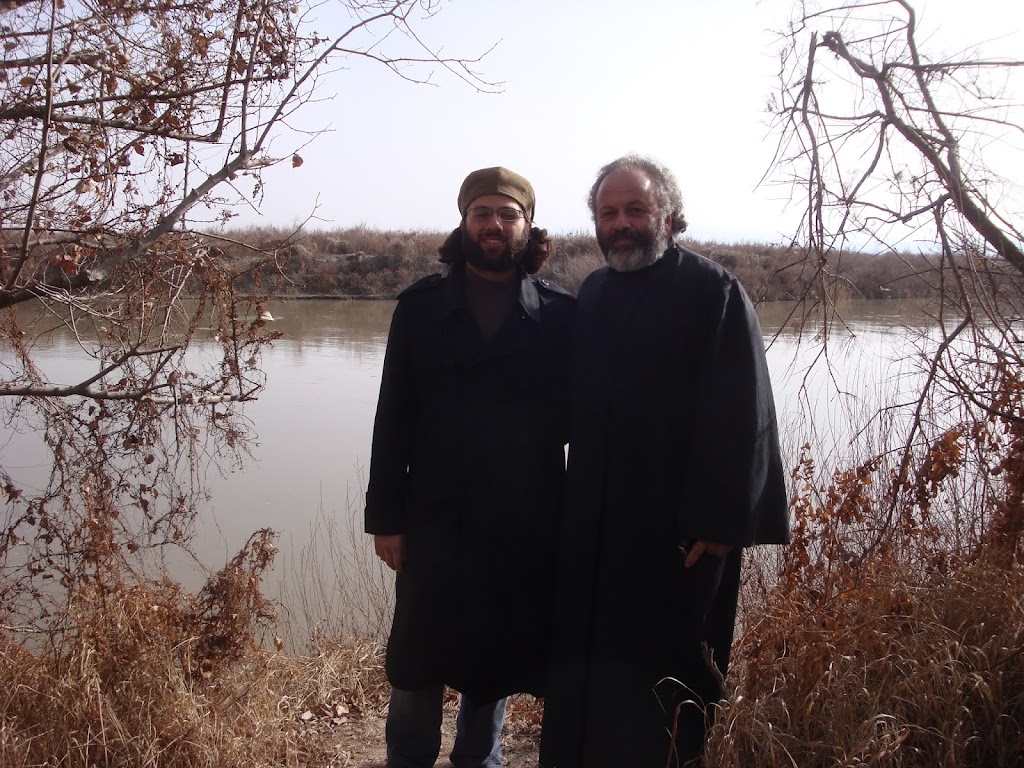
Closer to home, last month, we lost a high-spirited, energetic and dynamic young priest to the COVID-19 virus. Fr. Maghakia Amiryan was an exceptional priest. He was 40 years old. If you met him you know he would share his love for life, our church and our nation with you. Back in 2009, I met him when visiting Armenia with my son Varoujan. We spent several days together going to remote locations in the homeland. On one occasion, Fr. Maghakia took us right to the shore of the Arax River. It was forbidden for non-military people to be on the shore because the river divides Armenia from Turkey. It is a guarded by the military on both sides. Fr. Maghakia’s connection with one of the soldiers at the border got us to this choice spot. I was overcome with emotions, standing on the Arax which has been the focus of song and poem. I felt the frustration of looking at the fertile land across the river and knowing it was the home of the Armenian peoplle and it was inaccessible to us that day. Out of that frustration I picked up a stone

and hurled it across the river, as if to say, “Take that Turkey for imposing horrors on our people that have caused this separation in my homeland.” Fr. Maghakia, in a calm demeaner, asked me not to throw anything else in that direction. He said, “We have given them so much land, don’t add yet, even another stone.” He was loved where ever he went because he knew how to love and did love. He was currently the Dean of the Youth Centers of the Mother See of Holy Etchmiadzin. Children and young adults would flock to him, recognizing in him purity, goodness, and the mannerism that reflected the best of Christian character. Since the time we first met, whenever he’d visit the US, he’d come to our church for services. His loss was a great one for his family and friends, but mostly for the Armenian Church. This coming Monday, September 13, Fr. Maghakia would have turned 41 years old. He will forever remain 40. Yes, I can easily say, his was an ugly death.

Last year saw too many people die an ugly death. For Armenians, it was even uglier. One of the smallest populations on Earth, attacked by Azerbaijan and Turkey, over three thousand Armenians were killed during a 44 day war. To borrow from Fr. Maghakia’s exhortation, we’ve given more than enough, let’s not give even one more life. Exercise caution. Mask, vaccinate, and most importantly don’t participate in spreading ugliness.

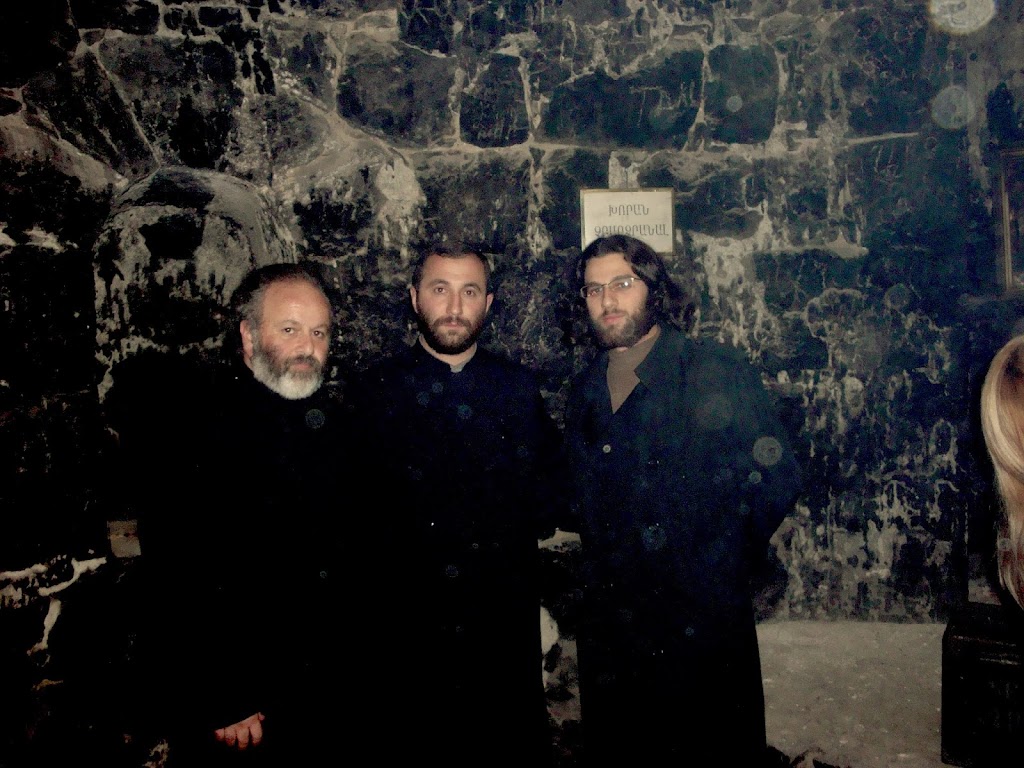
Fr. Maghakia in center with Varoujan and me,
at Khorvirab 2009


On the shore of the Arax River.
Backdrop: Turkey seen “across the pond.”

11 September 2021

The Next Step with Fr. Vazken on the 20th Anniversary (#692)

Shoghakat TV on Fr. Maghakia