Hysteria and Exaltation

Next Step #588: Hysteria takes many forms. From the Beatles (Beatlemania) to expressions today in the self-professed prophets of Christianity, the excitement focuses on the messenger rather than the message. Dangers of Bible study without structure. The Exaltation of the Holy Cross – a major feast with a major message to connect the dots twixt hysteria and meaning. Fr. Vazken makes his selections from the Christian cafeteria with no apologies but with menu recommendations. Statistics – their use and misuse: Why do 4 out of 5 dentists prefer Crest? The birth of the Bible: Surprise!
“A Better Moon” by Ian Anderson
Etchmiadzin Renovation – Fr. Vazken’s Video (AC202 #5)
Hysteria
Ron Howard’s Beatles’ Eight Days A Week
Bible in the Armenian Church
Armenian Christianity Today (Episode #1 – the basics)
Margaret Atwood – Handmaid’s Tale was a warning (Time)
A Better Moon” by Ian Anderson
Cover: Mass Hysteria – Bataclan, Paris (Flickr @tedbassman) 2010
Technical Director: Ken Nalik
Produced by Suzie Shatarevyan for InHisShoes.org
Subscribe to In His Shoes » Next Step with Fr. Vazken by Email
Look for The Next Step on blubrry.com
Listen via Stitcher Radio on demand!

Celebrating the Drummer

Next Step #587: Celebrating the individuals who walk to the beat of Thoreau’s drummer. Not waiting until death to appreciate the beauty people offer our world. Packaging religion and hatred: more than a word of caution, a challenge to reject. Tolerance and understanding today. Bizarre revelation: Trumpeter or con? Creative astrology. Have we forgotten to evolve? God’s foundation in us and not the program.
Adiss in Yerevan
Memory of Setrak
Walden by Henry David Thoreau
Adiss Harmandian
Adiss will not die by Lucy Deukmedjian
Sasnashen project
Cover: Stilt-walking, San Mateo Park, Fr. Vazken 2019
Technical Director: Ken Nalik
Produced by Suzie Shatarevyan for InHisShoes.org
Subscribe to In His Shoes » Next Step with Fr. Vazken by Email
Look for The Next Step on blubrry.com
Listen via Stitcher Radio on demand!

Children & God

Next Step #586: Do children need God? Keeping God close and in focus; Finding God not so much without as much as within, especially in the heart. Jesus’ invitation to accept the Kingdom as children; so who’s leading who? Fr. Vazken is challenged and shares some insights on making God real, front and center in the lives of our children. A model for Sunday School built into the Divine Liturgy of the Ancient Orthodox Church.
Focused Vision
St. Nectarios
Divine Liturgy of the Armenian Church
Cover: Building block of God, Fr. Vazken 2019
Technical Director: Ken Nalik
Produced by Suzie Shatarevyan for InHisShoes.org
Subscribe to In His Shoes » Next Step with Fr. Vazken by Email
Look for The Next Step on blubrry.com
Listen via Stitcher Radio on demand!

Name & Legacy

Next Step #585: The legacy of Catholicos Vazken I – what do we take away from him 25 years after his death. His name, a special calling and expression of the Holy Spirit. One Vazken to the next in this edition. An angel named Alyssa visits and makes a 25 year old connection.
Alone Again Or by Love
25th Anniversary Video Tribute
Vazken I – Addresses & Messages PDF
Photo Gallery of 25th Anniversary Event
Vazken on Vazken: Personal Reflections
Cover: Catholicos’ tomb close up
Technical Director: Ken Nalik
Produced by Suzie Shatarevyan for InHisShoes.org
Subscribe to In His Shoes » Next Step with Fr. Vazken by Email
Look for The Next Step on blubrry.com
Listen via Stitcher Radio on demand!

Encountering Anew: Vazken I

by Fr. Vazken Movsesian
When His Holiness Vazken the First was elected in 1955 to head the Armenian Apostolic Church, Armenia was one of the Republics of the Soviet Union. The Cold War was in full swing and the Iron Curtain was more than a convenient metaphor. It very definitely separated East from West. The notion of a Church – a sacred and established religious institution—surviving in a system which preached atheism sounded absurd to many. But there, in the shadow of Biblical Mt. Ararat and in the place where Jesus Christ descended to mark the spot where the first Christian Nation would build the first cathedral, the Armenian Church was overtly being driven by the power of the Holy Spirit. During the 39 years that followed, Catholicos Vazken led the Armenian Church with wisdom and divine grace against the internal and external threats that were beating on an already fragile church. In 1991, with the collapse of the Soviet Union and the proclamation of Armenian Independence, the first papers of citizenship, most deserving, were given to this Venerable Patriarch. He had overcome obstacles, met challenges, delivered the Church to the doorsteps of the new millennium and in so doing, managed to inspire generations of us.
During the years as Catholicos, to many of us living in the United States – as well as in most parts of the Diaspora – His Holiness Vazken I was the embodiment of the Armenian Church. Think not in terms of the 100+ years that have removed us from the atrocities of 1915, rather imagine a time when only a few decades separated us from those memories. It was common to attend an Armenian gathering and sit side-by-side with a survivor of the Genocide – to hear her story or see his pain. It was a time when a survivor from Van would share his story with another from Kharpert or Izmir, and yet another from Tomarza. Improbable as it may sounded – the ideas that survivors of a Genocide, pulled from the homeland by mass exiles and marches, would find themselves on the other side of the globe meeting and visiting with others who shared their plight – it was happening. And the most common place where these meetings took place were under the domes of the Armenian Churches which decorated the diaspora landscape.


His Holiness expressed himself about the Diaspora while Independence was only a dream and a hope, while Glasnost and Perestroika(remember those words?) were yet to enter the Western lexicon.


… In the future, the framework for a return to the Homeland may be established. And, in fact, it is likely that such programs for repatriation will be organized. As the Catholicos all Armenians, we will be the first to offer prayers and rejoice on the occasion. … The existence of the diaspora should not be a source of fear and despair. On the contrary, destiny has thrust upon us the diaspora – a challenge which we must confront with courage and honor, structuring our life on a firm and enduring foundation of today, tomorrow… the strongest, the safest and the most reliable foundation upon which the structure of the entire Diaspora can be built today is and always will be the Armenian Apostolic Church – our Mother Church. (Paris, 1979)
 
ACYO Central Council 1960, San Francisco
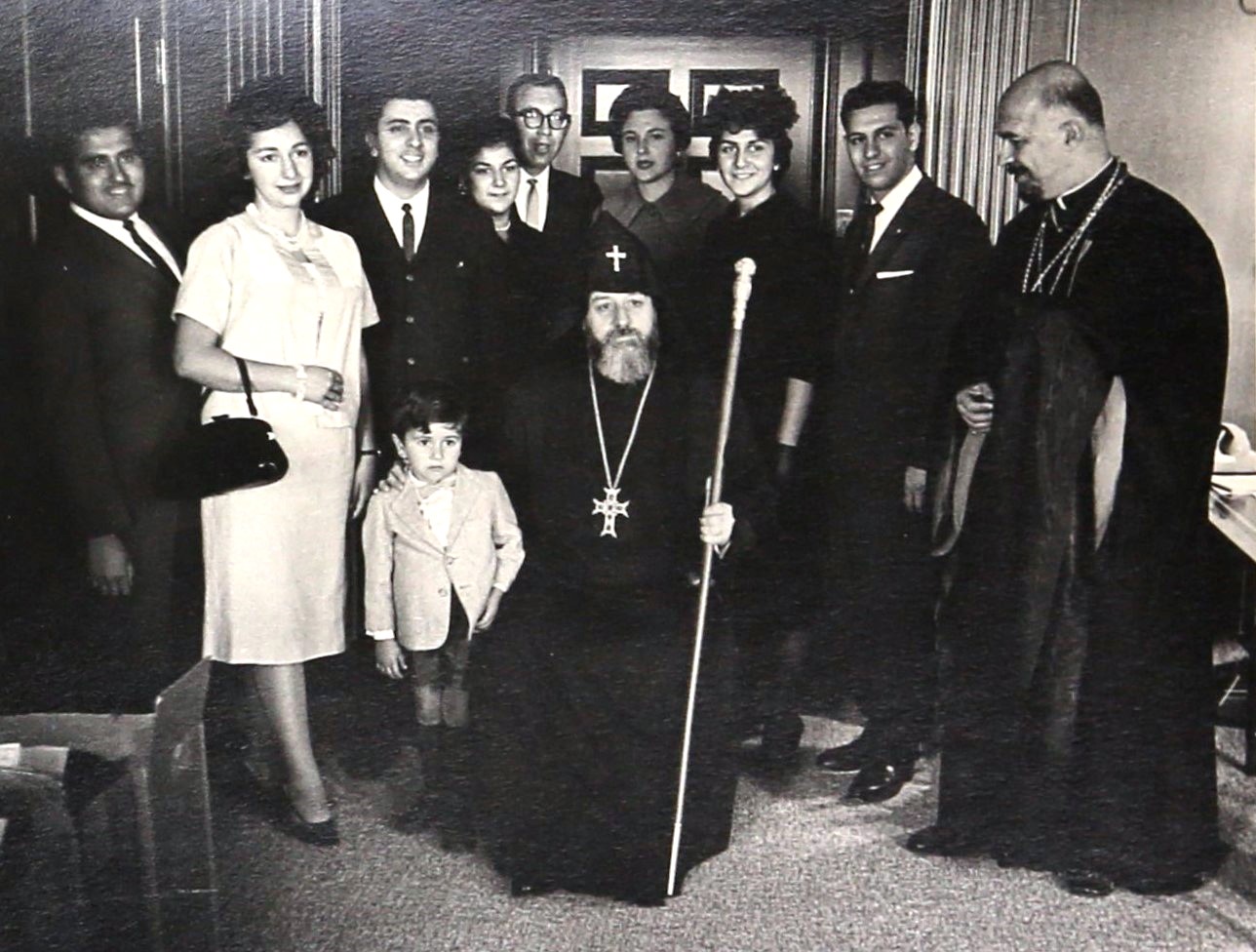
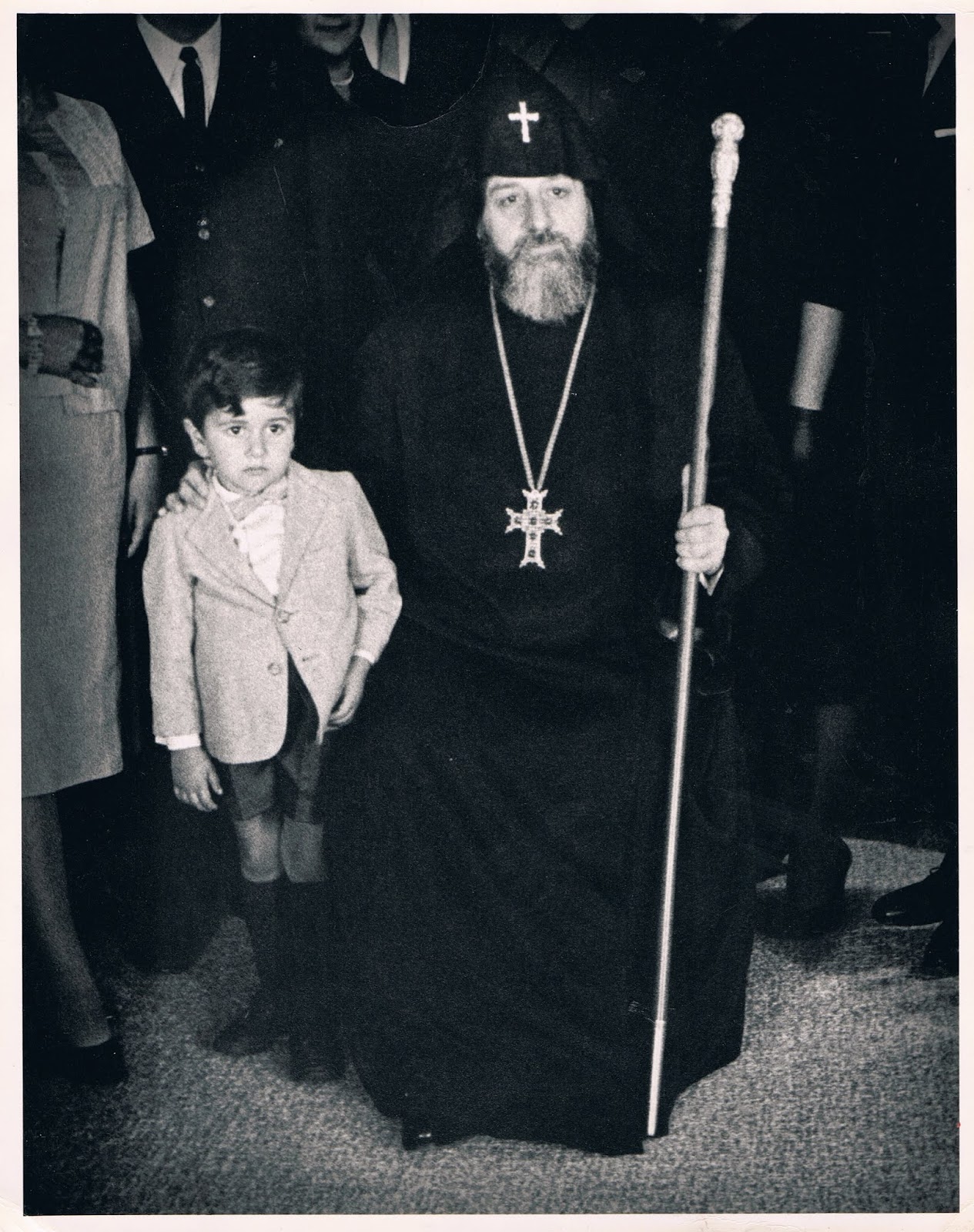
I have many memories of the great Pontiff as do many others. I was honored to be given his name as a crown upon my ordination. But my first encounter with His Holiness would not be remembered had it not been for a very special photograph. I was four years old and my parents were in ACYO when His Holiness made his first visit to the United States in 1960. The ACYO Central Council had an audience with His Holiness in San Francisco and I was there. A shutter clicked and I had my first memory. My parents framed and placed that picture prominently in our home. His Holiness was larger-than-life, and the photograph would fortify that largeness every time I looked at it. His kind face was contrasted by the long black robe he donned, overshadowing the four year old little boy next to him. This was the beginning of the 1960s. A few years later, this decades was to be defined by protests, distrust for government and institutions. Individual identity was being defined along ethnic lines, Civil Rights were being demanded for all, and that picture of Vazken the First was something I could point to and claim as ours.


In the Los Angeles area, as well as throughout the world, we were coming to terms with our living in the diaspora and the ugly reality which caused the diaspora phenomenon. We heard the stories of mass atrocities from our grandparents and collectively we demonstrated for justice. In Montebello, the  Armenian Genocide Martyrs Memorial Monument was being planned. My father was on the building committee for this structure and as children we were there for all the milestones: groundbreaking, fundraisers and endless speeches. Then in 1968, the Monument was to open to the public. His Holiness Vazken I was there from Armenia. His presence, his charisma, his mannerism and his words said in a united voice for All Armenians: the Armenians have arrived. There is no hiding the truth! The Genocide will never be forgotten.
 
My dad gave me a small camera that day to photograph the scenes. He was busy with the organizing efforts involving thousands of Armenians and dignitaries who had come  to pay respect to the past but also to celebrate the presence of the leader of the most ancient Christian tradition on Earth.  To this day I remember that camera – a Mansfield using 127 film. I snapped away and with each click of the shutter I was building a library of memories that would serve as the platform for my future ministry. His Holiness had given the community a booster shot to stay vigilant in the quest for justice. But for this young boy, it was among my first major dose of the vaccination against apathy and indifference. Even going to school during those days was a pleasure because I didn’t have to search for current events: I was living through history.
 
By the early ‘70s I had felt the call to enter the priesthood. After completing my undergraduate work my studies continued at the Seminary of Holy Etchmiadzin. During that time, I took it all in. Travel to Armenia was limited. There was also a sense of isolation and loneliness being there. 1977 technology included a broken-down phone system in Armenia which made my reliance on the postal system the only hope of connecting with family and friends. A letter would take about a month to get to America and another month to get back, and of course, envelopes arrived opened, read and sometimes missing items such as the coveted powdered coffee sent to me by my mom.
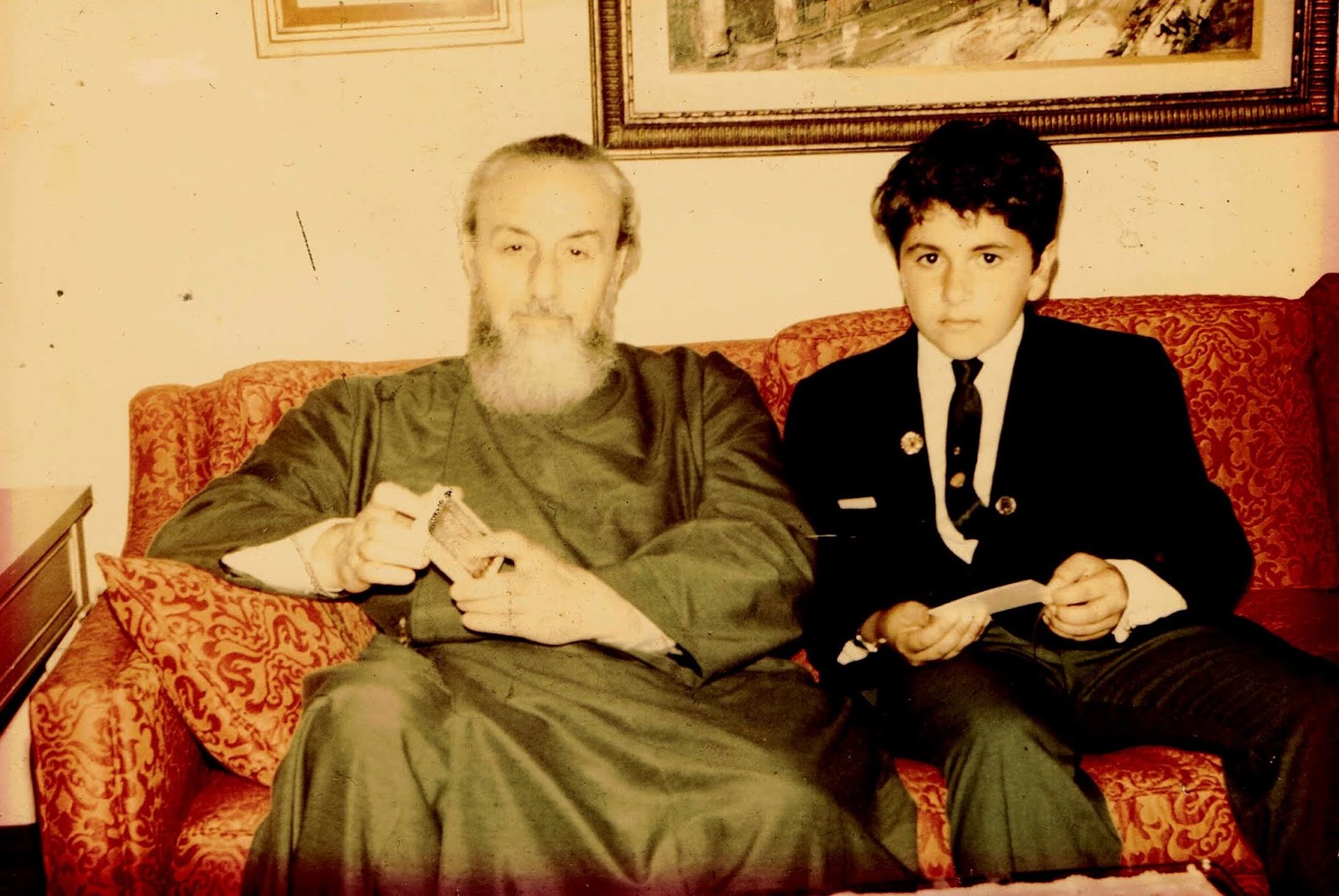
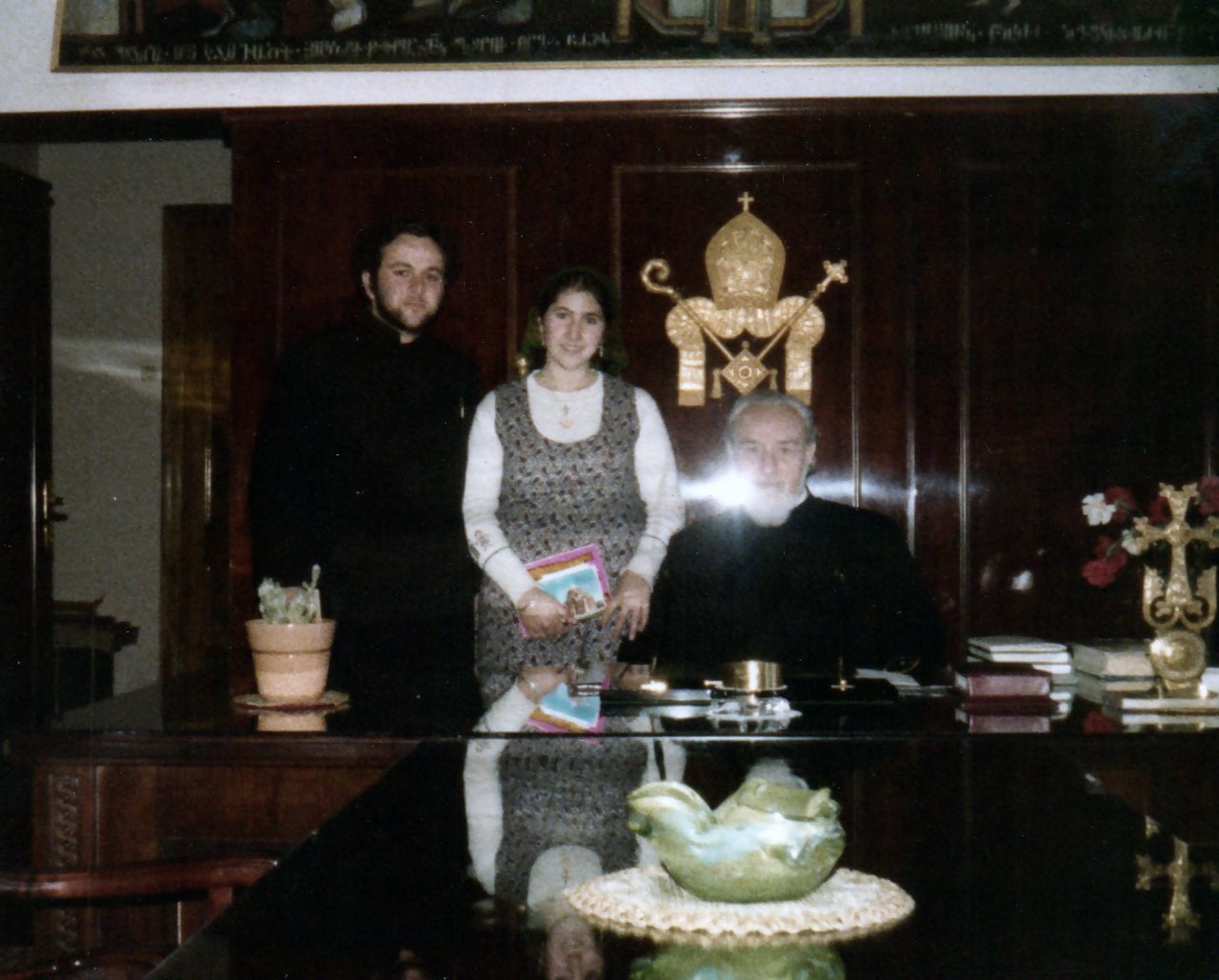
With my sister, January 1978
 
But His Holiness was sensitive to my plight. Even as head of the worldwide Armenian Church, he was always available for a fatherly talk. He approved my bishop’s request to ordain me into the diaconate and even arranged for my sister to visit while I was on Winter break. During the school year he taught a class in psychology. I was blessed to sit in on those classes. Considering psychology was my undergraduate degree I was in awe of how current and relevant His Holiness’ lectures were, how he engaged students in the learning process and challenged us with his assignments.
 
Easter Week 1978
After returning from Etchmiadzin I continued my graduate studies at USC until the time came for my ordination. September 26, 1982 on the feast of the Holy Cross of Varak, I was ordained into the sacred priesthood by Archbishop Vatché Hovsepian and given the name Vazken. It turned out, said Archbishop Hovsepian, that it was exactly 27 years to the day that His Holiness Vazken I was ordained and out of respect to him he ordained the youngest priest with that name. In fact, the honor was to be mine; it was an honor of a lifetime to be named after a living hero of the Armenian Church and the Armenian people.
 
The 60’s and 70’s were times of change, of revolution and understanding ourselves as the agents of change. The music called us to activism and the atmosphere called us to reach out to one another to improve the world we had inherited and borrowing from our children. His Holiness Vazken the First was a mentor and a living example of an activist for justice. He was a revolutionary who understood the value of diplomacy and knew well how to exercise his options for the betterment of his people.
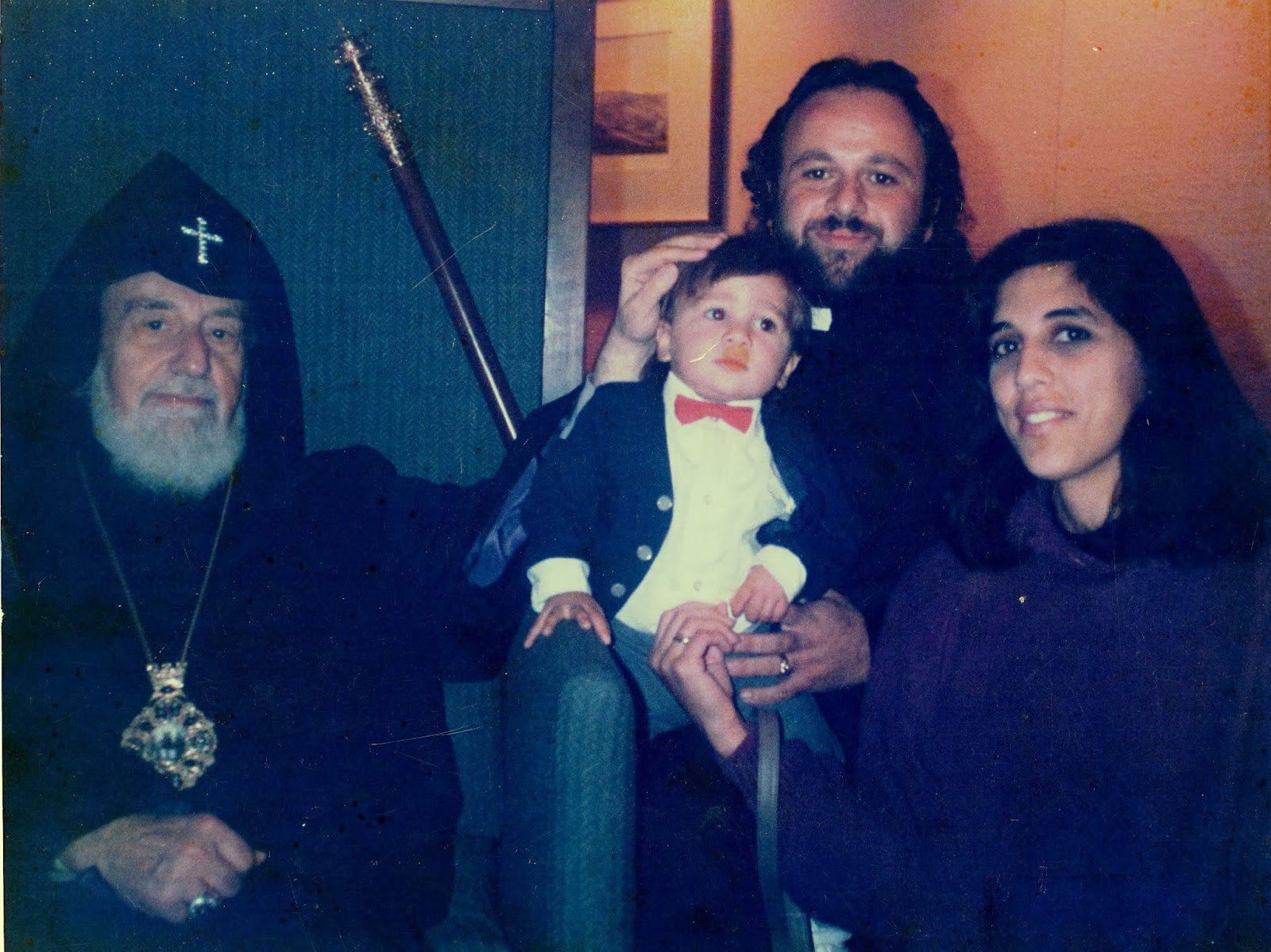
Blessing in San Francisco 1987
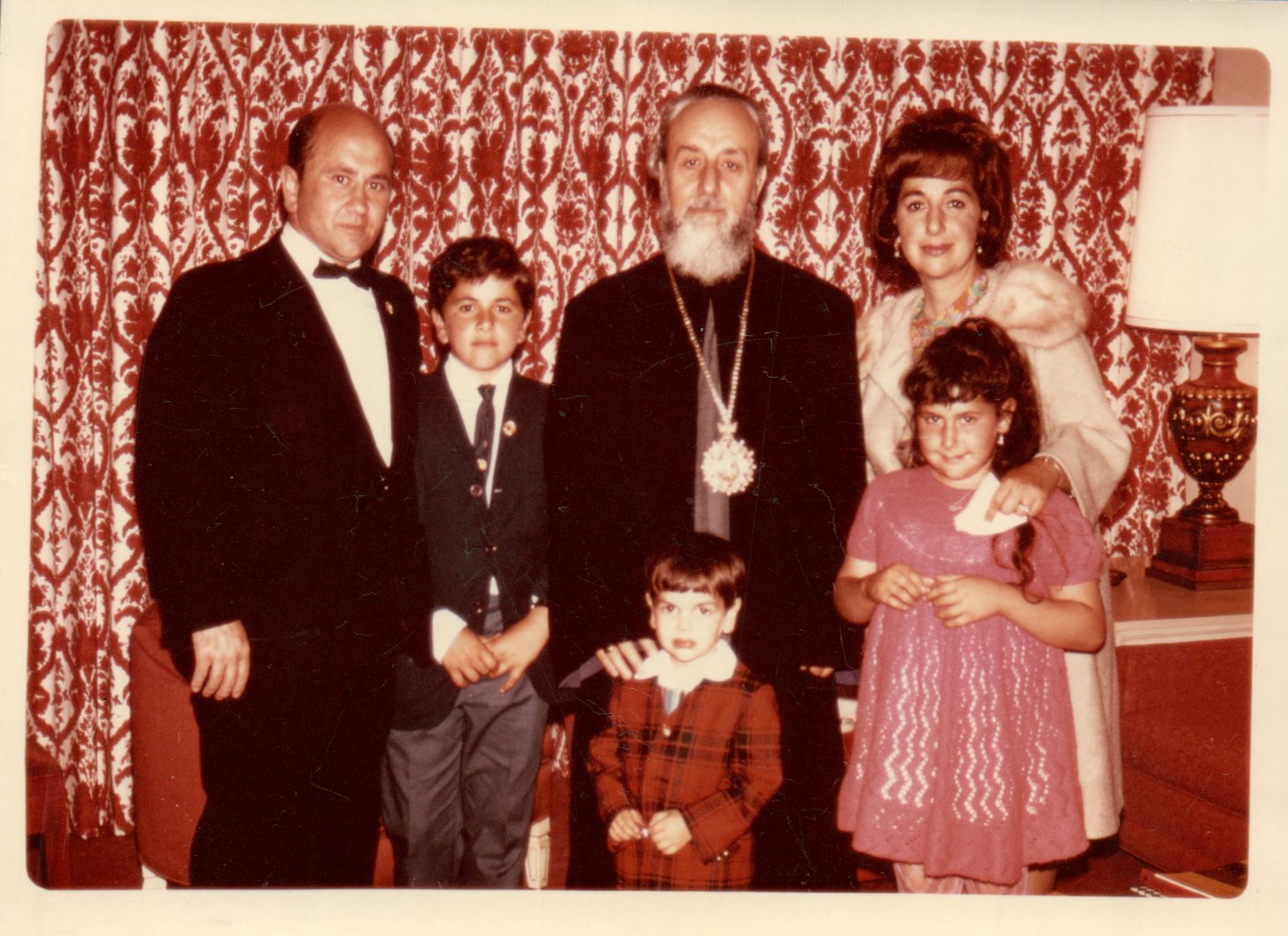
The last time I saw His Holiness was in 1987 when he made his third and final pontifical visit to the United States. By this time Susan and I had our first son Varoujan. He blessed us as a family. Coincidently we were once again in San Francisco for this blessing. Click. I keep that picture hanging in our home as a reminder and inspiration of what the Church must be and can be through its leadership.
If ever there is an overt display of the Holy Spirit guiding the Holy Church, it was during the pontificate of His Holiness Vazken the First. He led the Church during the Cold War. He was attacked by atheist ideologies from the outside. From the inside, party factions and the ugliness of divisiveness ate away at him. The church was being played as a pawn in a game but he met each challenge with love in his heart – love toward God and toward every one of his children in the Armenian nation. Without discrimination he cared about all of his children. As he ascended to the Apostolic Seat of St. Thaddeus and the Holy Throne of St. Gregory the Illuminator he kept firm to his Faith and his calling. He led with courage and valor. He articulated the primary goal of the Armenian Church “is to be the true messenger of the Gospel and to herald the Good News of Jesus Christ to the Armenian people.” He did not compromise himself nor his principles.
Twenty five years have passed since his passing. Today we invite you to Encounter Anew Vazken the First of Blessed Memory.
 

Assumption 2019

Next Step #584: Assumption Feast, Woodstock at 50 and the passing of the Venerable Catholicos Vazken I, 25 years later – connecting these dots. Epidemic of shootings, fear in the air and when religion should stay quiet rather than syncing life with ancient stories. (Termites on the arc?) St. Paul to the Thessalonians 4, and hearing it today in Fowler at the passing for Fr. Yeghia Hairabedian. Inheriting vs borrowing – a way of looking at Christian responsibility in a life that matters.
The Weight – Woodstock Album
The Last Waltz by the Band
Encountering Anew: Vazken I
Blessing of Grapes
Explained! Assumption & Grapeblessing
Rev. Fr. Yeghia Archpriest Hairabedian
Pontificate of Catholicos Vazken by Rev. Dr. Zaven Arzoumanian
Woodstock at 50
I Thessalonians 4 
Road Runner & violence
Cover: Rinjani Volcano – Bing cover
Technical Director: Ken Nalik
Produced by Suzie Shatarevyan for InHisShoes.org
Subscribe to In His Shoes » Next Step with Fr. Vazken by Email
Look for The Next Step on blubrry.com
Listen via Stitcher Radio on demand!

Landmine Free Maratuk: $30,000 closer to happening

A beautiful summer evening in Southern California, a roof top party in Beverly Hills and cool jazz playing in the background are hardly the elements in which a discussion about landmines would ordinarily take place. But this was no ordinary gathering. Concerned and compassionate individuals joined together at the home of Seza Ouzounian and Ohannes Beudjekian in Beverly Hills on Sunday, August 4 to learn about landmine clearance in Artsakh and about the Halo Trust. As a result, $30,000 was raised toward the goal of a landmine-free Artsakh.

At the initiative and invitation of Seza Ouzounian the invaluable work of the Halo Trust was showcased to this group. Landmines have haunted the people of Artsakh for over two decades. One of the largest per capital incidents of landmine and unexploded ordnance accidents in the world – a quarter for victims are children – is in Artsakh (Nagorno Kharabagh). Since 2000, The HALO Trust has cleared approximately 500 minefields removing nearly 12,000 mines for the benefit of over 130,000 people.

The evening began with welcoming words by the hostess, who then invited Fr. Vazken Movsesian of the Western Diocese to share some insights about the urgency of landmine clearance. Next Amasia Zargarian of the Halo Trust presented a short video and explained the workings of the Trust.

The area of land that Ms. Ouzounian has targeted is in the Maratuk region. $100,000 is needed for this area. A matching fund (dollar-for-dollar) has been established.

According to Ms. Ouzounian, “What was gained from this fundraising event is awareness of how serious the situation is in Karabagh. Landmines have made the inhabitants suffer with loss of limbs and deaths and crippled the farming economy. A third of landmine victims are children.”

Many of the guests had not heard of the Halo Trust. “What touched me most,” she continued “is that some of my non-Armenian friends were so moved that they went to their employers and doctors who are Armenian and discussed Halo’s actions to demine Artsakh.

“We need to not rely so much on outside support, we rather need to hold hands and raise funds so that Halo can finish their work and the land can be safe to live on. We raised almost $30,000.00 and we need to raise $20,000.00 more to clear the region of Maratuk. There is an anonymous donor who is matching each dollar. It takes $100,000.00 to clear this particular area and this minefield is being worked on as we speak.”

If you would like to help this effort, you may visit the Halo websites www.halotrust.org/MineFreeNK, Or you may write checks out to The Halo Trust and write “For Nagorno Karabakh” in the memo field and please mail to

Seza Ouzounian,
℅ In His Shoes
PO Box 70773
Pasadena, CA 91117.

They will be forever grateful.

C^2 at the Transfiguration

Next Step #582: From E=mc^2 to the Divine Liturgy – the Peace of Christ being beyond understanding and words, is matched up against the constant speed of light in a manner only Fr. Vazken can. Here’s a connection of dots – a religious unified field theory – that brings it together; the scriptures of Transfiguration and astrophysics, lending to the discussion of mass/energy equivalence and why did you become a priest, Fr. V? More so, the gross and vulgar expressions of Vartavar in the light of the Light: grab a ticket to Magic Mountain. Laugh tracks and canned laughter – being told what’s funny, what’s not and what’s acceptable (a loaded word but only if from the church!)
“About the Light” Gor Mkhitarian from the Spirit Album
Unified Field Theory
Mass Energy Equivolence
Sasnashen Youth Center
Transfiguration Narrative
NPR on Laugh Tracks (Study Confirms)
Neil Degrasse Tyson Astrophysics for People in a Hurry
Stephen Colbert
Technical Director: Ken Nalik
Produced by Suzie Shatarevyan for InHisShoes.org
Subscribe to In His Shoes » Next Step with Fr. Vazken by Email
Look for The Next Step on blubrry.com
Listen via Stitcher Radio on demand!

Closed Box Church

Next Step #581: Back from Armenia and specifically a visit to the village of Sasnashen, site of the US Air Force C-130 Shoot Down, Fr. Vazken debriefs with the listeners in this episode. A preliminary look at the Sasnashen Youth Center Project. Closed boxed churches to keep God away from us: The need for relevance here, there and everywhere. Financial responsibility in the church: PETA would be proud of this model! Living legends continue to inspire with music – McCartney and Anderson. Touching Armenia via the spirit: Saluting the unsung heroes. And much more.
Get Back by the Beatles
Liyah Babayan – Refugee Interview (NPR)
Sasnashen Story (July 2019)
Transfiguration – Fr. Vazken’s Message
For Michael Collins, Andrew and Dad
ANCA – Middle East Christians
Scrambled Eggs (pre-Yesterday)
Email us at feedback@epostle.net
Technical Director: Ken Nalik
Produced by Suzie Shatarevyan for InHisShoes.org
Subscribe to In His Shoes » Next Step with Fr. Vazken by Email
Look for The Next Step on blubrry.com
Listen via Stitcher Radio on demand!

Sasnashen Youth Center

Walking In His Shoes in… Sasnashen Village in the Town of Talin, Armenia

A place for kids to feel welcome, share and explore options to maximize their potential

Introduction:

Last Summer, at the request of the Prop Wash Gang I was invited to the Offutt Air Force Base in Nebraska to offer the keynote address at their gathering commemorating the 60th Anniversary of the shoot-down of US Air Force C-130 #60528. Before going any further…  let’s get the obvious questions out of the way: Why a priest of the Armenian Church? at a US Air Force base? to a group of hundreds of servicemen and their families? So let’s back up 60 years…

In 1958 – during the height of the Cold War – a United States Air Force C-130 flying a reconnaissance mission on the Turkish/Armenian border was shot down by the Soviets. The plane crashed in the village of Sasnashen, Armenia and lost its entire crew of 17 servicemen. The Soviets did not admit to the severity of the tragedy until after the fall of the USSR and by 1992 – some 34 years after the incident – the remains of all 17 men were returned to the United States for proper recognition and committal. Since that time commemorations have been taken place, including the placing of a khatchkar (cross stone) and a monument at the crash site with visits by U.S. military and government officials.

Now… on the evening of September 2, 2018, exactly 60 years to the date of the crash I stood before the servicemen and their families. I explained that in 1958 Armenia was completely occupied, that is, the place where the C-130 took-off (Van) was in Armenia occupied by the Turks and that where the plane crashed was occupied by the Soviets. After speaking about Armenian history and our faith as Christian, there in Nebraska, I offered the requiem hymn and prayer of the Armenian Church for the souls of the 17 victims of the shoot-down.

The group honored me by giving me a framed piece of the tail of the fallen plane. Then, spontaneously they took up a collection and asked that I use it to benefit the children of Sasnashen. Here, I had to confess that I did not know where Sasnashen was but I also promised that from this point on I would not travel to Armenia without visiting the village which had brought us and tied us together 60 years after the tragedy.

On October 25, 2018, I made it to the village of Sasnanshen – about 65km out of Yerevan toward the Northwest border of Armenia. The closest town is Talin (about 10 kms away) with a population of about 4,000. Through our Armenian Church I connected with Fr. Tade Tamazyan, the priest of the Talin and a number of villages that surround the Town, one of those villages being Sasnashen (population 750). My deacon Hrayr Nalbandian, drove us up to there and together with the priest we climbed a rocky road to the crash-site where a monument stands in this remote and obscure corner of the world. It is a tall standing memorial with a plaque written in both Armenian and English:

September 2, 1958

We must never forget that freedom is never really free.
It is the most costly thing in the world.
Freedom is never paid in a lump sum.
Installments come due in every generation.
All any of us can do is offer the generations
that follow a chance for freedom.

There, under the open skies and the silence of the village we offered a prayer for the 17 fallen servicemen as well as a prayer for peace.


In His Shoes’ Involvement

Since 2003 the In His Shoes ministry has actively initiated programs that effect and benefit some of the most impoverished and violence infected areas of the world, including in areas such as Darfur, Syria and Rwanda. After a recent project with the Starkey Foundation to provide hearing aids for over 2,000 inhabitants in Yerevan, we made a conscious decision to move beyond the limits of Yerevan with our assistance so to stay closer to our charter and so that our contributions can be directed in these often forgotten and overlooked regions.

In Sasnashen, beyond the economic challenges of village life, there are few, if any, opportunities for young people to advance in education, or even to explore and exploit their potential. There are government schools but after school-hours and on weekends the children end up on the rural roads without supervision and/or guidance. Father Tade has access to the schools and offers weekly classes to children in the village schools and is known and recognized youth. We decided to use the Prop Wash

Gang funds to further opportunities for youth in the Sasnashen village by creating a Center for after school-hours, where young people can feel welcome, share and explore options to maximize their potential in life.

With the encouragement and blessing of Archbishop Hovnan Derderian, the Primate of the Western Diocese we quickly began work on organizing this program called “Sasnashen Youth Center.”  The Catholicos of All Armenians, HH Kareken II gave a small house directly across the street from the Talin church with the understanding that it would be used as a gathering place for youth. The collected funds were used to bring the house up to standards for a meeting place. We repaired the plumbing, installed a kitchenette, lavatory and new windows.  We have been monitoring the renovation process via pictures and videos sent to us by Fr. Tade.

On July 18, 2019 I personally made a trip to the area to monitor progress and meet with Fr. Tade and others to discuss the program. I also met with the head of the Aragatsotn Diocesan, Bishop Mkrtich Proshyan to assure a proper working relationship between all of our parties. He officially pronounced the name of this project as Sasnashen Youth Center and we are scheduled to open on September 29, 2019. It will be dedicated in the name of the servicemen who perished in the village in 1958. A framed piece of the plane will be presented to the Center at that time.

This is a place where young people can first and foremost feel welcome, safe and loved. It is a gathering place to study, to learn, or merely congregate after school.  We furnished the room and provided computers with internet connections so that we can visit remotely. Fr. Tade plans to bring speakers and mentors with specialties to direct and share time with the kids.

If successful, this can be a pilot project which can be replicated in villages for a low cost and can take advantage of local resources – personnel and physical spaces – which are often overlooked. In this case, those resources were found in the apartment/house which was vacant and unused because of its condition and a priest who has unique access and connection to the young people.

-Fr. Vazken Movsesian

Some links:

Talin in Armenia

Shoot Down of US Air Force C-130 Flight 60528

Fr. Vazken’s Blog on Visiting Sasnashen