Feathers that Explain

Armodoxy for Today: Feathers that Explain

We continue on our theme of finding God in the little things, with this short observation from Soviet dissident, Alexander Solzhenitsyn. In 1970 he won the Nobel Prize in Literature, having raised global awareness of political repression in the Gulag prison systems of the Soviet Union. Today, there is no Soviet Union, but there is tyranny, and political unrest in the human quest for freedom.

Alexander Solzhenitsyn wrote this beautiful short prose poem dedicated to a duckling.

A little yellow duckling, flopping comically on its white belly in the wet grass and scarcely able to stand on its thin, feeble legs, runs in front of me and quacks: “Where’s my mommy? Where’s my family?”

… this one is lost Come on then, little thing, let me take you in my hand.

What keeps it alive? It weighs nothing; its little black eyes are like beads, its feet are like sparrows’ feet, the slightest squeeze and it would be no more. Yet it is warm with life. Its little beak is pale pink and slightly splayed, like a manicured fingernail. Its feet are already webbed, there is yellow among its feathers, and its downy wings are starting to protrude. Its personality already sets it apart …

And we men will soon be flying to Venus; if we pooled our efforts, we could plough up the whole world in twenty minutes. Yet, with all our atomic might, we shall never-never! — be able to make this feeble speck of a yellow duckling in a test tube; even if we were given the feathers and bones, we could never put such a creature together.*

Like the life in our breath, the cells of a trees, the splash of an ocean wave or in the feather of the duckling Solzhenitsyn describes here, everything is of God.

We pray, Lord, open my eyes and my heart so I may notice, feel, touch and appreciate the beauty you articulate in Your creation. Amen.

*Excerpt from Alexander Solzhenitsyn’s Short Stories and Prose Poems. Farrar, Strauss and Giroux, 1971. Bantam 1972

Tested in Birthing Rooms

Armodoxy for Today: Tested in Birthing Rooms

A foxhole is a hole in the ground used by soldiers as shelter against enemy fire. It’s been said that there are no atheists in foxholes. It’s an aphorism to suggest that in times of extreme fear or threat of death people will appeal to a higher power. In other words, when looking in the face of death, even the atheist will admit to a God.

Many years ago, I discovered another place where there are no atheists. The night my first child was born, it occurred to me that there aren’t any atheists in birthing rooms, either. When looking in the face of life in its most delicate and novel state, that is new life, untouched by the world, uncontrollably you lose yourself to your emotions. That loss of control is a recognition and acknowledgement of being in the presence of something greater than yourself. The details of paper-thin fingernails, the sculpting of beauty in the features, point to the fingerprint of God and the realization that the miracle of life as anything but an accident.

I tested this theory a couple of times after that first experience and most recently with the phenomena of grandchildren. Same conclusion: There are no atheists in birthing rooms.

We pray, Lord, in the simplest expressions of life we find You. Keep our senses ever-alert to Your presence all around us. Watch over and protect those little expressions of Your Love. Amen.Whispers of the wind, held in a breath—each filament a fragile thread of nature’s poetry.

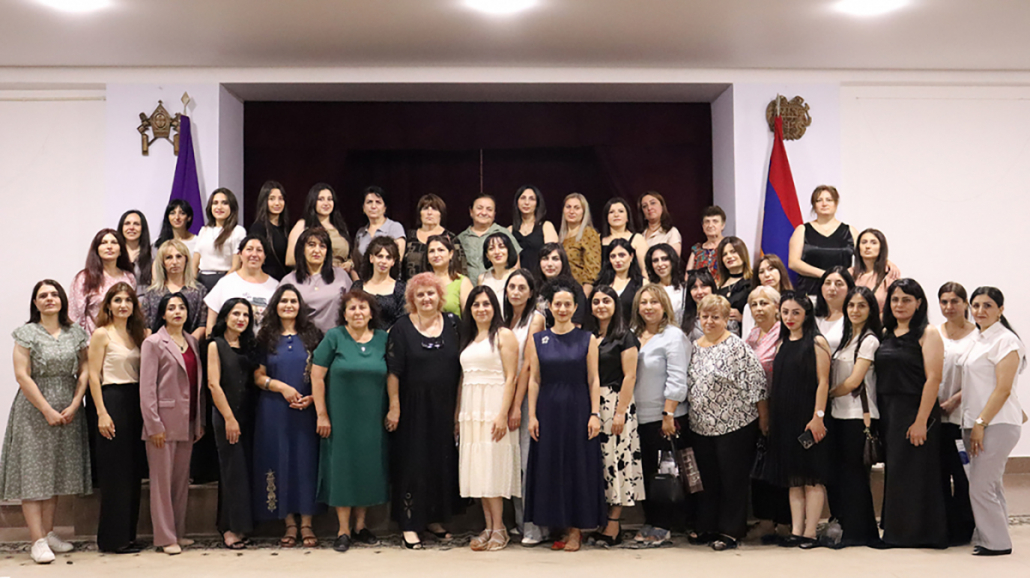
The Vanadzor Team

Epostle Welcomes the Vanadzor Team

2025 marked a transformative year of growth for Epostle. We launched new initiatives, sharpened our focus, and reaffirmed our essential mission: to bring the light of Christ’s wisdom, the O.G. (original gospel) message uniquely preserved by the Armenian Church, to people around the world today. At Epostle, we view this mission as a bridge, a vehicle to guide humanity forward into the light. In an era when the world grapples with crisis, questions truth, and witnesses the consequences of polarization and division, this unifying light is needed more than ever. Like a lighthouse guiding ships through the night, Epostle aspires to be that steady beacon, beyond politics, untouched by societal drama, and unwavering in our commitment to the mission. When in doubt, follow the light. This is our message, our protocol for healing, evolving, innovating, and finding solutions amid darkness.

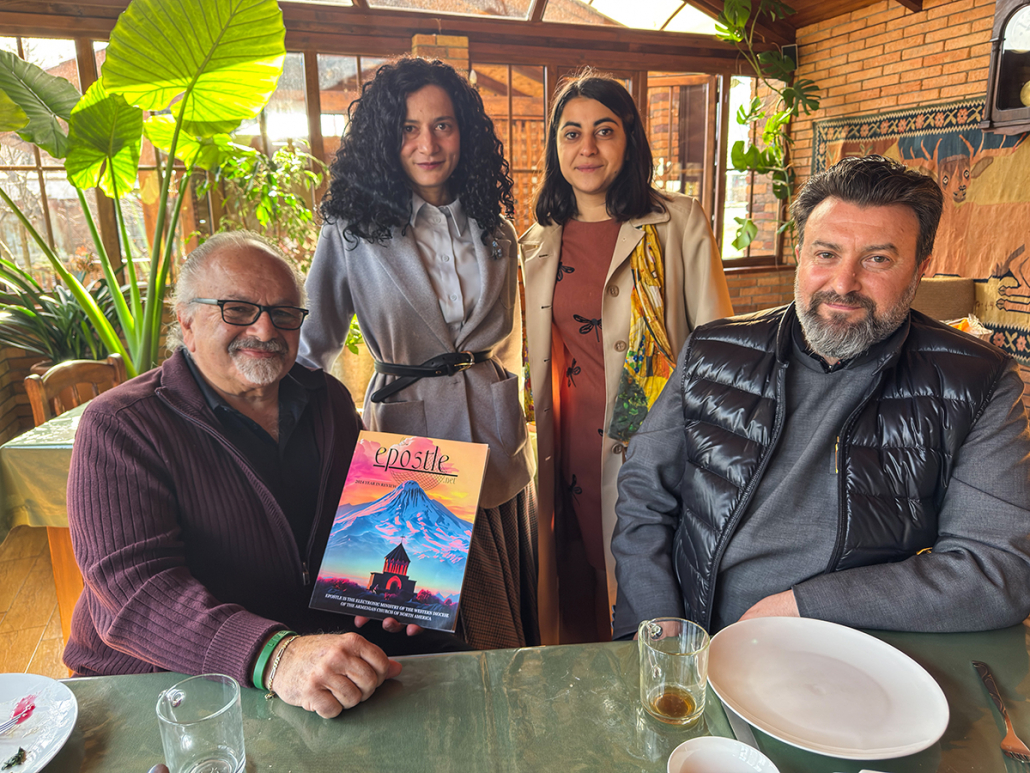
To fulfill this vision, we are intentionally building a borderless team, one that draws strength from diverse locations and shared purpose. After introducing our social media team in Yerevan, we are proud to present our Vanadzor Team, based in Armenia’s third-largest city. In March 2025, shortly after the Reclaim Conference, a small Epostle delegation traveled to Vanadzor to meet our newest members and lay the foundation for thriving outreach programs. We were warmly received by Bishop Hovnan Hakopian, Primate of the Gougark Diocese of the Armenian Apostolic Church, who shared his vision for the diocese’s future. This visit deepened our collaboration, focusing on real needs: spiritual and emotional support for refugees from Artsakh, a sewing center empowering displaced women to earn income and build self-reliance, and a children’s art center where young ones create freely, healing through expression.

At the heart of these efforts are two exceptional women whose experience aligns perfectly with Epostle’s goals and the community’s needs: Arevik Yeghiazaryan and Hripsime Mirzoyan, our Project Managers in Vanadzor. They serve as the vital bridge connecting Epostle’s main hub in Los Angeles with on-the-ground action in Armenia.

Arevik Yeghiazaryan brings strong project leadership and organizational skills. She holds a Master’s in Business Administration from the Public Administration Academy of Armenia and a Bachelor’s in Management from Vanadzor State University (with studies in Romania). Since 2021, she has been Project Manager at the Gougark Diocese, while leading “Bolor sar” NGO as President/Project Manager (2017–2025) and serving as founding member/Program Coordinator of WINNET Vanadzor (since 2020). Backed by trainings in CSO management and collaborative policy, she excels in communication, leadership, teamwork, and problem-solving, perfect for driving sustainable Epostle initiatives.

Hripsime Mirzoyan, a dedicated social worker born in Vanadzor, brings deep compassion and extensive community experience. Educated in Social Work and Social Policy at Yerevan State University’s Lori Regional Center, she has led the Social Programs Department at the Gougark Diocese since 2018. She coordinates programs like “Her Power, Her Future” (with CARE Caucasus and WINNET, 2023–present), psychosocial support, children’s education, and refugee aid. As Founding Member and President of WINNET Vanadzor (since 2020), she focuses on women’s and youth empowerment. Hripsime excels in communication, leadership, organization, and conflict management, making her an ideal heart-led partner for Epostle’s work.

During our March visit, these programs truly came alive. We met refugee women in the basement of Narekatsi Cathedral, listening to their stories of loss and exile while honoring their hope to return home. Dr. Talar Tejirian, our accomplished physician and surgeon from Los Angeles, spoke candidly about staying active and positive. She offered gentle assessments and introduced gratitude journaling. Her magnetic presence and professionalism left a lasting impression, embodying the empowered woman as a beacon of perseverance and possibility. To many Artsakh refugee women, Talar represents hope and what’s achievable through committed action, a living example of Epostle’s vision: light over darkness, possibility over fear.

Our refugee support began last year with fundraising like the Cars and Coffee event at St. Leon Ghevontyants Cathedral in Burbank, channeling funds to the sewing center and self-sustainability efforts. At the children’s art center, we saw joyful creativity and held open conversations with youth about faith and adolescence. Gregory Beylerian, Epostle’s creative director, shared insights on the children’s drawings, underscoring art’s role in healing and power of creative expression. We also reflected at the tomb of beloved former Primate Archbishop Sebu Chuljian, whose legacy of leadership and youth exchanges, including our continuing sister-camp programs, endures with our support.

With Arevik and Hripsime as our heart-led liaisons in Vanadzor, Epostle is achieving these goals with remarkable effectiveness. Teamwork is central: we co-create in rhythm, guided by conscious orientation and faith. Our team is built not on need or security, but on the heart, aligned with the teachings preserved by the Armenian Church at the base of Mount Ararat 2000 years ago. As a heart-led team rooted in divine intelligence, creativity, and action, the sky is not our limit; we reach beyond to the stars and further.

Looking to 2026 and beyond, we see a canvas of possibility. We are not dissuaded by society’s challenges because we choose to be part of the solution, a choice open to everyone. At Epostle, we have chosen to preserve and honor our past while shaping an illuminated future. We are deeply grateful for Arevik and Hripsime, whose dedication brings the light of Christ to life in Vanadzor. Their work uplifts families, empowers women and youth, and strengthens the global Armenian community’s bonds of faith and solidarity.

Together, we follow the light.

A Humbling Choked Voice

Armodoxy for Today: A Humbling Choked Voice

In birthing rooms, homes, and fields throughout the world, parents meeting their child for the first time are overwhelmed with tears and choke on finding the words to express that awesome moment of life. Our Lord Jesus refers to this moment, “When a woman is in labor, she has pain, because her hour has come. But when her child is born, she no longer remembers the anguish because of the joy of having brought a human being into the world.” (John 16)

At a full solar eclipse a few years back, as the Moon covered the Sun and only the solar flares were dancing around the circular disk in the sky, I was moved to sing the Armenian Hymn, sharagan, “Aravod Looso” – a praise to the morning Sunrise and to the Light. Try as I may, words were not coming out of my mouth. I was choking in emotion. Overwhelmed by the event.

In 1985 Carl Segan and his wife Ann Druyan authored the book, “Contact.” The story explores the possibilities of contact between humans and extraterrestrial beings.  About a decade later the story was made into a motion picture starring Jodi Foster and Matthew Machaney. It was fascinating because the story was written from a science perspective, as would be expect from Carl Segan, who was an astronomer and planetary scientists, and very eloquently articulated scientific concepts for the average man. He was an advocate of skeptical scientific inquiry and the scientific method. Yet at the end of Contact he concedes that words and the expressions we possess are inadequate in explaining or expressing the events of the first human contact with the extraterrestrial world. In common parlance we can say he choked.

Events that are bigger than life – whether exploding in the cosmos or the first glance at new life, humble us. They choke our voice so we speak with our heart, and a tear in our eye. They are subtle reminders of the grandeur of God.

We pray from the Book of Sirach, Because of Him each of His messengers succeeds, and by His word all things hold together. We could say more but could never say enough; let the final word be: “He is the all.” Where can we find the strength to praise Him?  For he is greater than all His works. Awesome is the Lord and very great, and marvelous is His power. Glorify the Lord and exalt Him as much as you can, for He surpasses even that. Amen. (chapter 43)

My Neighbor? You’re kidding!

Armodoxy for Today: My Neighbor? You’re Kidding!

“Love your neighbor,” said Jesus, to a man looking for the answers to life. The man responds to Jesus with a question which leads us to one of the most celebrated parables of Christ, yielding the greatest measure and definition of Christian love, compassion and outreach. The man simply asks, “Who is my neighbor?”

Jesus answers, “A certain man went down from Jerusalem to Jericho, and fell among thieves, who stripped him of his clothing, wounded him, and departed, leaving him half dead. Now by chance a certain priest came down that road. And when he saw him, he passed by on the other side. Likewise, a Levite, when he arrived at the place, came and looked, and passed by on the other side. But a certain Samaritan, as he journeyed, came where he was. And when he saw him, he had compassion. So, he went to him and bandaged his wounds, pouring on oil and wine; and he set him on his own animal, brought him to an inn, and took care of him. On the next day, when he departed, he took out two denarii, gave them to the innkeeper, and said to him, ‘Take care of him; and whatever more you spend, when I come again, I will repay you.’”

Jesus asks, “So which of these three do you think was neighbor to him who fell among the thieves?” The answer obviously is the one who showed him mercy. Jesus then says, “Go and do likewise.” (Luke 10:25–37).

The story of the Good Samaritan has been heard from Sunday School classrooms to pulpits, from children’s books to movie screenplays, and, most importantly, has certainly stirred many people to action. Perhaps the one point that hasn’t been accented adequately is the definition of a Samaritan. We can deduce that it was a person who lived in Samaria, but the significance of that place, and the people of Samaria is what sets the parable of the Good Samaritan on fire. These were people that were looked down upon, held in very low esteem by the Jews of the time, so much so that they were outcasts from mainstream Jewish society. In John chapter 4, Jesus asks for a drink of water a Samaritan woman who responds, “How is it that You ask a drink from me, a Samaritan woman?” And the Gospel evangelist adds, “For Jews have no dealings with Samaritans.”

Armodoxy demands that we place ourselves in the shoes of others. It challenges us to look at the full impact of Christ’s parables on our lives. And so, I am certain, that if Jesus were speaking to us today, the parable would be adapted to his audience. The spirit of this parable is to understand that the Good Samaritan is the object of our intolerance. Speaking to Armenians, the hero character would be a Turk who pulls out his credit card and covers the hospital expenses until his return. To the Israeli, the hero would be a Palestinian. To the Ukrainian, a Russian. To the white supremist, a black man. And to the self-appointed righteous, perhaps a member of the LBGT community?

Yes, the message is an uncomfortable one. Jesus was not one to keep us in our comfort zones. The number of Samaritans in the entire world today is under 1,000 individuals, accenting even more that the bottom line of the parable is not aligning ourselves with the Samaritans, but rather answering the question, “And who is my neighbor?”  The one who offers mercy, to which Jesus’ message is addressed to us, “Go and do likewise.” Today, we are invited to seek the “neighbor” in everyone, even a foreigner or a so-called enemy.

Let us pray, “Lord Jesus Christ, you instructed us to not judge, but to live. With all the complexities of life today, open my heart to your love, so I may see my neighbor in everyone, and others may see their neighbor in me. Amen.”


The Atmosphere that Saves Us

Armodoxy for Today: Atmosphere

If you’ve ever looked up at the illuminated moon, or studied close pictures of its surface, you can’t help but notice its pock-marked surface. Craters, large and small, are the witnesses to eons of bombardment by meteors, chunks of planets, debris, rocks, and ice slamming into its surface. Everywhere you look on the moon’s surface, there are craters. There’s no escaping the destruction of space-stuff on that surface.

The moon is our closest astronomical neighbor. It belongs to planet Earth, circling around us as Earth’s largest natural satellite. And yet, the surface of the Earth and the surface of the Moon have no resemblance.

The Earth is traveling around the Sun in its orbit, along with other planets and an assortment of debris, rocks, ice and space-stuff. Once these small bodies of matter enter the Earth’s atmosphere, they light up and we conveniently label them as meteors. They streak across the sky and we call them shooting-stars. Actually, they are merely matter becoming incandescent as a result of the friction. Thanks to our atmosphere, most of these objects burn away or slow down so much that their destruction is minimal. Thanks to our atmosphere, the surface of the Earth differs from the surface of the moon quite dramatically. Not only do we not have craters, but we have lush forests, vegetation, oceans, water and therefore, we have life! Of course, the atmosphere is also responsible for our weather patterns, which include beautiful moderate to fair weather, as well as hurricanes and tornadoes. Storms and monsoons cause floods and sometimes there is loss of life because of the harsh conditions. The atmosphere is responsible for life, as well as for the loss of life.

Natural disasters are built into the design of life. An earthquake happens because the tectonic plates, deep below the Earth’s surface, upon which we build our civilizations, settle and shift. Much like the atmosphere that saves us from meteors, the earth below our feet gives us an environment to build and create life.

We end today, with a short reading from the Gospel of St. Luke (chapter 13) where our Lord Jesus Christ explains that natural disasters are not based on our guilt, our sins nor the sins of our fathers.

Do you suppose that these Galileans were worse sinners than all other Galileans, because they suffered such things? I tell you, no; but unless you repent you will all likewise perish. Or those eighteen on whom the tower in Siloam fell and killed them, do you think that they were worse sinners than all other men who dwelt in Jerusalem? I tell you, no; but unless you repent you will all likewise perish.”

Punctuation Marks that Mark

Armodoxy for Today: Punctuation

One of the ways that knowledge is passed along from teacher to students, from generation to generation is through by the written word. The Bible evolved from an oral tradition to the written word, to the printed collection we carry today. It was written in Greek, Biblical Hebrew and Biblical Aramaic. The printing press was not invented until the 15th century. Up until then, it was transferred to new audiences by scribes who painstakingly copied words from one manuscript onto new parchment and arduously inspected the words, to avoid mistakes, and those words became the stories of the Faith.

Interestingly enough many of the texts, especially the Greek text in the New Testament were written in ALL CAPITAL LETTERS with no spaces and probably no punctuation.

Punctuation is necessary to give meaning to the words strung in a sentence. Take, for instance, the sentence, “Women without her man is nothing.” Now hold off, before you decide to stop following this post, I want you to realize that the sentence is void of punctuation. Again: Women without her man is nothing. Now, let’s add some punctuation: Woman, without her, man is nothing. The same words, with added punctuation, reveal a sentence that expresses a thought quite the opposite of the original one.

Imagine now, the tremendous task that was before the Church in deciphering the sentences and the sentence structures. When Jesus turns to the thief on with me the cross and says, “Truly I tell you, today you will be with me in paradise,” there is a certainly that life continues after death immediately. But if a comma were to move over by one word “Truly I tell you today, you will be in paradise” the immediacy of the moment is lost opening up speculation about the next step after death.

Fortunately, the Church was there from the beginning and knew the meaning of the words before they were written in a sentence.

Punctuation – a dot, a line, a squiggle – is more than a pause or an accent. It’s a way of passing along a message.

We pray today, “Lord, open my heart to your word. I hear with my ears and read with my eyes, but it is my heart that I commit to you. Amen.”

Groundhogs, Pagans and Celebrations

Armodoxy for Today: Candlemas, Groundhog Day and the Celebrations

A shadow is worth six weeks, at least if the shadow is that of Punxsutawney Phil. Yes, it’s Groundhog Day here in America and the little rodent came out of his hole with all the fanfare of the local community and those watching virtually on monitors throughout the country.  Before you think that you’ve tuned into the weather forecast or a small animal’s nature show, let me mention that today, February 2nd also has religious significance.

In Christianity, February 2nd marks 40 days after Christmas. In Scripture, the Evangelist St. Luke tells us that Joseph and Mary took the baby Jesus to the Temple as was the custom on the fortieth day after birth for all babies to be presented to the Temple, hence, the name “The Presentation.” In the West, it is referred to as Candlemas.

Candlemas and Groundhog Day share deep roots in ancient pagan traditions that marked the midpoint between winter and spring. Candlemas—linked to the festival of Imbolc—originated as a pagan observance in the Roman world before becoming a Christian feast celebrating the presentation of Jesus in the Temple, observed forty days after Christmas on February 2. In German folklore, weather predictions were tied to the behavior of a badger, a tradition that German immigrants carried to Pennsylvania, where the groundhog eventually took the badger’s place. The belief that a groundhog’s shadow on February 2 foretells either six more weeks of winter or an early spring became formalized in Punxsutawney in 1887, evolving into the cherished American custom celebrated today.

Because we in the Armenian Church celebrate the Nativity of Christ on January 6th as part of the Theophany Celebration, the Presentation is celebrated in 12 days, on February 14, with rituals that take from other pagan observances.

There is no need to hide the pagan roots of any of our celebrations. They are pointers to life being lived and enjoyed. Jesus came into the world, in his words, so that we may have life and have it abundantly, (John 10:10), celebrations are outward expressions of the abundance of joy in our lives. Pagan society had their rituals and their enjoyment according to many of the cycles of nature. Whether it’s the midwinter, the Equinox, the Solstice, rituals celebrate the possibility of new life, of forgiveness, of moving forward in the face of adversity.

Christ’s message is celebratory. It celebrates the defeat of darkness by light, evil by good and hate by love.

We pray, a prayer of St. Mesrop Mashdots of the 5th Century: Mighty King, refuge to the thirsty, Savior of the troubled, who succumbed to suffering for us at the hands of rulers. Prohibit Satan from enslaving those whom You have saved. Forbid the Evil One from seeking refuge in the House of God. With Your divine love, have mercy upon your creation. Amen.

Thousand Word Pictures Alive

Armodoxy for Today: 1000 Word Pictures of St. Sarkis

Over the weekend we commemorated St. Sarkis, in the Armenian Church. Throughout the year there are several saints that are remembered on the Church calendar. St. Sarkis is one of the more revered saints. He is a fourth century personality who served as a warrior in the Roman army at a time when Christianity was spreading through the Empire.

Yesterday I shared with you the story of St. Sarkis, as the Armodoxy message of the Day. Instead of covering the episode with a picture of St. Sarkis the warrior, donning the battle gear and weaponry, I placed a picture of a couple looking into the “fantasy” mirror, imagining themselves decked out in elegant clothing standing before a high-end car.

Every now and then I like to provide an explanation, especially to those new to Armodoxy and just as a reminder to those who may think we erred in finding a cover picture. The messaging we refer to as Armodoxy, takes the form of stories and imagery that point to expressions of the ancient stories articulated in our lives today. St. Sarkis, or any of the saints we commemorate, is a character in history. They have biographies that can be search and discovered in books, pages on-line, virtual queries and in just about every church weekly bulletin. The challenge for us has been and continues to be, how to raise the historical figure off of the pages of the history book in such a way that his or her life becomes a model of living today.

As I mentioned yesterday, Christians are being persecuted daily for their beliefs. We may not see the swords of the emperors or outright proclamations by Kings, but the weapons that strike us are just as deadly. We succumb to the lure of materialism, believing that our possessions define us and growing indifferent to the plight of others. With a contempt for Christ’s call to love, we sign our own death sentence.

Saints are the expression of life lived for Christ. Armodoxy is the witness to the relevancy of that expression in our life today.

We end with St. Nersess Shnorhali’s prayer of the fourth hour, where in the same spirit he refers to the thief on the cross next to Christ’s as one to touches us today. Son of God, true God, who descended from the bosom of the Father, and took flesh of the Holy Virgin Mary for our salvation, who was crucified and buried, and rose from the dead, and ascended to the Father, I have sinned against Heaven and before You; remember me like the robber, when You come in Your kingdom. Amen.

A Day at the Meta Lab

Inspiration In The Making: From coffee rituals to AR Breakthroughs, how innovation fuels the Epostle Vision.

There’s a kind of rhythm that forms when Father Vazken Movsesian and I (Gregory Beylerian) meet. Our gatherings have never been casual catch-ups, they’re rituals. Moments where ideas spark like flares in the night sky, where conversation becomes its own creative engine, and where inspiration flows as freely as the coffee we always share. Sometimes it’s his legendary Armenian brew, strong enough to alter the fabric of time, or an artisanal cup from a local roaster. Either way, coffee has become our silent companion, a symbol of the warmth and intention behind our partnership.

So when we stepped into the Meta Flagship store on Melrose Avenue in Los Angeles, we had to laugh. There, tucked between glistening devices and clean lines of futuristic design, was a full coffee bar, gourmet doughnuts, curated seating, the works. Whoever dreamed this up must have been tuned in to our wavelength. After our guided walkthrough with the Meta team, it became the perfect place to sit, sip, and let our minds stretch into the horizon of possibility.
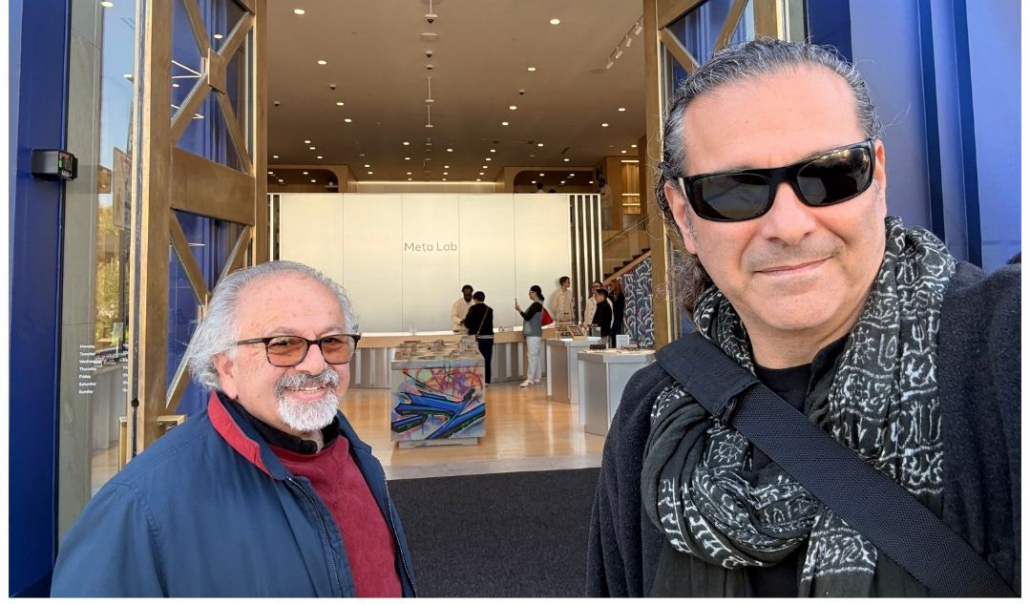
We were there to test-drive Meta’s newest creation, released just a month prior, the Meta Ray-Ban Display glasses and their accompanying neural wristband. As two longtime lovers of tech, and as the visionaries behind Epostle, these moments speak to us. Innovation, when guided by purpose, has always been one of our greatest tools. And Epostle’s work in education, outreach, and heritage preservation has been deeply intertwined with emerging technologies from the very beginning.

Today’s visit was no different. It was a look forward, a vision-quest into the future of how Epostle might evolve and serve in new ways.

We’re already immersed in virtual reality experiences through Meta’s Quest 3 system and Apple’s Vision Pro. But this was different. This was the edge of what’s coming in augmented reality, something lighter, more intuitive, more seamlessly integrated into daily life. And from the moment the Meta Lab team fitted us with the neural wristbands and placed the glasses in our hands, we could feel it: we were entering the first moments of a new chapter.

The experience was astonishing. Standing side-by-side, guided by the warm enthusiasm of the Meta team, we watched as a new world quietly shimmered into view. Messages appearing directly in the lens. Turn-by-turn directions floating before us like subtle constellations. Hands-free photo capture triggered with a simple gesture. And then the moment that truly stunned us: live translation, unfolding in real time as someone spoke.
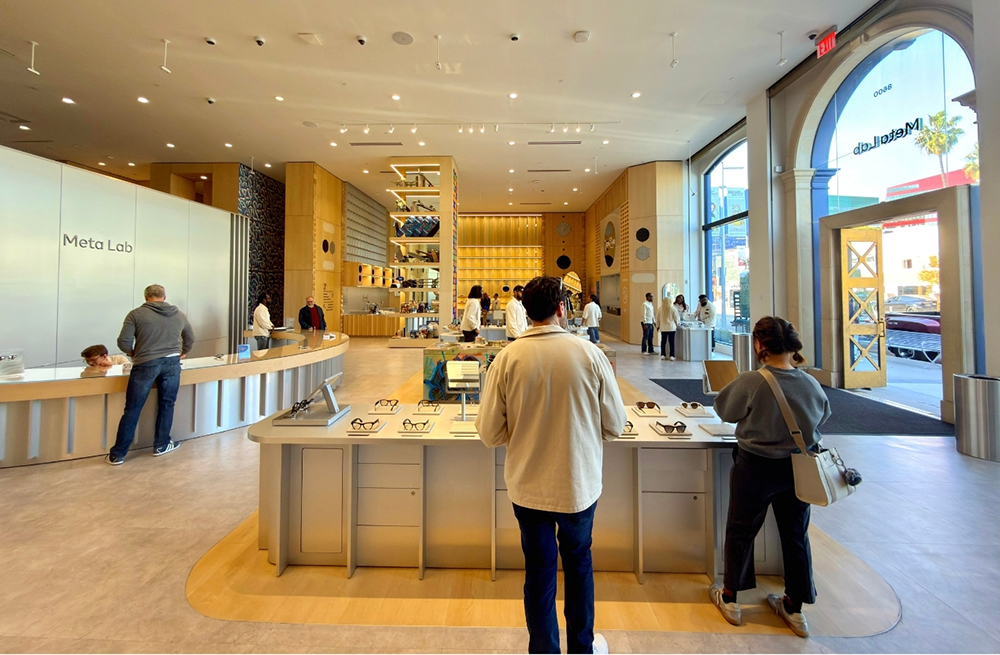
Words materializing before our eyes, clear, instant, and deeply human. We looked at each other and immediately understood the scope of what this could mean. Not someday. Now!

Ideas poured out faster than we could articulate them. Each feature hinted at new possibilities for connection, storytelling, teaching, and reaching communities scattered across the world.

And yet, for all its brilliance, the technology is still in its infancy. Much of what we asked about is “too new,” still behind closed doors, not yet ready for release. Standing there, we felt the unmistakable sense of being at the frontier, witnesses to something both powerful and fragile in its beginning stages.

But with that excitement comes a recognition of the moment we’re living in. The past twenty years have unfolded at a pace the human mind was never designed to absorb. Today we see the consequences, disconnection, doubt, identity confusion, and a pervasive sense that the ground beneath us is shifting faster than we can stabilize. Younger generations, who never knew a world without constant digital stimuli, face these challenges in even deeper ways.

Yet this is not a reason to reject technology. It is an invitation, a call to remember what it means to be human.
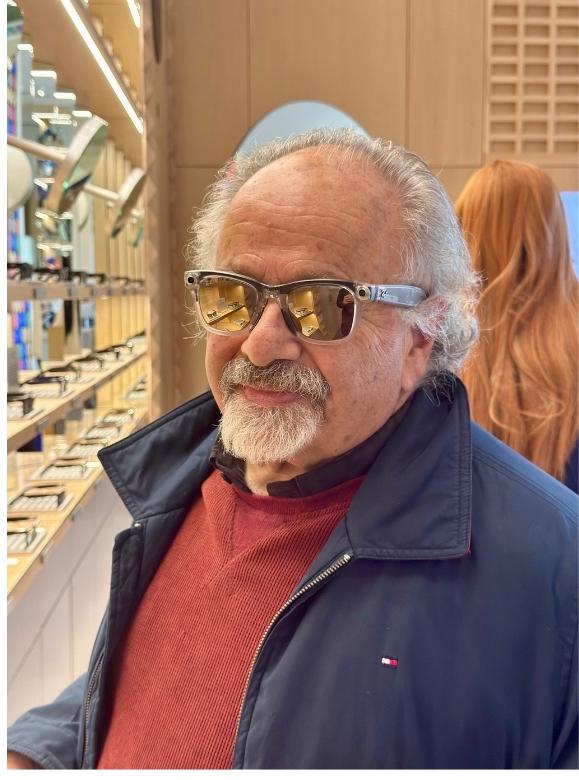
This is where Epostle steps in.

Our mission has always been to reconnect people to the root source of existence, the light from which all spiritual insight emanates. Armenia’s monastic culture preserved this wisdom, the OG Christian message, through centuries of sacrifice, carrying it intact from 301 AD to today. Epostle exists to share this treasure with the world, in its clarity and its original form.

And so, when we explore new technologies, we do it not to add more noise to a noisy world,

but to build a bridge. In Armenian tradition, this bridge is symbolized by the sacred “Eh”,

the eternal vowel placed above every altar, signifying presence, open-heartedness, the divine spark within us.

Technology itself is neutral. It doesn’t judge. It amplifies the intention of the one who wields it.

Our calling is to infuse these tools with the essence of Eh, using them to uplift, reconnect, and remind humanity of its inherent light. To bring people closer not to distraction, but to depth.

Not to fragmentation, but to unity.

As we walked out of the Meta Flagship store that day, Father Vazken and I felt it clearly: this future rushing toward us can be a force for incredible good. If held with heart, it becomes a conduit for peace, understanding, and community across continents.

That afternoon, over coffee in the most unexpected of places, we caught a glimpse of a world where technology becomes a companion to spirituality, not its competitor. A world where Epostle continues its mission as a bridge, guiding humanity not toward fear and disconnect, but toward its highest potential.

And this is only the beginning.